 Consult with
 Sock Doc Workshops
It’s just your imagination – this pain that you or your trusted practitioner has diagnosed as “plantar fasciitis” – because it’s impossible to have such a problem where there is just no fascia in the body! Ok, it’s not in your head, and naming an injury doesn’t by any means …
Sports Injury Prevention, Causes, & Treatment
These articles discuss sports injury prevention, treatment, and causes. Athletes typically develop injuries over time due to training at an intensity or duration beyond what their body can handle in a given period. Improper equipment such as poor footwear and orthotics can cause an injury too. Injuries occur from muscle imbalances which result from the body's inability to handle these types of stress. Conventional therapies and sports injury treatments such as ice, heat, stretching, bracing, NSAIDs, and other drugs rarely benefit an athlete. Often these "go-to" therapies can actually hinder healing and result in increased injury rates. Sports injury prevention involves awareness of the proper training methods, diet, and footwear along with knowledge about muscle imbalances, hormonal imbalances, the impacts of stress, and related issues discussed in these articles. For injured athletes, there are a number of articles related to specific injuries that discuss healthy sports injury treatment methods for specific conditions.
Tissue and Joint Repair – Enough to Make You “GAG”
Tissue and joint repair is an important topic among many people, especially athletes. Supplements such as glucosamine, chondroitin, MSM, and other products are often taken when there is joint pain or degeneration, in hopes that a cure can be found in a bottle. Sometimes these substances work and sometimes they …
Breaking Muscle – Build Strong and Stable Ankles for a Strong and Stable Body
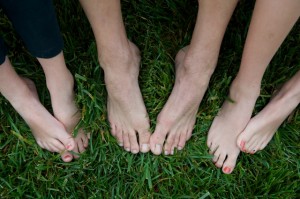
Strong ankles are all about supportive shoes and isolated strength exercises, right? No, actually they have nothing to do with either. Those philosophies can even increase your chance of an injury as they don’t allow your foot and ankle to move naturally as they’re intended to. Proper ankle mobility and …
Breaking Muscle – Breaking Your Fall: Gait Mechanics for Injury Prevention
This winter I’ve treated more patients who have been injured, some rather seriously, due to slipping on ice. Sure, anyone can have bad luck and slip on a sleek surface, but you can increase your odds of staying upright if your brain and your body are communicating well with one …
Surgical Intervention: Think Twice Before You Get Knifed Part II: Going Under the Knife
So you’re still thinking of some surgical intervention for your injury – getting cut open? That’s fine – maybe it’s right for you as long as you’ve fully investigated other treatments and have second opinions as I discussed in Part I. Let’s now talk about what surgery can do to your …
Surgical Intervention: Think Twice Before You Get Knifed Part I: Making an Informed, Educated Decision
An injured athlete is sometimes faced with the decision to go under the knife to hopefully rid you of your pain once and for all. With the multitude of diagnostic tests available today it’s often very easy to be convinced that surgery is the only way you will get better, …
No, It’s Not Your Hammy
The hamstrings are that group of muscles in the back of your thigh that every athlete is familiar with. Simply put, they are three muscles that provide motion to two joints – the hip and the knee. They’re of great importance if you choose to extend your hips, flex your …
This Is Why You’re Still Injured
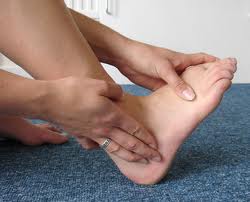
Injuries suck, that’s all there is to it. Oh, but there’s more. Injuries are a big reason as to why an athlete can’t get past a certain performance ceiling. If you’re training improperly as you try to take your fitness to the next level you’re probably going to get injured …
Calf Flexibility Sans Stretching: No More Calf Wall Stretches
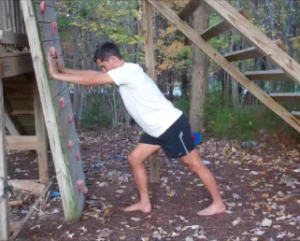
Oh, you caught me stretching my calves. This wall stretch that a lot of people do, a lot of runners like to do to warm up, is actually a pretty silly stretch. There’s lots of better ways that you can actually create normal flexibility and stability in your lower leg …
A Case For Orthotics?
It’s been well over a year since I’ve discussed orthotics. Orthotics, just like stretching, is an emotional and somewhat controversial topic because so many believe in their effectiveness for injury treatment and prevention. Others, such as myself, feel as though they either create, provoke, or hide a true problem. In …
The Least of Your Concerns: Arch Height, Weight, and Length
If you’ve ever been injured you may have been advised by your physician or therapist that your condition was in some part due to some physical imbalance or attribute. How important are some of these physical characteristics, such as foot arch height, in regards to the actual injury? Most are …
Educate Yourself to Recover From and Prevent Any Injury
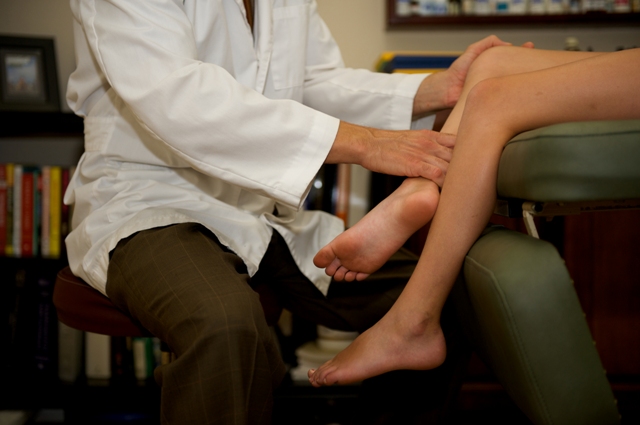
Nobody wants to be injured and if you’re injured you obviously want the injury gone as soon as possible. Properly treating an injury involves more than just looking at the symptom, which is usually where the pain is felt. You have to understand why you’re injured to properly assess, treat, …
Heart Damage: Five Ways to Prevent a Heart Injury and Reduce Your Chances of Dropping Dead
Damage to your heart is one injury you definitely don’t want; you might not live through it. As a conclusion to the several articles I have written discussing heart damage and exercise, including the article I wrote two weeks ago,“Enough of the Aerobic and Endurance Bashing Fostered by ‘New Research’ …
Ankle Sprains, Pains, Instability and Other Ligament Damage: Check Your Hormones
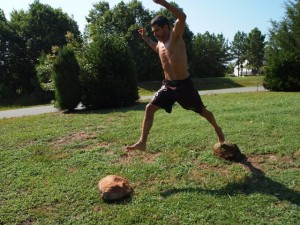
Whether you’re an avid runner or not you’ve most likely experienced an ankle problem at one point or another. Perhaps you twisted your ankle during a workout or simply stepped off a curb and “landed wrong.” Ankle sprains are very common injuries especially if you venture off-road on some treacherous …
First Aid For Injuries Part IV – NSAIDS: Friend or Foe?

If you’re injured do you take an anti-inflammatory medication commonly known as NSAIDs? After all, as you learned in Part III of the Sock Doc First Aid for Injuries, some inflammation is necessary and normal when you’re injured. Inflammation is all about balance – if it’s out of control then you …
First Aid For Injuries Part III – Inflammation: Embrace It and Control It
So you’re (still) injured but now you hopefully understand why you’re injured. As discussed in Part I of the Sock Doc First Aid For Injuries, if you didn’t have some sort of traumatic accident then your injury was slowly developing over time due to muscle imbalances which resulted from too …
First Aid For Injuries Part II – Ice, Heat, or RICE?
Okay, you’re injured. Now what? Do you apply ice, heat, or “RICE” for injury treatment? In Part I of the Sock Doc First Aid For Injuries you learned WHY injuries occur. Injuries don’t just come of of nowhere; they’re there for a reason and typically they are from too much …
First Aid For Injuries Part I – Sports Injury Causes: Understanding WHY You’re Injured

Welcome to the four-part Sock Doc series: “First Aid for Injuries” designed to help you understand sports injury causes, how to prevent them, how to treat them naturally, and how to become a better athlete. I hope you’ll gain a lot of knowledge from these four articles that will further …
Sock Doc: Foot Pain & Foot Injuries – Natural Treatment & Prevention
Video Transcript Hey this is Dr. Gangemi and today’s Sock Doc video is going to be about the foot. I’m going to basically describe and talk about some few easy treatment options that you can use for some common foot aliments that I haven’t discussed in other videos. And …
10 Reasons Why You’re Still Injured
Ten Very Simple Reasons Why You’re Always Injured, or Soon Will Be, Yet Again
Sock Doc: Knee Pain & Injuries – Natural Treatment & Prevention
Video Transcript Dr. Gangemi: Hey this is Dr. Gangemi and welcome to the newest Sock Doc video. Today I’m going to be talking about the knee and common complaints and injuries, performance problems that people have with the knee. Who better to help out today than G. A. Long …
Trigger Point Therapy – A Powerful Tool to Treat & Prevent Injuries
I use trigger point therapy a lot while treating patients in my office – it’s one of the many tools used to get a person well. Trigger point therapy is very effective for a variety of problems, often structural but even sometimes visceral (organ related). Since I discuss trigger points …
Preventing and Healing Stress Fractures & Stress Reactions
A stress fracture occurs when there is an overload of stress in a bone because of poor biomechanics and sometimes accompanying nutritional imbalances. Poor biomechanics occur due to muscle imbalances that are a result of mechanical and nutritional problems. Improper footwear is a very common mechanical factor resulting in muscle …
Sock Doc: Natural Treatment & Prevention of Piriformis Syndrome, Low Back Pain, & Sciatica
Video Transcript Hey, this is Doctor Gangemi, The Sock Doc. In today’s Sock Doc video is on Piriformis syndrome, lower back issues, and sciatic type pain, or what many people perceive as sciatic type pain. Lara O’Brien who is a principal dancer with Carolina Ballet is going to be …
Tendonitis or Bursitis? Natural Treatment & Prevention Regardless of Which “Itis” You Have
“Itis” means inflammation usually as a result of trauma (such as a tendon strain) or infection. However inflammation can also occur from nutritional problems as well as local muscle and joint dysfunctions, and I’d say that this is much more common than actual trauma and infection. Think about how often …
No Need For Knee Pain – Running, Cycling, or Anytime
Knee pain is a common complaint for many runners, cyclists, and triathletes leading them to succumb to pain medication, anti-inflammatories, knee braces and other contraptions just so they can continue pushing through the miles. From elite athletes to fitness walkers, an individual may be told they have bursitis, tendonitis, arthritis, …
Your Running Shoes Are Only Part of the Injury-Free Prescription
Since Sock Doc began almost three months ago, one of the most common questions I have been asked is, “Sock Doc, I’m running in minimalist shoes (or barefoot), but I’m still injured – why?” This question tells me one thing – runners think that if you get out of your …
Shin Splints Treatment, Prevention, and Video – Save the Frozen Veges for Dinner
Just about anyone who has ever played high school sports has rubbed a Dixie cup of ice up and down their shins to deal with the painful shin splints. While this is still being prescribed today by many coaches, athletic trainers, and physical therapists, I think that the Dixie cup …
Achilles Tendonitis
Achilles Tendonitis is a pain in the Achilles tendon often where it attaches to the heel bone. Another name this injury goes by is Achilles tendinopathy as there is question to whether there is actually inflammation (the ‘itis’) in the injury. Retrocalcaneal bursitis is sometimes diagnosed too, signifying that the …
Plantar Fasciitis: How Runners Can Learn How To Step Out of the Pain
Plantar fasciitis is a type of foot pain that occurs in the heel and sometimes in or around the arch of the foot as your plantar fascia is the thick connective tissue on the bottom of your foot. Symptoms are usually worse in the morning, and tend to ease off …
Iliotibial Band Frictional Syndrome – Is Your ITB Killin’ You?
If you’ve had Iliotibial band (ITB) Frictional syndrome, then you know how much it hurts, and how it feels like it’s never going to go away. I’ve had it more than once many, many years ago before I knew how to train and eat properly. It’s one of those pains …