 Consult with
 Sock Doc Workshops
Whether you’re an avid runner or not you’ve most likely experienced an ankle problem at one point or another. Perhaps you twisted your ankle during a workout or simply stepped off a curb and “landed wrong.” Ankle sprains are very common injuries especially if you venture off-road on some treacherous trails for a hike or run. Ankle mobility and stability will dictate if you get back hobbling or not, and keep you from even being susceptible to an injury in the first place. Strong ankles are all about supportive shoes and doing strength exercises, right? No, actually they have nothing to do with either and those philosophies can even increase your chance of an injury.
Your ankle is supported with the help of sturdy ligaments whose job is to also provide mechanical feedback to the rest of your body so you can move efficiently and smoothly. They’re a huge part of proprioception, which along with your eyes and inner ear, let your brain know where you are in relation to your environment. The ligaments help support muscles and tendons that store elastic energy for propulsion; they’re not meant for power. When ankles become fatigued they fail to provide the necessary feedback so our movements become slow, clumsy, and dampened. A common sign of this is when the ankles, or one ankle, easily rolls inwards while landing during the gait cycle – maybe not to the point of injury (a sprain) but enough for you to take notice. You may blame it on an uneven surface or even some rocks you might have had to scurry across during a trail run, but ultimately it comes down to the fact that your body is fatiguing due to a variety of reasons you will soon learn, and your ankles are one of the first places to let you know just that.
Estrogen and Ligaments
Ligaments are often stressed because of failing muscles and surrounding tendons causing them to work harder than what they’re intended to. Your ankles, and other ligament-prominent areas, (knee, shoulder, hand/wrist, foot, and pelvis), are also a key reflection of your health, especially hormonal health, as hormonal levels and fluctuations directly affect ligament receptors and tissue repair. Understanding this will not only help keep you injury-free but will also take your fitness and athletic potential to the next level.
There is a well-researched connection between the hormone estrogen and ligament injuries, specifically knee ACL injuries in women, more than other ligament injuries elsewhere in the body. Joints that are under a mechanical load in the presence of estrogen are known to incur a higher rate of ligament injury due to how the hormone affects collagen synthesis – specifically the formation of fibroblasts, which are cells that make up collagen. (Collagen is the main component of connective tissue and ligaments are one of many types of connective tissue.) This has been studied in another area of high ligament activity, the wrist, linking carpal tunnel syndrome prevalence to women with estrogen and progesterone receptor activity. Sex hormones such as estrogen and progesterone also affect water retention, and this can increase swelling within the synovium, which is the soft tissue found between joints. Hey – ligaments connect joints! So you can see how these joints can quickly become more injury prone due to pressure changes and alterations in tissue repair as a directly result of hormonal issues.
Though there aren’t any studies linking sex hormones and ankle sprains, (at least none that I could find), I don’t need to wait for these studies to make some rational, scientific, and clinical correlations I have seen treating patients with connective tissue injuries. ANY area where there is connective tissue, (yeah, that’s everywhere), is going to be affected by hormone receptors to various degrees. Another and perhaps more important fact is that adrenal stress hormones such as cortisol and adrenalin have more of an influence on ligaments than sex hormones, though they all play off each other in hormonal harmony, and this will be explained more in a bit. Areas of prominent ligament activity are going to be especially susceptible, particularly the ankles and knees. The reason for this is because the muscles that support the knee, as mentioned in the Knee Injury Video, and the major muscle of the lower leg that moderates pronation, the tibialis posterior, are closely related to hormonal balance especially adrenal hormones.
The majority of women tend to be estrogen dominant, often exhibiting signs of PMS, all which are common, yet never normal. PMS are symptoms of a woman’s inability to properly detoxify estrogen, or from an imbalance of estrogen with progesterone. Breast tenderness, back pain, menstrual cramps, irritability, and other symptoms are due to sex hormone imbalances. At this time, and for many women especially during the luteal phase of the cycle, (just after ovulation until the start of menses), a woman may be more susceptible to ligament damage. Yes, hormonal therapies including oral contraceptives (‘The Pill’) will increase the risk factor greatly for ligament-type injuries and damage.
The most common nutrients necessary for estrogen detoxification are vitamin B6, (usually in its active form pyridoxial-5-phosphate), magnesium, zinc, folate, (again in its active 5MTHF form), and methylcobalamin (a type of vitamin B12). The amino acid L-cysteine is also vital for liver detoxification of all hormones, and you’ll soon see how this can be a double-edged sword if you’re deficient in such as it’s needed for connective tissue repair (yeah that means your ligaments). Cysteine is plentiful in eggs and whey protein. The herb rosemary can also be very effective in detoxifying estrogen from extrahepatic sources – that’s primarily your adipose tissue (fat stores). The more fat you have the more estrogen you’ll make and the more estrogen you make the more fat you’ll become; not the most pleasant of biochemical systems but it is what it is.
Men, you’re of course for the most part not included in the risk factors as much as women, but don’t think you’re necessarily safe from estrogen problems with your ligaments or your overall health. More and more men are developing hormonal problems since estrogen mimicking compounds are so common in the environment and present in various food sources (plastics, anything living in any water, canned foods, and all the processed soy products). Guys have estrogen receptors, (some estrogen is normal and necessary), yet too much stress can and will alter testosterone breakdown and shunt it off to estrogen, leading to ligament weakness and other low testosterone/high estrogen symptoms such as erectile dysfunction, low libido, low energy, increased body fat, loss of body hair (including head hair), and a liking for shows on the network Lifetime, (just kidding on that last one).
Stress Hormones and Ligaments
The balance of hormones is often more important than overall sufficient levels. Progesterone levels in women and testosterone levels in men are often depleted as the nutrients, enzymes, and other hormones which are needed to produce these hormones are used to make our major stress hormone coming from the adrenal glands, cortisol.
The health of adrenal hormones is altered under stress. In the early stages of acute stress cortisol levels are increased but as stress becomes chronic or too much for the body to handle, cortisol levels can soon become depleted. The body will essentially steal from other hormones, particularly those sex hormones, in an effort to keep cortisol levels from plummeting too low. Your body, in all of its infinite wisdom, is much more concerned with you getting through the day rather than procreation, or even being interested in sex. Of course, ligaments will now be affected not simply because of the sex hormone imbalances previously mentioned, but the cortisol load too – partly due to how cortisol is needed to balance blood sugar and partly due to the fact that many of the same nutrients needed to break down (detoxify) hormones of all types are also needed to repair tissue – including ligaments. Next thing you know you have no sex drive and your ankles and knees are killing you. That just sucks.
There’s also an important hormone called aldosterone that your adrenal glands produce. This is a mineralocorticoid which balances electrolytes in your body, specifically sodium and potassium. Any athlete concerned about their health and performance is going to be concerned about their electrolytes, but especially an endurance athlete as sodium (salt) depletion is very common. This too is an adrenal problem, but it can soon turn into a ligament problem. Under chronic stress aldosterone levels are depleted along with cortisol, and as that occurs you’ll lose more sodium. Your body knows this and wants to hang onto some of that sodium, so it takes the sodium that is normally outside of the cell and drives it into the cell. Along with that salt goes fluid and that means increased pressure within the cell membrane (swelling) and yes, within the joint space – once again toying with your ligaments just as estrogen is known to do within the synovial membrane.
Blood Sugar and Ligaments
Adrenal stress will further impact the health of connective tissue, especially ligaments, due to its relationship with blood sugar. Now for a bit (more) of biochemistry and physiology: Blood sugar levels are monitored by cells in the pancreas called the Islets of Langerhans. When blood glucose levels fall too low, the body must increase this level via two main mechanisms. The body may convert stored glycogen (sugar) into glucose, (termed glycogenolysis), which occurs in the muscle and liver tissue, or it may generate glucose from some non-carbohydrate carbon substrate such as amino acids, glycerol or lactate. This process is called gluconeogenesis and occurs primarily in the liver.
Cortisol, produced in the adrenal cortex, will increase protein catabolism (break-down) which in turn frees amino acids to be used for gluconeogenesis. The excretion of cortisol is synonymous with a stress response. Epinephrine (adrenalin), from the adrenal medulla and glucagon (from the pancreas) promote glycogenolysis which increases plasma glucose levels by breaking down liver glycogen. Since the liver is the main target organ involved in both the epinephrine effect of glycogenolysis and the cortisol effect of gluconeogenesis, the health of the liver has a lot do with not only blood sugar, hormonal detoxification and balance, but also connective tissue repair and integrity.
You can see that more stress you are under, the more cortisol and adrenalin will become problematic and the more glucose (blood sugar handling) problems will result. You may have blood sugar handling problems such as headaches, irritability, waking up at night, or concentration problems. You may have a poor aerobic system or not be able to run well over one hour aerobically without consuming some sugar if you have these hormonal problems. A Paleo-Type Diet is very beneficial here as is training properly (see the Sock Doc Training Principles) to naturally help balance all hormones and heal all tissues. Major nutrients that are depleted in this hormonal-glucose cycle are magnesium, zinc, chromium, and manganese. L-Cysteine, mentioned earlier, is often depleted too and this eventually leads to the body’s inability to repair connective tissue. That means you’re either going to get injured or you can’t recover from your current injury.
Stress and Excess Stimuli Alter Proprioception = Injuries
Proprioception and kinesthesia are terms commonly used to describe position and movement. Proprioception is a sense of where your body is as determined by the conscious feedback it receives from muscular, tendon, and articular sources and the unconscious feedback from the cerebellum of your brain. Kinesthesia is a sense of that movement, also highly dependent on the information received from your tissues back to your nervous system. The articular sources, (joints), are supported by the ligaments which connect them. The amount of external stress your ligaments can handle will be greatly influenced by the other aspects which affect position and movement. That means if there are tendon and muscular problems, which are so common in athletes, there will be more stress to the joints and ligaments. It also means that other types of stress, both internal and external, that affect proprioception and kinesthesia, can cause ligament problems.
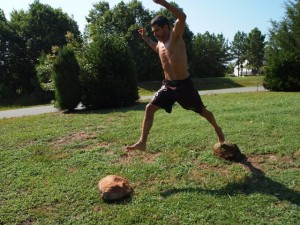
Balance & ankle stability
In addition to proprioception, body position and movement are also determined by your eyes and inner ear (vestibular system). Excessive stress to your nervous system can quickly alter your body orientation and movement patterns. If your body is receiving more stimulation than what it can handle it’s similar to the anaerobic excess “excess lifestyle stress” I discuss often. This can occur from too much training or racing, or poor recovery, sleep, or diet. Eventually your eyes can lose fine focus throwing your balance off, and for those who race long miles on the trails you know exactly how important this is. This is why if you close your eyes it’s much harder to keep your balance, especially if your musculoskeletal feedback system is fatigued, (or simply not trained). Stand on one leg with your eyes open and then close your eyes and see how you do. They should be equally as good; many are not.
Muscle imbalances can occur in the head and neck region affecting the inner ear thus altering body position and movement too. Now more stress is placed on other tissues of the body, especially ligaments, as muscles and tendons fatigue; they must work extra hard to control movement and posture. Next thing you know you’re starting to trip on just slightly uneven surfaces or roll an ankle again and again.
Additionally, when running and jumping, energy is constantly stored and released in the connective tissues of the foot and especially the ankle. The weaker these tissues are, the less power and speed you will generate. Conventional footwear often alters proprioception significantly, which can not only result in weakened structural tissues but also poor balance and movement. Orthotics promote problems too. If your body isn’t exactly sure how your foot is moving and exactly sure how it is loading, unloading, and recovering with each and every step, you’re at a high risk for injury. Add in chronic nervous system and hormonal stress most people are dealing with every day and you’re just waiting to injury your knee or roll an ankle.
Strong Body, Healthy Ligaments, Powerful Ankles
Ligaments do need some rehabilitation, though as you hopefully realize after reading this article it’s not as much as you once thought because it’s more of an issue with hormonal health – and overall health. However, walking, standing, and moving, (including running if you enjoy it), barefoot or in a shoe which does not alter biomechanics and proprioception are the simplest and most effective ways to aid in ligament repair and recovery, as well as increase overall strength. Balance boards, wobble boards, and similar devices are also ideal for further development of balance and connective tissue health, but save these for when everything is uninjured or well within the healing phase. Of course you should never stretch ligament injuries, as ligaments cannot retain their original shape and tension when stretched too much or too often past a certain point. Hormonal issues also contribute to ligament laxity, setting up an athlete for chronic injuries in a joint.
As I often say with any injury, you first have to remove the problem, (often the stress on the hormonal system), and treat the muscles and tendons which have become problematic resulting in more stress to the ligaments. Trigger point work and compression as I note in the various articles and in the Injury First Aid series is one of the most effective ways you can assess and start to heal an injury. Once that occurs then exercise rehab is the next step. Trigger point work on ligaments is sometimes necessary, but you should be very careful if you’re inexperienced and are performing this type of therapy on yourself as you can cause more damage if you’re unsure of what you’re doing. Remember I often advise staying off the actual area where the injury is felt but rather treat the surrounding “more meaty” muscles, and sometimes tendons, as this will help get those working again so the ligaments don’t need to do work they’re not meant to do. Now go train, think about all this information, and then read it again – it will make even more sense the second run through.
Dr. Stephen Gangemi "Sock Doc"

I'm a board-certified chiropractic physician and clinical nutritionist with a passion for true natural health care. I implement dietary & nutritional therapies, exercise & movement practices, and lifestyle changes along with manual therapy techniques to help the body heal and prevent illness and injuries.
Kieren Geaney says
Thanks again for another good article. I have completely dissected the site and used your articles to identify (at least I hope) the source of my ankle injury. I just had one question, from something I read somewhere else but can’t find the link.
The article was basically about the the lack of research that was done in the past against cortisol and estrogen – because, for sports performance research studies are heavily biased towards the finding body. It said cortisol and estrogen do play an important role and they are not ‘bad hormones’ so long as their is balance. It mentioned that higher estrogen levels lead to increased flexibility – essentially preparing a womans body for child birth. 90% of the women I know seem to be a lot more flexible than men in the same peer group. I was wondering if you might expand on this – maybe in another article?
Sock Doc says
Yes estrogen can do that and so can the hormone relaxin which is produced at the same time in the woman’s cycle – both affecting connective tissue “flexibility” you might say. It’s all about what is normal – that’s a grey area. All women are going to have different levels of these hormones – there’s no “you have to have this level on this day” to be normal, it’s a wide variance. But when balance is off, for so many reasons, then symptoms exist followed by problems (injuries perhaps). So “increased” flexibility is okay as long as that increased level isn’t too much causing imbalances.
pkadams says
Hey Doc, about the proprioception, I had an odd experience in a half marathon last weekend. It was a big race, 25K runners. While running, I began to have the sensation that I could stop moving my legs and just float along with the runners. I literally had to tell myself , in my head, to keep stepping. Would you consider that a proprioception issue and what should I do next time? Thanks.
By the way, I am also suffering from estrogen dominance, water retention, but also dehydation. I use progesterone cream and take supplements. I am 48.
Sock Doc says
Yeah you can consider a lot of things like that to affect proprioception; you probably had several muscles imbalances which made you feel that way.
Lori says
Consider hormone replacement therapy. Progesterone cream is a hoax. I was told I was estrogen dominant too. It’s not a valid argument. Your age shows you are approaching estrogen deficiency. I was saved by the transdermal estrogen patch. Women benefit from HRT within the first few years of menopause. Good luck.
Sock Doc says
I don’t agree with this at all but wanted to share Lori’s perspective because it’s so common that women “need” HRT.
silvia goldwasser says
I personally agree with the progesterone cream “hoax” – it’s all about balance and what hormones a woman needs. I felt miserable on progesterone of any sort. I recently had some injuries and from all my reading, estrogen delays healing and makes women more prone to injury. My experience has been the exact opposite! I have put on lean muscle, lost abdominal and general weight, feel 100% better on a small transdermal estrogen patch. I was starting to suddenly have knee, hip and neck and shoulder problems. I admit I don’t know whether estrogen is affecting the pain receptors in my body so I feel less pain, or whether the estrogen is helping me heal. When my orthopedic surgeon suggested estrogen I was surprised but he was right. I didn’t even have hot flashes…I felt quite good but I feel 100% better now. There is a lot we don’t know about the female reproductive system and hormones. One-size-fits-all doesn’t work.
Erica says
Silvia – I just stumbled across this & I am the same! When I was prescribed progesterone by two separat private medical Dr’s who ‘think outside the box’… I became miserable. Not only that I would have nausea nearly all the time similar to morning sickness. The last time I was given this stuff at age 48 I ended up with severe depression & didn’t know why. Until I got very quiet with myself & though “what if its the opposite in me?” What if its all hogwash that has been spread by certain alternative health practitioners based on a few women who did need progesterone. & I am the last person to bash alternative medicine as I visit an SOT chiropractor every 4 – 6 weeks & was a fully trained homeopath. I only use herbal or homeopathic medicine with my horses when they need it (mostly just minor accidents). Then today I was so fed up of the sacroiliac issues & pain I have due to slack ligaments (allegedly). All I did was a bit of gardening. So I thought “I wonder..” I put some body cream on the area that someone had given me that has soy oil in it & that I had never used because I don’t like soy. My back has now stopped hurting! Its bonkers but its true. I’ve had this problem for 20 years & have tried nearly everything imaginable. It is has been life limiting often as I’m an out doors type of gal. I had to stop riding my horses & the upset over that was terrible (I am back doing small sessions now). I try not to let it get me down but even so every once in a while it is just too much! I am so glad I found your comment. We are all different & it cannot be a one size fits all 🙂
greengirlrunning says
This is a fantastic article! So useful and just makes so much sense. When I look back on the injuries I’ve had with this info in mind, it’s so easy to see that things were out of balance in my body. Thank you for continuing to put information out there that takes into account the whole person…so few actually do this. I take my children to a very unique pediatric practice that combines holistic and “conventional” medicine and preventative care. Your approach to health, wellness and injury prevention/care reminds me so much of my kids’ pediatricians. You’re awesome Sock Doc!
Sock Doc says
Thanks Green Girl!
Kerry Swier says
Very much wondering if hormone imbalance is the root cause of all that I have been experiencing the past 11 months. Last October, I stopped having periods as I entered menopause. At the same time, I started taking gabapentin to see if it would help with face sensations I was experiencing and 5,000 mg Vit D. At the same time. I build a rock path over a two week period. Three days after finishing, I had bilateral bicep tendonitis. Two months later tendonitis in both thumb tendons. Stopped gabapentin in late December and reduced Vit D in January to 2,000 mg and added magnesium and B vits. Have taken these off and on since. Then, in Feb. tendon probs in inner side of both knees. In April, both elbows after falling on them. After that, I seemed to stabilize. None of the tendon issues have completely gone away, but nothing was getting worse until late August of this year. Within a space of two weeks I get achilles tendonitis both sides, shin pain, mild pain in both hamstring origins, and pain in tendons or ligaments near the breastbone that started when I was only sitting around. What changed and brought all of the new issues on? The only things that were different were that I was trying some immune boosting and A-Biotic herbal supplements for a couple weeks and I weaning off taking estrodial 0.5/progesterone 100 mg that I had only been taking for 7-8 weeks anyways to see if Bio HRT would help with the tendon issues I was already having. Now I have a bunch more and don’t know what to do. Was being on the hormones in the first place, getting off them, the wrong combo of them for me? And, or all of this combined with maybe nutrient imbalances and increased cortisol due to the stress of not knowing what is wrong with my body for months and months. Been to many docs. Blood work always comes back good, except due run a little low in Vit D (29 at last check in August after being out in the sun alot) and mag usually runs about 1.8 to 2.0. You start tinkering with one nutrient and that can lead to imbalances in others. So, truly don’t know what to do now or who to turn to. Any help would be appreciated.
Dr. Stephen Gangemi "Sock Doc" says
Hormone questions really need to be discussed via a consult.
Crying says
Your problems sound effects aptly like mine I’m ready to scream.
Gina says
Have you gotten any answers?? I’m 24 and have the SAME issues as you!! I feel like I’m 75 years old. The pains started shortly after I had the Mirena IUD implanted, and 3 1/2 years later, I’m JUST making the connection. I was 100% HEALTHY before that IUD, and now the tendons all over my body are riddled with pain. My body must’ve hated those hormones. Please let me know how you are!
Cate says
Hi there, just linked to you from MDA. Was wondering if you’d heard of the Russian ‘Scenar’ device, and its affect on strained/sprained tendons and ligaments.
(I sure don’t work for them.. but.) I bought one last week after months of humming/hawing and have only used it once so far. Pretty amazing IMHO, very old back sprain (lat.dorsi) pain literally gone, but interested in your opinion on it if you had one.
Really enjoyed your article.
: )
Sock Doc says
Hi Cate, I have never heard of that device before. Glad you like the article, thanks!
Liz says
Love this article! Quite an eye opener! I have been in a wheelchair for several months after doing a round of in vitro where they pumped me full of hormones. I already had bi-lateral plantar fasciitis, but could still crossfit. Now I get around in a wheelchair because I have bi lateral tarsal tunnel/baxters entrapment. I also have symptoms of Erythromelalgia. Now my hormones are probably way off. I haven’t felt the same since the in vitro.
Sock Doc says
Oh that’s not good; unfortunately more common that what you’d think – and what people are told.
Yad says
Hi, Doc. When my period is coming, at least I have low of energy, pain everywhere, water retention. I need to eat more fat? (protein) and take Complex B and magnesium? I starting eating green juice extrac to get antioxidants and iron. What do you think Doc.
Blessing from Panama
Sock Doc says
If you’re not eating enough protein and fat that could be contributing, but more won’t help if you’re eating enough. B6 and magnesium are the two most common nutrients needed for estrogen breakdown, and sometimes vitamin E (mixed, natural tocopherols) for hormonal balance too.
Yad says
Thanks Doc. Do you know a specific suplements for that? any brand that you suggest?
Sock Doc says
I can’t give specific supplement advice for that via on-line, and I’m sure you have different brands in Panama.
michaelplaceres says
Hey Doc,
I am new to running and started minimalist and barefoot. I started having a pain in my right ankle area on the outside of the leg. It ran from the middle of the ankle bone up approximately 3 inches. It will get better with time but comes back. It now has started on the left side and hurts like you know what. I do recovery drinks and plenty of protein as we eat Paleo. I have been told numerous things to do and nothing seems to help. Any ideas?
Sock Doc says
That’s one of your peroneus muscles, check out the video here: https://sock-doc.com/2012/05/foot-injuries/
Jayisk says
Hello Doctor,
I’ve dislocated my left ankle 3 times in the last 10 years playing basketball, I have also had an on going issue with my right shoulder which makes me think that I might a hormonal problem witch your article points out. In relation to my ankle injuries, in all instances it was because I had landed on another person’s foot 🙁
After reading your article, I was just wondering 2 things. (1) Is there is any way I can find out my current hormone and nutrients levels and (2) what should they be at for a 30yr old male.
I’m currently taking zinc and using topical magnesium before reading your article and will consider also using the other nutrient that you have suggested. I’m also taping my ankle when I play basketball now as a recent visit to a physio suggested that the interior ligament in my left ankle is completely gone due to a previous injury.
Ideally i would like to play the sport I love without having the slight pain in my ankle when I to jump or exercise.
Thank you for your insightful article.
Sock Doc says
1. There are lab tests available but they aren’t the best way to figure this stuff out. Look for a doc there in AUS who practices applied kinesiology and works with soft tissue problems.
2. The levels are variable and not just a “high”, “low”, and “normal” but also how they are in balance with each other.
Zach Hulce says
Sock-dock,
I was told I have a lordotic posture because I have chronic back pain and I’ve been strengthening my abs and stretching my hip flexors like I was told, but I also have heel pain, shin splints etc… My question is does lordosis cause plantar fasciitis, foot problems things like that or is it strictly muscles restrictions in your calf muscles? if I correct my lordosis will the foot pain eventually subside as well?
Zach
Sock Doc says
Usually those problems are a different symptoms from a same cause (though could be individual). I’ve never seen lordosis CAUSE PF, but it could contribute. You should look for a doc who knows how to treat a whole body.
clive quinn says
Hi sock doc. I am regular visitor to your site and really appreciate the effort you put into it. I am also an avid reader of Phil Maffetone’s books and training procedures which seem to be in tune with your advice also.
Basically i am in rehab phase of recovering from 2 disc herniations (thankfully they were only protrusions). I am running again but taking it slow. I have some slight pain in the ankle(medial ankle). It is slightly sore to touch. This is the right ankle and most of my disc protrusion sciatic like pains i was getting was on the right side. Thankfully an osteopath manipulated my pelvis to level it which removed most (if not all) of my pain. My question – What to do with the medial ankle pain ? Could this be a symptom of disc bulges i have ? I walk and run in minimal shoes with 1mm sole thickness and zero drop(barefoot at times in the summer). I have been told many times i am an overpronator and i need orthotics etc. Obviously i dont buy into this as i read your site. My diet is pretty good now (from reading this site and maffetones books). Obvioulsy i have stresses like every other man but i try keep it in check. Any tips on how to firstly diagnose medial ankle pain ? Trigger points – where should i look.
Any help much appreciated and happy new year.
Clive
Sock Doc says
Hi Clive – for medial pain the most common muscle issue there would be the tibialis posterior. You can read about that is 3 videos – the Foot Pain, Plantar Fasciitis, and Shin Splints Videos. Sure it could be linked in some way to your disc issues, but from what you tell me here, I’d say (guess) probably not. A weak tib post will make you an “overpronator” too.
Clive quinn says
Fantastic thanks for that. So what is the best way to strengthen tibialis posterior? Lots of websites show pointing ankle up down left and right etc Any sock doc tips?
Sock Doc says
Trigger point work of the muscle itself and the lower calf. Check out the Sock Doc videos.
Clive quinn says
Thanks again sock doc. Went to my physio yesterday and he looked at my ankle and he found some tightness there but he then looked at my lower leg and done some deep tissue work and told me that my tibialis posterior was probably causing all my problems.
Lisa Quenon says
Hi Doc. I severely tore ligaments in my right knee over 2 years ago. Primarily have treated with hot/cold, swimming, walking and a ton of Ligaplex II, in addition to other supplements. I have not had my hormones tested, I do not think…at least for several years. The western doc always wants me to take Synthroid…except I do not wish to. For the last 6 months I have been self-treating for adrenal healing with Thymus, dessicated Adrenals, DHEA and other supplements plus intentional rest and much barefoot walking in the grass, doing art and other enjoyable pursuits. Last year I had about 4 months solid of bronchitis that culminated with a hospital stay for pneumonia. I have also cut all sugar out of my diet and significantly changed my eating. So far, these past 6 months, seem to be somewhat better. The pain in my right knee is somewhat better…many days not troublesome at all. (A surgeon looked at the MRI and immediately said surgery…I opted not.) How do I learn about the hormones or have them tested? I have a western doc who I think will do tests – at least most of them – that I might request. I do not have an alternate doc right now. I did rub the thymus area and, yup, really sore…will continue rubbing it. Thank you, Lisa Q
Sock Doc says
You’ll have to find a holistic doc in your area to help you with that.
Jennifer Logan says
Very insightful reading having suffered ankle and knee ligament trouble for the last 3 years. I have under active thyroid treated by thyroxine and also had surgery for carpel tunnel syndrome. I’m a 41 year old female and am convinced that my injuries are hormone related.
Neal says
Hey Doc. You have any advice on treatment for tarsal tunnel syndrome please?I may have had it for a year.
Sock Doc says
Same advice as I give for plantar fasciitis as it has to do with the tibialis posterior muscle. So check out the PF video and Foot Pain video too.
Michele says
I definitely have Tarsal Tunnel. I’m only 45, got Shingles in my right foot at 42, then at 44 did a really bad ankle inversion when jumping down. I feel the pain in my inner ankle and sligh numbness, tingling in toes. Doc said possible surgery. I watched videos but I’m walking barefoot most of the day and have been able to pick things up with my toes like a pro. Maybe something I’m missing – the hormones and stress? Get hormones checked maybe?
Sock Doc says
Please read this; thanks!
https://sock-doc.com/sock-doc-questions-comments/
Beth says
Hi Doc,
I stumbled across your site today would like advice. I suffer from lax ligaments over most of my body, have had ankle surgery to “tighten” the ligaments, suffer from chronic back pain, and I have one hip that all the muscles around it get so tight it literally gets about 3 inches higher than the other and the muscles feel like concrete. What sort of doctor should I look for that would be able to address these issues? I live in the Metro DC region if you know anyone out my way. I have previously been to chiropractics before and I would have short term relief (<2 weeks at a time) but would like to have longer relief.
Thans!
Sock Doc says
Hi Beth, This is the article for you to read: https://sock-doc.com/2013/02/recover-prevent-injuries/
And you’re always welcome go venture 4 hrs south to come see me if you can’t find anyone up there.
Aileen says
I can certainly attest to the fact that my back went haywire during perimenopause. One week a month I pretty much couldn’t run. However I don’t think you’ve covered menopause itself. My rheumatologist specialist blithely said women have lots of problems after menopause. I am having lots of problems – in fact going to my sports med doc on Monday about my hip! Is there a place for HRT for joint problems? Can we simply cast them off as old age? I really hate being stereotyped when I am in fact fit (I do heavy weights and run), not overweight, not prediabetic……………..But I also hate feeling increasingly decrepit!
Sock Doc says
We don’t use “old age” as an excuse on this site (or in my practice) and MDs are always going to blame common problems on your gender, age, or now your menopause. Find a natural doc who may be able to help you out. There is some more hormonal information on my drgangemi.com site.
jonathan niles says
I have spained my ankle a couple of times in my life, like 4 or 5 times and about a year or so ago i had an ankle surgery to clear out bone spurs. I know only have about 8 degrees of dorsiflexion. This i think is given me forefoot pain, in that foot. how do i get that to 12-15 degress for optimal running and walking without stretching. i was thinking about gettting a EMPI advance dynamic ROM streching splint i dont really know what else to do. Every morining when i wake up and evening before i go to bed i use a trigger point roller and ball on my calves and feet, just wondering what else to do.
Sock Doc says
Please read this; thanks!
https://sock-doc.com/sock-doc-questions-comments/
Eva says
Dear Sock Doc,
I have recently come down with a number of health problems, which I’ve always thought were related but your site is the first opinion I see that seems to agree with me in this respect!
I have been on birth control pills for 20 years continuously (since I was 17), with only a few months break here and there. I always felt much better on the pill — it gave me more energy, made my periods predictable and it evened out my PMS symptoms.
My problems started in early 2012 with mild bilateral plantar fasciitis, joint stiffness in the morning and general fatigue, which intuitively led me to quit the pill in August. A few weeks later the plantar fasciitis was gone but my ankles started rotating inwards and the pain spread to the inside of the ankle. A podiatrist diagnosed me with posterior tibialis tendonitis. At the same time I became extremely fatigued, developed a painful lump in my breast, had really bad constipation, developed a hemmorhoid, and had stomach cramps several times a day. I had to cut back on exercise and work hours to be able to cope.
Doctors said my bloodwork was fine (FSH, TSH, vitamin D, FCS, differential white cell counts were all in range) though I had slightly elevated anti-TG anitbodies (56 IU/ml) and cholesterol (5.68nmol/l, HDL 2.42nmol/l), also close to the limit were my CRP<0.6mg/L and erythrocyte sedimentation 7mm/h. An MRI of my foot showed some fluid buildup (peroneus longus tenosynovitis) but no other abnormality. Everyone looked at me funny when I said I thought something was up with my hormones.
By December 2012, I couldn't walk or stand, couldn't wear shoes and I lost feeling in the right big toe. A podiatrist told me I had tarsal tunnel syndrome and I should take NSAIDs. Not knowing what to do, I went on vacation for three weeks and didn't wear shoes. In that time I tried taking diosmin/hesperidin, which not only made a big difference to my hemmorhoids, but also helped my fatigue and my feet slightly.
I recently had a metabolic profile done, which showed low linoleic/linolenic fatty acid levels, increased need for Q10, B1, increased need for aminoacids, particularly glutamine. I have increased my protein intake and now take aminoacid complexes, omega 3-6-9, glutamine, D3 and Calcium/Magnesium supplements.
Although my symptoms have slowly started to become milder by March/April this year, none of them are gone completely, and I still can't run or jump without pain. My diet is very healthy and naturally high in omega 3/6/9 and protein so I think there must be more going on than not getting enough nutrients from my diet and I would like to find the root cause. I am looking into saliva hormone testing and trying to find a doctor here in the UK who could help me interpret the results. I was wondering if you agree that that's a good way forward and if you have recommendations for any other avenues I could explore or tests/supplements to try?
Sock Doc says
Please read this; thanks!
https://sock-doc.com/sock-doc-questions-comments/
Eva says
Thanks for taking the time to respond, Sock Doc! I have read most articles on your site but I’ll keep digging. Just wanted to say I agree with your philosophy on diet and stress reduction and have been doing most things you recommend before I came to your site either because I grew up that way or because they always made me feel better (low carb, no preservatives, low sugar diet, lots of organic eggs/seeds/fish/veg, reduced work hours, getting lots of sun, always running around barefoot). I am a dancer/yogini so I also get plenty of anaerobic exercise.
It is very scary that none of the western healthcare professionals I saw so far (including doctors who prescribe the pill!) have agreed with me that my symptoms could be due to a hormonal imbalance. It feels like being stuck in a no man’s land where your site is a breath of fresh air.
Jen says
Thanks for the article! Now my big question is, how do we fix the hormonal imbalances? I just sprained my ankle when stepping off the deck wrong and landing in a hole. I’m ordering recommended supplements, vit c, vit a, zinc, glucosamine, chrondroitin, and a vit b complex. How do I regulate the estrogen levels? I have breast tenderness before my monthly cycle that’s about it for PMS. An herbalist said my estrogen was high because I have some red dots on my upper arm and thigh. Thanks in advance! Looking forward to your reply, and insight! Glad I found this website!
Jen
Sock Doc says
That’s sometimes individualized; the best I can offer you on this site is to read the articles on diet and nutrition and also check out my other site, drgangemi.com.
Karen sankiw says
Hi there I hurt my ankle once in April and once in May . And I was wondering if that could be causing My neck to crack and to be sore and my inner to hurt. I have went tot the doctor and he said my ears are good, heart is good and that. It is just getting irritating more and more each day.i did haven ear infection and fluid in the ears a couple of months ago but I swear a doctor in emergency right away to start taking anitbiotics to clear it . And when I went to go see a eye ear one throat specialist after about a month or so later he said my ears and that we’re good. I am just thinking of when I hurt my ankle the second time I really did sea lot of stars and blackness. Can that cause my ears and neck to hurt and crack. Thanks
Sock Doc says
The fascial connective tissue in your body literally connects everything – so in some way your big toe is connected to your head, and and all your organs in-between. So although it’s a strange occurrence, and maybe just a coincidence, I’ve seen odd things like that happen with patients too – not that specifically – but other injuries that cause weird symptoms in other parts of the body.
Jackemeyer says
Dear Doc-in-socks,
Any recommended therapists in Arizona?
—
barefooted David in Tempe
Sock Doc says
http://www.drnoahlebowitz.com/
Cindy says
Hi, I came across your page while researching the effect of hormones on ligaments, I have had lower back issues all my life and found a link between being premenstral and causing re- injury to my herniated discs. I also suffered an ACL injury from jumping on a trampoline. Ten years later I had a spontaneous coronary artery disection. This I have found is also associated with hormones, I have had to do my own research because my cardiologist told me there was no know cause and dismissed my observations about my blood vessels in my fingers bursting and my hormones effecting my back which preceded this event also. I am curios as to the effect of the hormones relating to the arteries and blood vessels as I am sure there is a connection. I am again suffering herniated disc injury and terrified about having another heart attack from a SCAD event. I would be grateful for your thoughts.
Janet says
Hi Cindy,
You may have Ehlers Danlos Syndrome (EDS), vascular type. You should look it up and see if the symptoms fit. Stretchy ligaments and stretchy vessels are symptoms, and artery dissections can occur. If you think you may have it you need to see a geneticist that specializes in EDS.
Sally says
I apparently have weak ligaments around my knees. Tore my right ACL 7 years ago at age 51, had 3 surgeries, but knee is still loose and is easily injured if I misstep. Just injured left knee ease stepped in a whole. What type of professional should I see?
Cody says
Hey,
Thanks for the great article. I sprained my ankle pretty bad in March of this year (too much alcohol, and wearing sandals lol) and it has been affecting me since. I bought some compression bands and they brought some relief but it hasn’t been the same. Yesterday I found out about trigger points, and worked on my peroneal points. I have to say, that after doing this my injured ankle felt better than my non injured ankle! It pretty much brought 100% relief, greatly improved my squat mobility, and I am in the process of working on those points a few times a day now. My question is, should I be using compression before or after doing the trigger points? Or should I be still using it at all?
All the Best,
Cody
Sock Doc says
Compression meaning socks? In a way trigger point therapy is a type of compression. Personally I don’t think compression socks (or bands) are worth much aside from recovery or sometimes during transitioning down to more minimalist footwear as the soleus and Achilles lengthen.
Carol says
Hi, my physio has told me that I have retropatelar dysfunction and the fluid and grittyness that is in my knee is caused by being in the perimenopause state caused by an imbalance of eostrogen and progesterone levels. Does this sound right? Can this fluid go away? Once I have corrected the weakness to the vastus medialus muscle what do I need to do to ensure my injury doesnt reoccur. Can a suppliment help?
Sock Doc says
Hormones can affect the joints, as I note in my article. How much of that is pertinent to your case I of course cannot know. And whether the fluid will go away on its own or not would depend on many factors.
Anja says
Love this article!
To a newly trained Sports Massage Therapist like me this is all extremely fascinating!
I have suddenly understood where my own problems with loose tendons and ligaments (knees and hands) come from (low progesterone levels, hypothyroidism and a lot of stress -> weight gain) and finally now what to do about it.
Very grateful! Thank you! 🙂
Evans says
Hi doc
My 11 year old sporty daughter seems to be constantly spraining ankles and damaging ligaments , today she complained her knee gave out whist just walking . She has also become suddenly hyper mobile in her shoulders across chest . Hence me finding your site . She has not started her period yet but is clearly hormonal . Complaining about feeling very irritated and sensitive to touch .
Can you please offer some advice .
Sock Doc says
The best advice I can give is the ones offered in the article, specifically estrogen detox.
mrinal kanti says
Hi I’m mrinal kanti I have an injury in ankle before 1 week I was rest first 3 days after injuries .now I’m walking with a supporter what should I do no pls advise me
Andre says
Could you advise if there is a direct impact on ankle ligaments from HRT… I am really struggling with ankle weakness and pain /Achilles issues ever since the Menopause began… 2 years on and my running is badly affected.
Dr. Stephen Gangemi "Sock Doc" says
There definitely is. Just check out pubmed and you will see research to support this. http://www.ncbi.nlm.nih.gov/pubmed?term=(estrogen)%20AND%20ligaments
Jasmina Samardzic says
4 days before my period I have craving for sugars, I wake up around 3 AM, I feel that my muscle doesn’t work properly some kind of imbalance of the body,.. I have tension in neck, reaction in my inner ear, drink a more glass of water than usually…and 1st day of my period on my way to work I have ankle sprain as I had last month on the other leg…All my life (now I’m 44)I have problems with progesteron, Gilbert sindrom(liver), before 7 years I was diagnosed with coeliac disease and I have candida problems..When I read this article I’m shocked with your conclusion wich are very similar to mine as a product of listening my body..for ex. during PMS I have also craving for rosmarine and olive oil on all my food… Regards from Croatia,Europe
Dan Stroup LMT says
Would you have any information regarding ligaments and joints ossifying or calcifying?
Dr. Stephen Gangemi "Sock Doc" says
Check out the article on GAGS: https://sock-doc.com/joint-tissue-repair-gags/
Samantha says
Hello- I came across this article after I was diagnosed with a vertebral artery dissection after a chiropractic adjustment 3 1/2 months ago. I hope that someone still follows this and can respond with some insight.
I’ve been researching information regarding arterial issues/dissection and connective tissue problems, and their connection to hormones. I’ve found that since my dissection-every month- about a week before my period is due and the week of my period, I experience excruciating pain in the neck at the dissection site, soreness, debilitating migraines w/temporary vision loss, numbness, I am more prone to injuries, and I am just wondering how I can naturally bring about a hormonal balance to help alleviate these pains because I end up feeling like my dissection is progressing each month or that estrogen is somehow weakening my arteries so I cannot heal like I need to.. I have 3 very young children, a loving family and all I want is to be here for them, to watch my children grow. Any advice or diet/nutritional tips would be greatly appreciated. Thank you so much and thank you for the very informative article.
Tipsy says
Hi doctor,
Due to hormonal imbalance, I start to have PMS..and my pelvic area widened causing bigger hips/waist. Also there is pain in the area.
What should I do and How to bring pepvic back to previous shape?
Thanks alot, please answer.
Dr. Stephen Gangemi "Sock Doc" says
Check out all the great “resets” at Original Strength. https://originalstrength.net
Jessica says
Dr. Gangemi, do you have information on facial hormonal acne? I have been dealing with this for over 5 years. I want to know the root cause and fix that. Putting acne products on only mask the problem and usually don’t work for me anyway. I have tried alot of what “they” say to do; cut out sugar, cut out dairy, etc. and I never saw any improvements. I would love to get your input on what is causing this and how to go about ending it. Thanks so much.
Dr. Stephen Gangemi "Sock Doc" says
Acne is often either from the liver’s inability to properly detoxify hormones (typically estrogen in women), or from something taking the digestive tract. Hormones need certain nutrients to break them down in the liver, and if those nutrients are not available, then the skin can break out with acne. Vitamin B12 (methylcobalamin), folate (5MTHF) , vitamin B6 (pyridoxal 5’ phosphate), magnesium, and zinc are the most common nutrients necessary to achieve this. A poor/unhealthy digestive tract can also result in poor hormonal health and therefore acne.