 Consult with
 Sock Doc Workshops
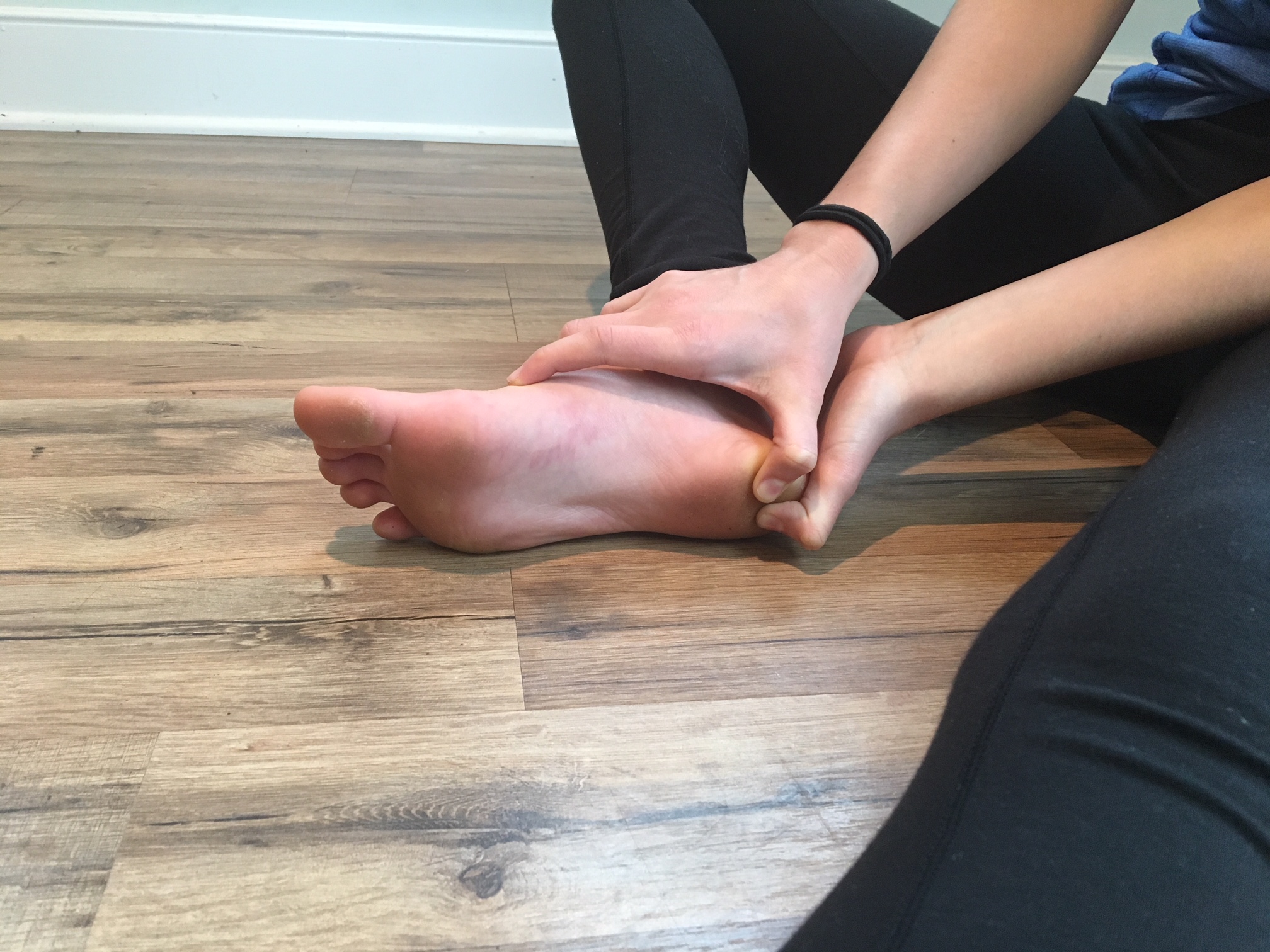 It’s just your imagination – this pain that you or your trusted practitioner has diagnosed as “plantar fasciitis” – because it’s impossible to have such a problem where there is just no fascia in the body! Ok, it’s not in your head, and naming an injury doesn’t by any means explain why you have the problem in the first place, let alone tell you how to go about correcting it, even if the name is completely wrong. You see, this area we’ve been calling “fascia” due to the connective tissue aspects of that tissue located on the bottom of your foot from your heel to base of your toes is really not fascia, but what’s called aponeurosis. An aponeurosis is a tendinous tissue expansion connecting muscle (in this case primarily the muscles coming from the lower leg), to the parts which they move (in this case the foot). This band of fibrous connective tissue can become problematic resulting in pain – maybe acute pain (i.e.“fasciitis” or “aponeurositis”) – or a chronic degenerative condition (i.e. “fasciosis” or “aponeurosis-osis?”).
Now that I’m through being grammatically and anatomically correct let’s actually get to what’s important – why your foot hurts and how to go about fixing it hopefully once and for all. Also, to sorta completely undo what I just said I’m going to go back to using the term plantar fasciitis. Why would I do this if it’s completely the wrong name to call it? Two simple reasons: 1) It’s what people still call it today and what they understand; nobody is talking about their aponeurositis. 2) This is a website, therefore I have to write according to the laws of Google so it, and all of its web-crawling bots, can see, identify, link, and properly score this article as something of value. People search for terms with the words “plantar fasciitis.” So it’s as simple as that; call me a sell-out.
The Muscles Involved With Plantar Fasciitis
Plantar fasciitis (PF), is when you have pain due to something wrong with that connective tissue on the bottom of the foot. Though typically in the heel region, it can be painful in the arch, or close to the base of the toes around where they bend. So since we’re talking about connective tissues, we have to look at where this connective tissue comes from, as that will help us identify and treat the problem successfully. The two muscles I find to be most important in PF are the tibialis posterior and the soleus.
Posterior Tibialis Dysfunction Stance
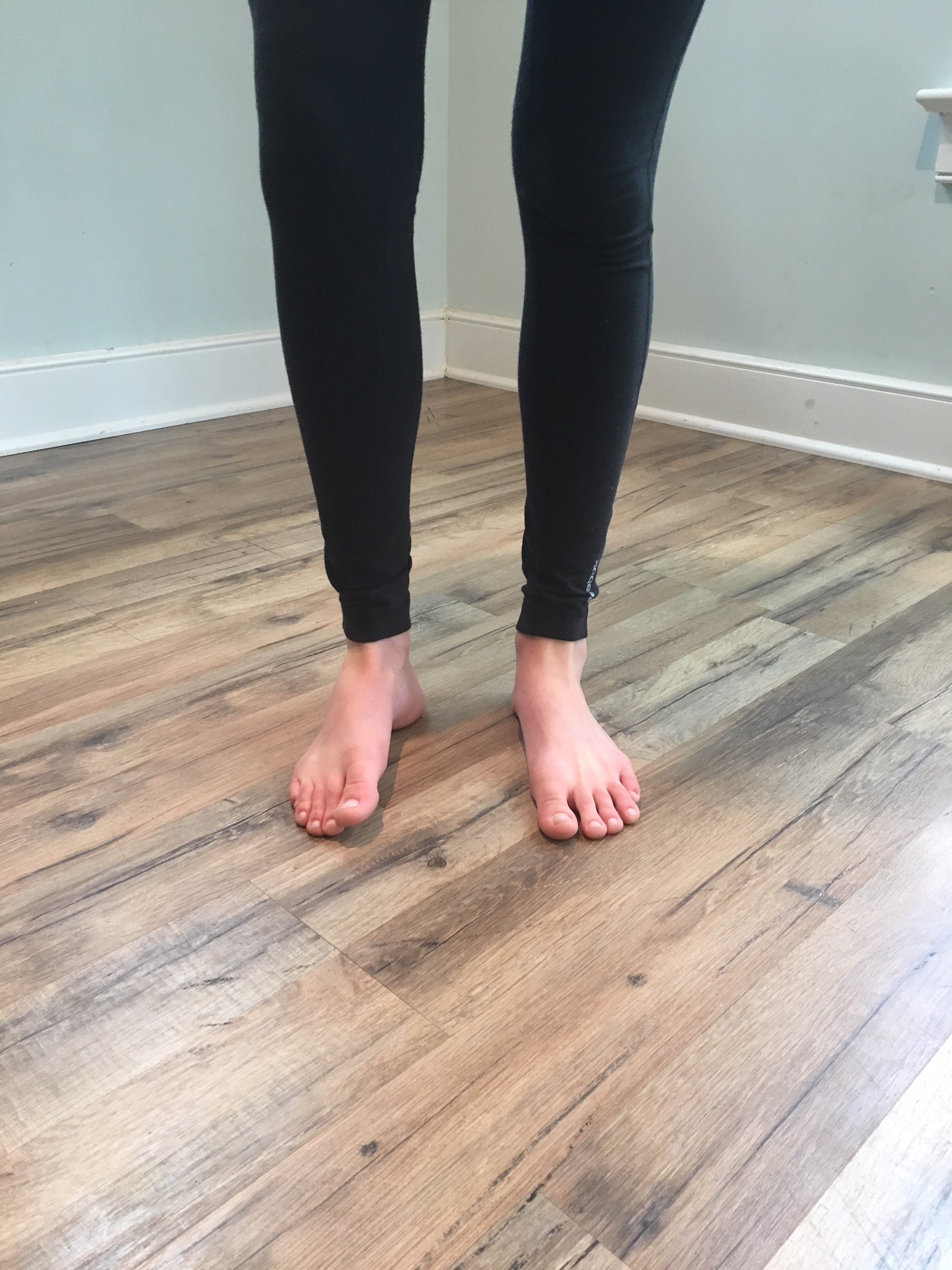
The tibialis posterior is a long sheath of muscle running from the upper part of your lower two leg bones (your tibia and fibula) all the way down to the inside of your foot into your arch and throughout much of the foot. It is significantly involved in proper foot pronation and ankle supination. Yes, your foot needs to “roll inwards,” or pronate during your gait cycle, especially when you run. Check out the plantar fasciitis video where I show the trigger points to look for along the tibialis posterior as like most ailments you have to look distant to where the problem (pain, in this case) is felt. So don’t mess around directly with that pain in your foot. Also note, as I show in the photo here, that if you have a fatigued tibialis posterior muscle you might lean towards the outside of your foot when you’re standing for a bit.
The soleus is that calf muscle right under and below your gastrocnemius, the upper and thicker calf muscle. The soleus eventually makes up that one tendon that everyone has heard of, the Achilles tendon. That soleus travels down into the tendinous attachments into your foot (yes, the aponeurosis). If your soleus isn’t functioning well you can get anything from shin splints, Achilles tendonitis, heel spurs, Morton’s neuroma, and plantar fasciitis. If your soleus is more of the problem you might feel more pain pushing off (plantar flexion of the foot), walking tippy-toes, and climbing stairs. Again, check out the video for trigger points for the soleus. Also, soleus problems can sometimes cause deep knee pain where tibialis posterior problems can cause medial (inside) or lateral (outside) knee pain due to its influence on lower leg rotation. Let’s move on.
Check out the new Sock Doc Plantar Fasciitis Video to see exactly where these muscles are.
The Reasons for Plantar Fasciitis
There are countless reasons for PF and no, it’s not a “runner’s problem” or an “overweight problem” or a “high arch” or “fallen arch” disorder. PF is essentially from one thing that results in many health problems from pain to many diseases – stress. Of course, saying something is from too much stress is sort of a cop-out because although not necessarily incorrect, it is rather vague. But, as I discuss many, many times throughout the SockDoc site, your feet are a great reflection of stress. In the case of PF, your feet are likely telling you that you are not handling your stress very well.
The tibialis posterior and soleus muscles are two muscles that are closely clinically related to respond to excess stress. The muscles will fatigue (weaken to some degree), resulting in perhaps a foot ailment (PF), or maybe a gait imbalance (and therefore sudden back or hip pain), or maybe some ailment like Morton’s neuroma since those nerves have to go through that “fascia” – or whatever you want to call it.
Plantar Fasciitis Natural Treatments
So if you’re too stressed out, whether from too much training (running, walking, lifting, swimming), too little training (sitting, sleeping, not moving), a poor diet (excess sugars, caffeine, refined inflammatory oils), emotional stress – or whatever the case may be – you just might end up with PF. Therefore, the way to really address the cause of the problem is to address that stress (or stressors) to help heal your PF, regain your health, and hopefully prevent your problem from returning.
But when you’re injured, local treatments are necessary as they’ll help speed up recovery and in this case, get you moving along since you’ll probably want to move using your feet. Just a guess on my part. So go get you a nice pair of orthotics (I’d recommend spending at least $499 on a pair, plus doctor visit), and put them in some super supportive shoes with at least a 24mm stack height – these will also make you look taller, helping you to make more friends.
Of course, it’s just the opposite here on SockDoc where plantar fasciitis natural treatments prevail. Orthotics will only, at best, temporarily “improve” your pain as your foot dysfunction only becomes more of an issue as your gait mechanics are further distorted and you “just somehow” have another injury in a few months or years later. Supportive shoes will do just the same – they support poor function (dysfunction), poor mechanics, and poor foot health. However, if your foot is just killing you, even to just stand on, some cushion is probably a good idea so you’re not in pain as you move through your day as pain is not only going to increase your stress level, but it will most likely cause more issues as you alter your gait to move away from the pain. So cushion a little, but don’t “lift” too much. If your soleus is the reason for your PF then you’ll feel better by shortening the Achilles tendon and that can be accomplished with a bit of a heel lift – 2-4 mm at most – not 1-2 inches, and just until you’re out of distress. You might consider equalizing the other side too, even if asymptomatic. Let’s not create new foot problems.
Check out the new Sock Doc Plantar Fasciitis Video to see how to treat these muscles using simple trigger point therapy.
Preventing Plantar Fasciitis
Preventing injuries involves integration of the health of your entire body, not just one part. So that’s back to stress – eating well, sleeping well, training well, etc. Just spend a few hours or days on sock-doc.com or drgangemi.com! (Not to increase your stress, but to understand how to live a more healthy life – just want to be clear there.)
To help prevent PF and other foot problems you’ve got to of course look towards the feet to some degree too. Strong, supple, healthy feet! The easiest way to begin to improve foot health is to be barefoot as much as you comfortably and safely can. No, don’t go running barefoot if you’ve been wearing shoes all day long, but start by moving around barefoot in your house, little by little. Read “Healthy People = Barefoot People” to learn more.
There is so much more to say about PF but I’ve said it before many years ago and it still holds true today. So check out my original plantar fasciitis article, as well as my original plantar fasciitis video and note that I still look exactly the same seven years later!
As always, thanks for spending your time on the SockDoc site. You’re better for it, and hopefully with this understanding of the importance of plantar fasciitis natural treatments your “fascia-aponeurosis-itis-osis” will soon be a thing of the past.
Dr. Stephen Gangemi "Sock Doc"

I'm a board-certified chiropractic physician and clinical nutritionist with a passion for true natural health care. I implement dietary & nutritional therapies, exercise & movement practices, and lifestyle changes along with manual therapy techniques to help the body heal and prevent illness and injuries.
Renee says
Thank you for this information. I am at my wits end with this pain, now on both feet. I have tried EVERYTHING! I just came out of a 3 week cast to “heel my foot”. Now two days later, the pain is back! I’m going to the chiropractor for an ajustment tomorrow as I have sciatica also. Just a hot mess right now. I will try your release techniques tonight. Wish me luck and any suggestions are appreciated.
Jose says
get out of shoes!! i was like this a couple years ago , i’m a server and a bartender , i’m on my feet all day , i’m not even overweight , i was really stressed out , try to relax more , eat well, walk barefoot as much as posible , also be patient , never give up!
Michael Howard says
Thanks for a most interesting article on PF (or whatever we’re meant to call it now). I’ve been a sufferer for about 6 months, with pain in my left heel and tendon probably caused by too much hill walking last year, and a ‘bumped foot’ in the bathroom in Sept 2017. My question for Stephen is: as well as identifying trigger points in the lower leg, is there any value in strengthening the soleus muscle? I suspect I have weakness in the calf area and am currently doing ‘heel raise’ exercises every day as a general cure all for my foot pain. I’ve also been picking up small objects with my toes and recently started to walk barefoot a little around the house. I totally buy into the ‘fallacy of orthotics’ argument by the way. Really interesting website and YouTube clips – can’t wait to see more.
Dr. Stephen Gangemi "Sock Doc" says
Yes there is value in that but only after the direct fascia/muscular issues are taken care of, with the trigger points. And I really feel that a lot of soleus strengthening can be accomplished via barefoot walking, running, jumping, moving.
Kenny Marklow says
I am on my feet much of the day. Please update your recommended shoe options as the one’s previously recommended – well, most of those, or at least many of them are no longer available.
Please be advised, I cannot wear the Vibram Five Fingers due to a webbed toe situation.
Thanks for all the updates!
Kenny
Dr. Stephen Gangemi "Sock Doc" says
https://www.vivobarefoot.com/
https://xeroshoes.com/
https://www.wildling.shoes/
Kim says
Any new recommendations for transition shoes? Not quite ready for the total minimalist shoes at this point.
Dr. Stephen Gangemi "Sock Doc" says
I’m still a fan of New Balance minimalist shoes for transitional shoes – particularly the trail shoes with a 4mm drop. Altras good too – they’ve got the cushion that helps people transition. (Altras are no longer a minimalist shoe today unfortunately.)
Janine Waugh says
Hi, I was wondering what do you think of lems minimalist shoes please?
Thank you.
Dr. Stephen Gangemi "Sock Doc" says
I have a lot of patients wear them; great shoe.
Rennur says
Your articles and videos are super informative. I can’t tell you how many times I’ve watched your previous “plantar fasciitis” video….we’ll, it’s as least as often as every time I have some type of foot pain. I rewatch the videos to refresh my memory as to which trigger points to target; and I’ll tell ya: the self-therapy techniques you encourage are SOOOO helpful. Thanks for putting out this info…now I’m going to watch the new “PF” video and see what other gems of knowledge you have to share!
Dr. Stephen Gangemi "Sock Doc" says
Thank you!
Wolfgang says
Dear Dr. Stephen,
so good to hear from you again ! I watched and re-watched and re-watched all of your videos, read every article. You’re the man, thanks for all the invaluable information you’re putting out for free.
All the best to you !
Wolfgang (from Austria)
Dr. Stephen Gangemi "Sock Doc" says
Very nice of you Wolfgang! Thank you!
Steve says
I found the trigger points in the calf and over the past 2 weeks my PF has lessoned. I hope over the next few weeks the points return to normal and aren’t painfull anymore
Ryan says
Hi Sock Doc. I just went for a run that was too intense for my current conditioning. After the run I took of my shoes and walked down my driveway barefoot. After about 20 meters I felt a tug on the bottom of my foot, right in front of my heel on the medial side. I have had steady pain going on 24 hours in this area (including the heel). I run in Xero Prios and Topo ST-2s, am barefoot almost all of the time and regularly practice mobility, etc. I have been living the barefoot/minimalist footwear lifestyle for 6 years now. I do have trigger points in my post. tib and soleus and need to address these more regularly. Does this sound like “plantar faciitis”? I’m going to follow all of your advice/exercises, but you never mentioned the use of ice. Should ice be used for the first 48 hours, if at all? Thanks!
Dr. Stephen Gangemi "Sock Doc" says
Hi – see this article, specifically Part II. https://sock-doc.com/sock-doc-first-aid-for-injuries/
Asna says
Hello!
First off wanted to thank you so much for being the ONLY person to get to the root of my problem. Suffered 7 years with PF. It was so bad and doctors said I had to wear shoes in the shower. Used to walk with a very supportive shoe in the house all the time. Stretched the crap out of my legs as well. Then I found you!! Went barefoot and felt lots of pain for a couple of months in lower legs (which was all the muscles working) and then was pretty much pain free!! Could not believe it. Went to Disney months later and by the end of every night my husband was complaining about his feet hurting before me and he has never had problems in past. (Told him to go minimalist)
Now all four of my kids are all hooked on minimalist as well. 🙂
Anways….I had started weight training heavy weights with trainer and did something to my left foot. Obviously stopped that for a couple of weeks now but my left arch and heel really really bad. It brings back bad memories and fear as well. What I am concerned about is doing the trigger point on the tibialis posterior but it is super super tender in the very very low part of the leg (by the ankle) However, the pain is just in the arch and heel not in the ankle.
I cannot do trigger point there as very tender and also feel some numbnes and tingling at night in that area and itching. Also big toe at night feels numb sometimes and itches a bit. This itch I got years ago when the pf was bad. It is like an itch that is very deep and you can’t get to it. Seems nerve related. I got worried that it is tarsal tunnel and when doing Tinel’s test I feel tingling and some pain.
My question is: what should I do with lower part of tibialis posterior? Should i still massage it lightly and hope overtime gets better? It is definitely inflamed when press on it but pain is in arch and heel. Feels like tightness sometimes in arch even when sitting. I am doing the stick on calves as well and getting my husband to use his thumbs for trigger point.
Dr. Stephen Gangemi "Sock Doc" says
Glad to hear you’re feeling better and the kids are wearing minimalist shoes!
You might look for a different trigger point away from that pain – check behind the knee (tip and fib area) as I show in the video rather than the other end by the ankle.
Asna says
Thank you for your response. I stopped massaging the lower leg area and it is a bit better. Doing more trigger point work on upper calves and behind knee area.
Kellie Moeller says
What if I am told I have a plantar fascia injury because I fell 12 feet from a ladder and landed on my feet? How can I best allow it to heal.
An orthotic was recommended, no pushed, after 4 weeks of walking in a boot.
I have minimal pain at this point and the bruising on the bottom of that foot is gone.
I don’t really think I need the orthotic but today had a day on my foot a lot and it is tender.
Any other suggestions for helping it heal?
Dr. Stephen Gangemi "Sock Doc" says
The same principles still apply for that type of injury, but the extent of what may need to be treated is most likely beyond the foot. (There are probably knee, hip, back issues most likely affected by the fall that should be evaluated by a qualified practitioner.)