 Consult with
 Sock Doc Workshops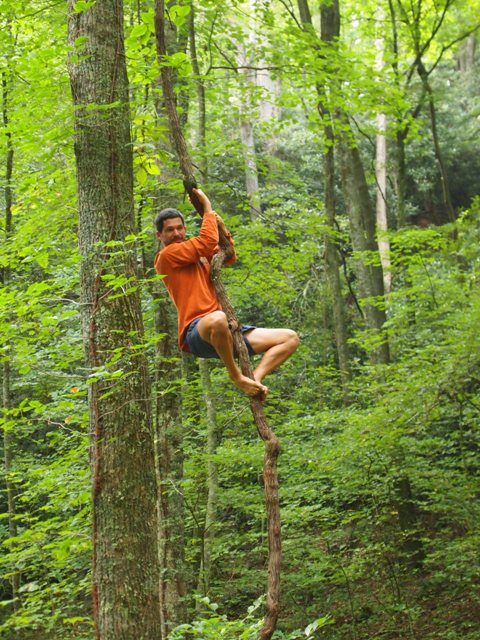
Climbing Definitely Easier Barefoot
Humans should be able to function barefoot from birth until death, (barring some birth defect, infection, or trauma of course), though sadly many people are unable to run, walk, or even stand for even a few minutes barefoot without discomfort, pain, or general uneasiness. Many people have essentially lost their ability to support themselves without support, (shoes or shoes with orthotics), either because of poor biomechanics or an underlying health problem. I’d like to think at least walking barefoot is possible for everyone but realize this unfortunately is not always the case and is even more of an unrealistic expectation for those wishing to run barefoot. Sure there are obvious health problems such as people who are diabetic with neuropathy who may need something under their feet, but many other people with various health conditions cannot shed their footwear because they need the support of their shoes or else their feet will ache, hurt, or even become injured.
Is Barefoot for Everyone?
I don’t think there is a debate on how we were meant to run, or even walk for that matter, but immediately switching back to barefoot the way our ancestors were living millions of years ago is often not a wise idea. Humans are not meant to over-stride and land on their heels when running which today’s typical shoe promotes. Even while walking, typical footwear will elicit more of a heel strike, extended stride, and an unnatural and inefficient push-off with the foot. A minimalist or barefoot walker will land softly with a shorter stride and efficiently roll off the foot.
Modern life has also changed how we move and of course, live our daily lives. In addition to the harmful influence of modern walking and running shoes, common daily stresses such as long work hours, family demands, and poor food choices have created unhealthy changes in most human feet which further contribute to gait disturbances and other body aches, pains, and ailments.
Health is not merely the absence of some pathological disease. Many people think they are healthy but often they are not as healthy as they could be. Do you sleep well throughout the night without awakening and then wake up feeling refreshed without aches and pains? If not, I’d define that as poor health. Do you take any medication – whether it’s an anti-inflammatory, hormone replacement, a drug to wake up, to go to sleep, or to have sex? Taking any medication is a sign of some health problem, (though they are sometimes necessary). Do you lack physical and/or mental energy during the day? How about your digestion? Are you one of the many women (and sometimes guys) like those I see in my office who think it’s normal to have a bowel movement just a couple of times a week? That’s definitely not healthy. Do you need to wear an orthotic in order to walk without pain or need some form of traditional footwear with support and “cushion” so you can walk, stand, or even exercise? If you do you’re definitely not healthy from my perspective.
A healthy person may not wish to go barefoot, but they should be able to. Sure if they’ve been wearing traditional shoes for some time they will need to transition into barefoot, but a healthy person can achieve this (and should, to further improve their health). An unhealthy person may be able to achieve the same feat, but it will be much more difficult for them and for many, impossible. One has to work their way towards health and to barefoot; they are both processes. For many, neither may be easy. Health and barefoot complement each other; it is much harder for an unhealthy person to be barefoot for a prolonged period of time or to the degree of a healthy individual, (such as running and jumping un-shod).
A barefoot or minimalist person still may have health problems, but I’d say overall less of these individuals do than those who wear the typical thick oversupportive shoes and especially orthotics. For those of you who may think that going barefoot does not have a significant impact on how you move and feel during the day I would ask how many of you are actually barefoot for a prolonged period of time each and every day? I have yet to meet a person who is often barefoot and no longer wears the typical shoes we see today who has not told me that they feel more vibrant, agile, and overall body awareness than when they were shod.
There’s More to Barefoot than Just the Feet
Each foot is home to thousands of nerve endings and the information they receive and pass on to the rest of the body is anything less than extraordinary. When your foot feels the ground, (or whatever is below it, including any footwear), the thousands of touch receptors in the nerve endings feed back to the rest of the entire nervous system. Since your nervous system runs your entire body, any foot impairment, dysfunction, injury, pain, or improper footwear can not only hinder you directly, (such as lower leg function and balance), but your entire health.

Sock Doc Kids – Ava Mae and Paxton Usually Barefoot
Walking or running barefoot is an ideal way to improve your proprioception (sense of position) and kinesthetic sense (the feedback your nervous system receives from your feet). Natural, unaltered motions of the human body provide optimal neurological input and increase blood flow to the brain improving the health of the nervous system. This increased blood flow provides more nutrients and oxygen to the brain and essentially the entire body thereby improving the health of the un-shod person. This is especially important in a developing child and is why a child should be barefoot as much as possible, inside and outside.
Barefoot Won’t Cure Cancer or Other Diseases, But it May Improve Your Health
There are some people with health issues who have no foot or leg problems, balance issues, or any body aches or pains. Are health problems and foot problems always related? Of course not. Do the feet always need to be examined and treated to get the person well from their ailment? Not necessarily – that depends on the individual (but examining foot health should be standard). The concept here is more that if you have a health problem yet you feel like your feet are already in excellent condition, then perhaps you can help your health problem by going barefoot more, (or start to if you’re not already), because of the amazing connection between your feet with your nervous system, fascia, and gait. Though, to reiterate, this type of person is rare, and often I find that once the person does try to go barefoot, they cannot, because they have lost their balance or perhaps they experience pain. They had a problem all along, it was just being supported (masked) by their footwear or perhaps an orthotic device.
But more often the feet will tell you how you’re doing overall from a health perspective. Regardless of where the problem is, the feet will eventually pick up on it. Listen to what they have to say. Often they’re telling you that you’re unable to deal with the amount of stress you’re under. This stress could be emotional, such as family issues, work stress, or expectations you or others have. The stress could be chemical/nutritional, perhaps from a diet high in refined carbohydrates, too much caffeine, artificial flavorings, smoking, or environmental toxins. The stress could be physical from an injury – not just one you perhaps sustained last week but even one from when you were five years old! Your body can remember many of those injuries, regardless if they still bother you. They can and do affect fascia, gait, and the nervous system. The physical stress could be from something on your feet you shouldn’t be wearing. Often people have an accumulation of many stressors and they build up over time. They still feel healthy, though their body is slowly trying to adapt to the stress and compensate as more is added. Eventually you wake up tired every morning, or go out for a run or walk and your knee starts to hurt, or you get indigestion when you eat. Traditional medicine is great at diagnosing what is wrong with someone – the end symptom, you may call it. You have “chronic fatigue” or “restless leg syndrome” or “tendonitis” or “GERD”. They all sound so intriguing but they do absolutely nothing to resolve the problem. This is because it is always more important to diagnose the processes gone awry that lead up to the symptom(s). Often there are many processes that must be investigated and treated accordingly.
By wearing over supportive shoes, arch supports, orthotics, or other devices, the person who has lost their health is only masking symptoms. It is symptom orientated – not a true correction of the underlying problem. I get a chuckle when a natural health care provider who touts themselves as “treating the cause and not the symptom” puts their patient in an orthotic. And let’s not be misled to think that “fallen arches” and flat feet need orthotics, they don’t.
Should You Venture Into Minimalism if You’re Not Injured or Having Any Problems?
If you’re not injured and could care less about performance should you get out of your traditional footwear or running shoes? Though many advise just to keep doing what you’re doing I don’t support that position. You will only truly be sure if your feet and other areas of your body are strong and healthy if you venture out of your footwear. If you have trouble doing so it’s an indication that there is a problem you’ve been supporting just as if you were not having elbow pain every time you played tennis because you wore a brace, for example. Just because you don’t have pain, weakness, or discomfort doesn’t mean a problem is not there. Ask yourself WHY you can’t be without your supportive shoes or supportive foot braces. This doesn’t mean you go barefoot right away, but you should enter the realm of minimalism just to get an idea of where you’re at. Stronger feet and lower legs and more body awareness are definitely possible the more you are barefoot.
A healthy individual can be barefoot, (baring some injury to the foot), and they can further improve their health, fitness and overall well-being. If you have a health problem or an injury, investigating the minimalist and barefoot approach may be an essential step in your recovery, and further prevention of that or another problem. As mentioned earlier, barefoot isn’t going to cure a disease you may have –but it most likely will have a noticeable effect on your health and well-being. And also as mentioned earlier, if you don’t think it can have such an effect, how do you really know unless you’ve tried it?
Ready to Make the Change? Transition to Minimalism and Barefoot
Yes, too many people are getting injured by switching from their current footwear to minimalist footwear or even barefoot. This gives the traditional medical doctor, podiatrist, or therapist reason to believe that humans today are not meant to be barefoot and we need to protect our feet with more supportive shoes. I get a fair share of hate mail from these people who think that because we don’t live in wild jungles we need support on our feet to get through the day on our “unnatural” surfaces. Though of course I don’t agree with this, the typical unhealthy person and/or person who has always worn supportive footwear or orthotics can’t just make the shift so drastically. Many of them do, and they get injured, so these doctors and therapists see them in their office and rather than educate the patient on overall health (diet, lifestyle, and foot care), they convince them that barefoot is evil and humans need shoes all the time. This is pretty sad in my opinion, but it’s the standard of our health care system.
You must transition to barefoot slowly and carefully, so you do not become injured. There is no rush! Start just by walking barefoot inside your house as much as you comfortably can. If that’s painful then you can start with a minimalist-type “transitional” shoe and eventually work out of those to barefoot. It’s okay and often advised to alternate between your current traditional shoes and a minimalist shoe/barefoot if you have pain. If you’re wearing orthotics, talk to your prescribing doctor about getting out of them so you can walk naturally again and not support your dysfunction. If that doctor doesn’t think that’s possible for you to rehab your feet in such a way then personally I’d find another doc, unless your situation truly warrants a supportive device (very rare). If you’ve been wearing supportive shoes with orthotics for years the transition is going to take time.
Once you can comfortably walk barefoot then work on balancing (one leg at a time) barefoot too for several seconds and then a minute or so at a time. Hard surfaces (tile, hardwood) are okay and advised!
Once you’re walking barefoot and balancing well inside comfortably then venture outside onto hard, smooth surfaces such as your driveway. Slowly build up time as you comfortably can. Eventually make your way to other surfaces such as grass and gavel. Of course make sure these areas are safe to walk on. If barefoot is bothersome to you outside then use a minimalist shoe at first. Remember that different shoes work for different people! Check out some of my recommendations for transitional and barefoot-style shoes here at “Lose Your Shoes!“.
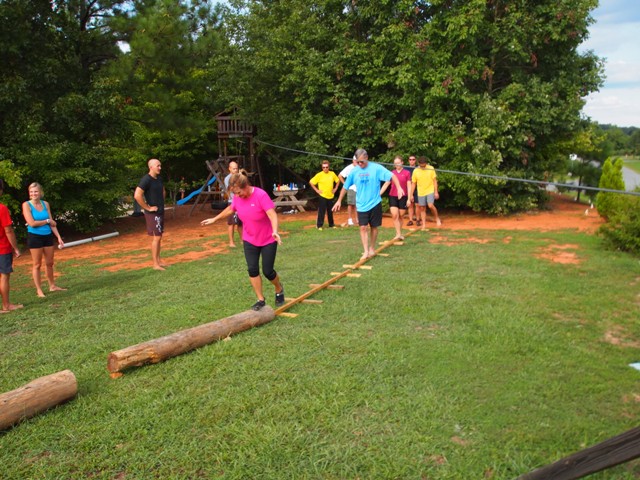
Barefoot Balancing
Once you’re walking barefoot outside comfortably then try a bit of barefoot running on a flat, hard surface – not too much at first or you’re likely to develop sore feet and calves very quickly! If you’re not a runner then a minimalist shoe will be more appropriate at first or you should just stick to walking. If you don’t want to or don’t like to run outside barefoot then that is perfectly fine. But do your best to get into a minimalist shoe or “barefoot style” shoe. Continuing to walk barefoot outside, and especially inside, as much as you can, is advised.
Watch the Sock Doc Video on how to properly strengthen your feet and lower legs.
Proper Shoes For A Healthy, Fit Body
If you’re a runner or avid walker then while introducing this barefoot program into your daily routine you should also be transitioning out of your current “necessary” footwear into minimalist-type shoes. Think flat, firm, flexible, and wide. This means that the shoe should not have a significant, or any, heel to toe drop, (if you’re coming from a thick heel you will not want to go to a zero-drop shoe immediately), there should be little to no cushion or padding in the sole, and the shoe should not be rigid anywhere – it should bend throughout the shoe and in any direction. The shoe should also be wide at the toe box allowing the toes to naturally splay apart.
Finally, don’t go back to your old shoes! The only unfortunate nuisance of barefoot and wearing minimalist/barefoot-style shoes over time is that the typical shoes you were wearing will soon be very uncomfortable on your feet and you’ll need new footwear. Even a 4mm drop may be uncomfortable to an often-barefoot individual. It is for me.
Check out my power point presentation on barefoot and minimalism!
Good health may not always start with the feet, but it always involves the feet!
Dr. Stephen Gangemi "Sock Doc"

I'm a board-certified chiropractic physician and clinical nutritionist with a passion for true natural health care. I implement dietary & nutritional therapies, exercise & movement practices, and lifestyle changes along with manual therapy techniques to help the body heal and prevent illness and injuries.
Max (Barefoot Mecki) Manroth says
Hi Steve,
found this brilliant article by a link which Tracy Longacre posted on facebook.
Would you mind me translate this article into german?
Best regards from Dortmund/Germany
Max
Sock Doc says
Yes please do and share here; thank you!
cody says
awesome article doc!
also, what is your stance on things like correct toes, yoga toes, etc.
since you’re not on board with stretching, and i’m with you on that one…
knowing that my toes are messed up is seriously bugging me….going barefoot myself the last two years and not seeing an improvement is frustrating
Sock Doc says
Thanks Cody, yes I like Correct Toes a lot; they’re the only ortho-type device I use in my office. I mostly use them for halux valgus issues (that’s when the big toe turns outwards towards the other toes, often resulting with a bunion), though they have other applications. If your toes are “messed up” you should give them a try – I don’t see how they could hurt. Dr. Ray and his staff are great at answering any questions. https://nwfootankle.com/correct-toes
cody says
i’ve looked at those and thought about it, although money is kind of an issue, it seems like they don’t allow toes to move much while moving around
buuuuuut
i thought it might be better to just wear something like that, or anything like it, while sleeping, then take it off during the day, i’m thinking it would be easier on the foot, allowing the push toward a more natural position while not sacrificing toe movement
Sock Doc says
CTs don’t restrict natural movement and the more you wear them the better success you’ll have – especially weight-bearing, which includes running.
cody says
hm, i WAS over thinking it…thanks for the info
and thanks again for the speedy replies!!
Rick Nagel says
Doc,
I am a successful Barefoot runner/sprinter and walker. I wear shoes only when I have to.
I enjoy running distance on Concrete as it feel like running on a cushion of Air, “beautiful.”
Grass is great to in its own way. Sprinting and running on Track too.
“I have no need for shoes at all,” and when I do wear them, I wear NBs Minimalist shoes.
Vibrams will not work for me, “sorry Vibrams don’t need ya.” I am 55, 5’6″ and 200 lbs.
I came to Barefoot of my own intution and empiracle experience. I hope to run Marathon Barefoot and compete in Sprinting barefoot. I also do Power lifting Barefoot.
Thank you. RN
Sock Doc says
Awesome Rick, thanks for the comments. I love running on concrete too. You’re a big guy! – proof that you don’t need shoes to “cushion” you as you run.
Nickie Barnard says
This is fascinating and just confirms the belief I’ve held most of my life. I spent much of my childhood and adolescence barefoot, mainly because we couldn’t afford multiple footwear especially whilst growing and I didn’t want to spoil the good shoes at play, and I only ever fell or tripped when wearing shoes. I was able to run across a pebble beach without hurting because my feet seemed to have a brain of their own and instantly adjust to avoid injury. I believe this sense is impaired when feet are enclosed in bulky trainers and to this day wear thin soled jazz shoes when not dressed up in posing clothes.. I can imagine that running is addictive once you get in the zone but I am a dancer and, frankly, running would be a waste of dance time. I was slightly pigeon toed because they were curly from birth but, in striving to perfect my dance technique, I worked on spinal posture and a little trick to keep the feet straight under the centre of gravity which resulted in the drive always from the rear foot and minimal impact on the leading heel. After doing this for a while my toes straightened. Never completely – too late for that – but really noticeable. I can understand how your feet can cope with running on concrete but why would you? The little running I have done was on track or, better, on earth or grass which apparently gives some beneficial electrical charge.
You give some really great advice and I.m sure it’s because you actually experience your body which I think many doctors never do. I found you whilst researching adrenal issues and I just wish the endo’s here in the UK knew as much as you do. Thanks a lot.
ray mcclanahan says
Great informative article Dr. Gangemi! Thank you for addressing many of the important issues surrounding natural foot health and development. Very solid education! Thank you!
Ray McClanahan
Sock Doc says
Thanks Dr. Ray! (inventor of Correct Toes)
Kaela Kidd says
Dr. Gangemi,
HI. I recently found out I Have scoliosis, backward curvature of my neck from whiplash, miss matched superior articular processes, and a rare condyle that puts a lot of pressure on my brain stem causing severe headaches. I have always been barefoot (30 years old now)- only wear shoes when I have to. My chiropractor is pushing for me to wear arch supports and shoes ALL the time. I feel so strongly against it, it made me cry. Do any of my conditions warrant the use of SHOES and ARCH supports? I LOVE to be barefoot. I can’t fathom not feeling things beneath my feet. He has also found out that my husband has a 1/4 inch shorter leg and has him now wearing a shim and arch supports all the time. I have been slowly transitioning my husband to no shoes in the house or in the yard. With the shorter leg, Is it necessary for him to wear the shim and arch supports? I am confused a bit because my Dr. talks about allowing the body to heal itself, I truly feel that bare feet are a necessity. How can I help my husband? By the way, my husband d has “naturally” flat feet. I know yo must be busy, but if you have any advice, it would be greatly appreciated. I feel like my whole world has been riped from beneath my feet- literally.
Sock Doc says
Unless someone is forcing you to stay with that chiropractor I’d suggest you find one more in-line with your way of thinking.
Jen says
Hello,
I bought some minimalist shoes for the first time last week. I have been wearing the Ghost by Brooks up until this point, but I have decided to try the “barefoot” approach that you describe. I have orthotics, which I have been using in my Ghost shoes as well, because they were prescribed for me by a foot and ankle doc due to over pronation. However, since I still experience pain in my ankle even with the orthotics, I decided to try this minimalist approach with no orthotics to see if it will help. I’ve run 3 times in my new shoes. They are also by Brooks. (The Pure Flow.) I like them because they feel good, but I’ve noticed that my legs become very fatigued half way through my 5k. Today I actually fell down, after tripping over a rock that was embedded in the dirt. The last time I wore these new shoes I almost fell as well, in nearly the same spot in my run as where I fell today. (I was almost finished with my run.) I don’t feel that this is a coincidence because I’ve never tripped in my Ghost shoes. Do you think the structure of the shoe is so different compared to my other ones which is causing me to trip? Do I just need to get more used to these shoes before I completely write them off? My knees and elbows are torn up pretty bad. But I would be willing to hang in there if this is just a warming-up period, and will stick to the pavement in the interim if I can. Any thoughts that you have would be appreciated. Thanks!
Sock Doc says
It’s usually not a good idea to suddenly go from your usual over supportive conventional shoe with orthotics to a more minimal shoe without orthotics. The shoe is not the problem here, your foot is. That’s why they’re fatigued – you have weak muscles that have compensated for your footwear over time. Read:
https://sock-doc.com/2011/09/unnecessary-orthotics/
https://sock-doc.com/2011/05/overpronation/
Daniel says
HI there i have a friend who has a hammer toe and it really effects her, causing her lots of pain. What do you recommend for her? She has tried five fingers, yoga toes and daily stretching.
Thanks
Daniel
Sock Doc says
Well not stretching, right? (Say ‘yes’.) I’ll eventually do a video on the foot but for hammer toes it will be similar as the plantar fasciitis info – so check that out. Correct Toes are also better because you can walk/run in them – good rehab.
Bryan says
Hey Dr. Gangemi, I came across your sights last night while researching carbohydrate intolerance (My 18 month old has shown intolerance reaction to Formula/Milk since birth) and I have this extremely informative. I am actually now realizing that I have hereditary carbohydrate intolerance issues passed down from both parents and now understand why even during training for the 11 marathon’s I have completed I have never really been able to get to get to my goal weight. I appreciate all of the information including this discussion on barefoot running thank you very much for sharing. I have two questions for you:
I have seen numerous barefoot runners go flying past me during marathons(along with blind people and little kids!) and understood immediately how this could be an effective way to run properly and help avoid injuries. I normally train on trails and live in the city with 2 dogs who constantly leave their mark on my yard. I believe a minimalist shoe outdoors will be the safest option. Does ankle support(a slightly taller shoe) for trail running go against the principle?
My father had spinal stenosis fusion surgery last year. Although his back feels better there is nerve damage in his feet (Docs haven’t really found the cause) which makes him uncoordinated when walking. He exercises, eats low carb, and is healthy but is skeptical about regaining strength in his feet and toes. I said he is barefoot a lot at home but do you think less shoe support outside of the house might help his Peripheral Neuropathy?
Sock Doc says
Hi Brian.
For Q#1 – why would you want ankle support? Those are not good for the body. Keep the running footwear off your ankles.
Q#2 – Peripheral Neuropathy is perhaps one of the only exceptions to going barefoot. He needs to be careful. If he can’t feel various parts of his foot, then he will not be receiving the sensory feedback from the foot – so not only are the benefits of going barefoot somewhat lost, but he could hurt himself. I’d still say less support for a shoe, but depending on the individual situation, he might want to always wear shoes outside.
hannah says
hello I am a 38 year old returing athlete with a hip rotation and a pelvic tilt problem and i have an adjustment at the chyropractor and within sometimes only one week i am rigid and my alignment is out again.He thinks he can permantly correct my problem within just 3 more visits ( new chyropractor)
I am training pretty hard twice per day for the 5km event, currently in about 17.30 shape.
I am using a 5mm heel lift in my right shoe scince march. do you believe i should take it out and if so how can i lengthen the time between visting my chyro as i cannot afford this and i want to be healthly so i can return to a high level again and run low 16s for 5km without being so stiff and running lopsided.
Thank you kindly ,your help and advice is appreciated.
Sock Doc says
I cannot say whether you need the lift or not but as you know from reading my info on orthotics, I’m against them. And remember that overtraining will cause muscle imbalances and that’s what will tilt your pelvis (not just “bones out of alignment”). Nice 5K time though!
hannah says
Dear Mr Doc Sock,lol
I apologise but i lost your comment as I have more brains in my feet then in my mind.I have been training well and I have been recieving chyropractic treatment out here in Spain.I havent worn my heel lifts for aproximately 2 weeks but I have been using just the padded insoles with no heel lifts but has a padded area under the toes ( metatarsal).
My question is why do you think I feel some discomfort and pain between my achilles and my outer ankle and I feel I do not put my left foot down properly when running fast,when I dont wear my 5mm heel lift in my right shoe?
I appreciate any suggestions/comments you may have and I would really like to know if you may be interested in sponsoring me ( low key) after I prove myself with some decent times in the 1500, 3000m ,mile 5km road and 10km road while out in Europe from September 2012?
I am canadian with european residency. I have taken the liberty of pasteing the link of my first low key road mile in Tenerife june 16th 2012 after being injured.It was 5.24 for the mile, I wish I had better competirs to run faster. Please can can you comment about my form and posture during this mile and I did wear my 5mm heel lift for the first time in my life in a race..Please forward the you tube video to 5minutes 40 secs.I have yellow shorts and shades on and I am front running on my own bib 17
http://www.youtube.com/watch?v=BQEkQ25U5zI&noredirect=1
Is it possible that my hip rotation ( causing pelvic tilt) is not from overuse/ injury and that it may indeed be partaily rectified .
thank you so much Hannah.
Sock Doc says
Your right foot lands midfoot and your left is heavy on the heel. So you have a major gait imbalance and that’s going to give you pain. Hard to say exactly why you have the imbalance.
I’m completely against heel lifts (https://sock-doc.com/2011/09/unnecessary-orthotics/).
*Sock Doc is perhaps the only FREE site you’ll find where there’s no banner ads, nothing to buy, nothing to sell, and nowhere to join. Sock Doc needs sponsorship 🙂
hannah says
Dear Dr Sock,
Thank you for your comments and analysis and too bad but never hurts to try to ask for a sponsor!
So I ran the mile with the heel lift in my right shoe, could this effect how my foot lands in a negative way if i dont infact need the heel lift?
Scince then as i mentioned ( 2 weeks a ago I havent ran with a heel lift)
I still have pain and its very frustrating as I felt less lopsided when i had the heel lift in my right shoe.
Are you also against just using pads under the forefoot for toe off and improving my gait? any recomendations please?
I am improving lots but its very hard to recover and my ligaments in my left outside of my ankle tend to be sore quickly and inflame a bit.
It makes me very sad as I believe I can run much faster for longer but I need away to improve my gait, be it via suggestions from you of exersizes or /and maybe if you aprove some type of good gait device for inside my shoes.
I really cant tell you how much I apprecaite your help as I believe I have the chance to be so much better as a runner.
Hannah
Sock Doc says
The heel lift can cause a problem in either foot – right or left.
I’m okay with pads if they are helping someone get over an injury. Otherwise they should not be used. There are exceptions. But if you are one of the rare exceptions then you have to be certain they are not making gait worse.
hannah says
hello thanks for your comment.
I was considering running with no heel lifts or toe pads from Monday after my next chyro practic visit.
what do you think of my trying to run with a universal 1mm noenne insole to help with the impact as my hattori racing shoes have a zero drop and i am not used to it as i have been wearing the metatarsal pads and i am very heavy on my feet?
how long should i give it before driving you crazy to see how my gait is with no heel pads? what happens if i do soem training in zero drop shoes and some in minmialists shoes?
thanks Hannah always runing tough
Sock Doc says
You transition as quickly and as comfortably as you can.
hannah says
Hello dr sock hope you are well.
i am training very well and have another question, hope you can maybe answer this.
I usually train some tempo runs so 5milers in my saucony hatori zero drop shoe. I also race in them.
If i wear my metatarsal pads ( part of my insoles) is the shoe still a zero drop shoe or does that change it signifincantly as i think the pads under my toes are about 6mm at the highest point and squish down to maybe 3mm ?
would this make it a negative heel to to toes drop and make my gait worse or would it be ok and not as severe transition from an average of 5 to 6mm drop shoes i usually run in to these hatoris
oh i do wear my spikes on the track and i am not sure what is the heel to toe drop.
thanks kindly hannah
Sock Doc says
It may do that somewhat. Hard to say without seeing – but sure it could be altering your gait.
hannah says
Hello Dr Sock hope you are well,
its the canadian runner agian..so i am running an easier week and without heel lifts or any insoles with toe pads. the week began ok but now on day 4 and today day 5 my left foot is hurting around the inside ankle between the heel and the arch.
I am going to be running with noene thin shock absorbing insoles from Satirday or monday..will this help me as i am feeling sad as I am finally really improving my running but when i do any slower recovery runs 7.45/9.45 min mile pace and for the warm up and warm downs of fast workouts,my left foot hurts really bad but not so much when i do fast stuff.
do i countiinue to only wear the insoles with metatarsal padding just for recovery runs and warm up warm down rather then quitting them completly, will this be a helpfull comprimise for my foot?
I am pretty desperate to find a soloution so i can be back into 16.30 shape for my 5km, right now i am scared to hit a wall with my foot hurting so your advice is incredibaly positive for me.
many thanks Hannah
Sock Doc says
I can’t make that call for you. But if you have pain between the ankle and arch that is most likely your tibialis posterior muscle which I discuss in the FOOT PAIN Video and the PLANTAR FASCIITIS Video.
tom says
Anybody notice this anit-barefoot orthodic salesman using this sock doc article out of context?
Sock Doc says
Who?
tom says
It was in the trackback yesterday but I don’t see the trackback today.
http://mygoodfeet.com/2012/07/25/what-to-wear-shoes-flip-flops-or-barefoot/
I guess we all need to pay the bills.
Sock Doc says
Yeah I saw that and that’s what I thought you meant. So I deleted it. Thanks for the heads up. Sometimes they get by me – Sock Doc is a one-man show. 🙂
Ben says
Hey Sock Doc,
First off, thank you so much for making all of this information so accessible. I found your site about 2 weeks ago after realizing that past 6 months I’ve spent trying to heal my Achilles Tendonitis hasn’t been working (boot/crutches, orthotics, physical therapy, 12mm running shoes, stretching – the works)
So after finding your site, I ditched the orthotics, stopped stretching, got The Stick, and bought a pair of Nike Free Run + (8mm), cut way down on caffeine, sugar, white flour. I’ve been wearing the Nike Frees non stop outside the house, and started walking barefoot when I’m home. I started balancing barefoot at home, and doing some strengthening at the gym in the nike frees, but then I started feeling pain in my heel bone just underneath my ankle on the outer-portion of my foot (calcaneus?). It’s gotten a little worse over these past few days, it hurts when I walk barefoot, and it’s much better in shoes, but I sometimes get a ‘numb’ feeling in my heel. Is it possible I’m transitioning too quickly?
Thanks
Ben
Sock Doc says
Thanks Ben and nice work turning everything around for the better. You’ll want to look for trigger points in those calves as I show in the Achilles Tendonitis video and the Foot Pain video too. Probably the points are 1-3″ up from the heel area where you feel the pain. Could be elsewhere though.
If you have less pain in the shoes then stay in those until you’re pain-free. No need to rush it though. It sounds like you’re getting some Achilles issues just in a different spot as your tendon adjusts (it naturally lengthens with less drop in a shoe). Compression socks can help a lot here too.
chiclet says
So I have been following your approach on barefoot walking. It has been 2 1/2 months now. I walk barefoot at home (forget running..not there yet) I find after a while (30 min) arch hurt as well as heel. Sometimes calves start to feel really tight. Now, I know you say stretching the calves is useless and I have completely stopped that but they feel soooo tight after walking for a bit. When it hurts like this, I sit down and do “The Stick” or Foam roller which does help. My questions is am I headed in the right direction…I was in orthopedic shoes for 7 years every minute I was on my feet. Now, I do find that I can walk a it longer periods pain free..but not much. Before 3 minutes would be too much now I can go 15- 20 minutes pain free. I also get some pain in the inner ankle (posterior tibialis) area after a while.. Just want to know if you think I am headed in the right direction and this pain and discomfort I am feeling is normal…
Sock Doc says
Yes you’re headed in the write direction but probably more going on due to the slow progress. Most likely you have weakness in the feet and calves for other health issues (old injuries/diet/stress).
chiclet says
Thanks for the speedy response..much appreciated! Yes I have been following your diet.. I was totally doing the opposite thing..skim milk..no eggs ..EVER…just egg whites and was so concerned about cholesterol and also cutting my meat intake and having lots of whole grain bread. Now that I am doing this paleo type diet I feel better and have lost a couple of pounds, which is nice. Actually it’s funny because when I came across your website I had also started reading this book by a cardiologist called “Wheat Belly.” His diet is very similar to yours…lots of coconut milk, eggs, nuts etc.. You have so much knowledge in health and nutrition..I just wish I had found your website seven years ago!! Thanks again, Sock-doc!
Debbie says
This is funny to me because I have always been a barefoot person. My children who are now 10 & 12 never wear shoes unless they have to. My son said “yeah, I have my shoes on, they are the calluses on my feet.”
We drove 2 hours with friends to IKEA and when we got there he realized he didn’t wear or bring any shoes!
I have been jogging for almost a year and not long distances. I usually jog on a hilly terrain and have been having trouble with my shins feeling sore and bruised. Also, the area above my heals around the back of my foot feels like rubber bands pulling. When I would attempt to stretch or down dog they would really pull. Yes, now I know the stretching is doing no good.
I had gone from Brooks, to Saucony and then Mizuno as they suggested at the sneaker store. I had to stop the Mizuno for a while because I was having lower leg pain. At that point I had to stop jogging for a while. I then went back to Saucony and now I have been jogging in the Mizuno for about 4 months. The foot/ shin problems are back again. Otherwise I feel better than ever!
Since I am typically barefoot otherwise I was thinking I could go to a minimal shoe. I am 5’6″ and 180lbs. Attempting to lose some weight but yet a med/large frame I feel comfortable around 150.
What would you suggest so I can keep on track? I have become to enjoy running/jogging!
Thanks:)
Sock Doc says
Right now you have to find the footwear that works for you so you are pain-free while running. If you can’t find a pair, then it is most likely something structural – muscle imbalances – that need to be looked into as I show in the respective videos. Stay barefoot as much as you can otherwise.
Deb says
I have gotten the Lucy Lites and love them. I know you are supposed to gradually move into them but since I am barefoot most of the time I did 2 miles the first day. I actually am able to jog about 3 miles without any problems at all. I have had a little soreness in my calves after I decided to do a little too much. That is really my own fault because I was actually enjoying myself once I got going.
I have had absolutely no pain in my shins:))
Oh, I have not been stretching all the time either, it does seem to make a world of difference.
Thanks for all of the information!!
Sock Doc says
Yeah Deb!
alan says
hello dr. sock,
i am alan from the heart of the dolomite mountain range in italy. i have just found out your two blogs and although i need to keep an open mind, as things you believe in are at the antipodes with what i have been taught through the years like stretching after w.outs and stuff like that, i find your view on things very interesting. your last post on elbow injuries was just ad hoc.
but right into the subject of minimal shoes and running.
i really have the desire to change my running from classic to fore/middle foot approach. i am not a big miler as my bio mechanic is not the best ( little scoliosis and pelvis alignment) so i get stiff in the left calf and right buttock.
anyway, i have been walking most of the time in my 5fingers in the last 6 months. i have pretty strong calves as i walk a lot in the mountain’s paths , which are long and steep around here.
i have tried to run as little as one mile roughly at a time, but my calves are killing me. the transition seems to take very much longer than i expected..
now with winter coming and snow and mud it will be possible to walk in minimal not as often.
nutrition wise, i eat a low carb diet and i am a fat burner with around 50 g of carbs daily, but i always liked to train in the morning in a fasted state even before switching to a low carb nutrition as i find that my body responds for the better.
in addition i get lots of midday sunshine in the summer and i supplement vit d, (winter) e , magnesium , 3 g fish oil daily.
i thought that after six months of walking bare ( at home all the time ) for long periods i could start running.
could i ask you some advice?
one thing i wanted to ask. when one walks barefoot, especially on gravel, would he experience something similar to what reflexology does in terms of well being , as all the area of the sole of the foot is continually stimulated?
thanks for your attention and keep up your good work.
alan
Sock Doc says
Hi Alan, yes you will definitely stimulate the many nerve endings on the bottom of your foot as the area becomes MORE sensitive. There may be some benefits to those foot reflex points, actually I’d be surprised if there wasn’t, but I can’t say yes with absolute certainty.
Remember the Achilles naturally lengthens with minimalist-barefoot style shoes, and this will affect your calves, which will already be working hard in those mountains. So take it easy – both the distance and the footwear transition, so you don’t become injured.
alan says
thanks steve.
perhaps it is really a matter of overloading. btw today i tried to run five minutes completely barefoot: ouch! the gravel on the asphalt! ah ah. easy will do it.
ciao
Rebekah says
We live on a farm in WNC and have 5 children. I want to let them go outside barefoot, but I am freaked out by what could happen if I let them! I am scared that they will get cut and splinters and some weird disease that all could be prevented if they wear shoes! haha. So please tell me, do I just let them go with out shoes and then deal with the “issues” that come from letting them go barefoot or do I continue to have them wear shoes? Thanks!
Sock Doc says
Shoes are meant for protection. So if they’re running around areas where they can get cut or there may be animal waste, put on shoes. Otherwise, keep them off. My kids wear the VivoBarefoot shoes.
Jerry Gentry says
Great article and very well presented. I converted to natural style running over the past 13 months. A couple of times I pushed faster than I should have and paid a price for it. Ii did find that building the aerobic base was important. I focus on running in good form and making it feel easy, not speed. The speed just seems to come over time. The minimal style has changed how I feel about running. I just go out and enjoy myself these days. It is what running is all about!
Davis says
I tore the tendon off the bone on the left side of my left foot and had to wear a brace for quite some time for it to heal up. Once it did I was still having problems with both feet. Thought it might be wise to have my podiatrist make some orthotics for me. They seemed to help at first but, now it seems like when I take my shoes off my feet hurt because they are so used to the orthotics they can’t function with out them. I prefer to not wear any kind of shoes as much as possible. So today I took the orthotics out. Need to get my feet back to the way they used to be with out being dependent on braces or orthotics. This is the first time in my life I have ever had these kinds of problems and they have been going on far too long. I would like to know your opinion on this. Thanks Davis
Sock Doc says
Right now there is no extra advice to give since you just removed your orthotics. Just take it slow and look at the advice I give in the “Lose Your Shoes” article too.
Davis says
Thanks for the website and wise advice. Its only been a few days and my feet feel better already. Davis
Paul Morgan says
SockDoc, you have started me on a new path. I can actually feel the change in my feet since I started doing foot exercises. Thanks. I have a long way to go. I have this pain. It is in the bone that runs along the outer side of my foot. Left foot. The pain is about in middle of foot, arch area and again on outer side. I think the bone is the cuboid. If I use any shoe, it feels like this area is quickly inflamed again. But I need some kind of shoe. I can’t go barefoot everywhere. Seems that all my old shoes hit this area when I walk. Will a minimalist shoe be different? When I walk barefoot I don’t have this pain, as nothing is hitting that area. Yet my heel becomes sore after going barefoot around my home all day long….caramic tile and outside is concrete and tile. I wear a sock sometimes two and that helps the heel. This cuboid problem is forcing me to go barefoot more often. That is a good thing. But need to get the cuboid well, if it is the cuboid. So how will a minimalist shoe fit in that area and do they make a sock that has a rubber padding…or what is the closest thing to that? thanks.
Sock Doc says
Great to hear Paul.
A minimalist shoe may be the only way to go; only way you’ll know for certain is to give it a try. You should also (and one day ideally will be able to) walk all day on those surfaces pain-free.
denise says
Hi Dr. Gangemi, my name is Denise and you have saved me! I suffer from plantar fasciitis for a year and a half now. I found your video on YouTube and it has helped me. I have two questions for you and one pertains to footwear. I,unfortunately, wear Converse sneakers to work cause I hate the look of athletic shoes. I know they have messed me up somehow but I was wondering if you have any suggestions on a minimalist shoe that doesn’t look so “I’m at the Gym and not at work”. I have been doing your strength exercises and walking barefoot and they are great. My second question concerns the exercises themselves. How often during the day or week should I do them? I thank you for your help!
Sock Doc says
Check out some shoe review here: https://sock-doc.com/vivobarefoot-shoe-reviews/
You can do the exercises every day to various degrees as long as you’re not too sore the next day. If so take a day off or until the soreness comes down. Balance in general is a great skill to work on daily.
Neal says
Should i wear minimalist shoes for long term running? If i were to work valet in a 8 hour shift?
Sock Doc says
The goal is to ONLY wear the least amount of shoe possible ALL day long. Yeah, even if you’re on your feet 24 hours/day. The more fit and healthy you are the longer you can move w/o shoes.
Matt says
Soc doc,
I started reading your articles about 6 months ago. You answered several of my question on your article “are orthotics really necessary”. I do however, have another question.
I had flat feet that would cause me pain after about 10 minutes of standing. The pain was all along the bottom of my feet. Over the past couple months I’ve transitioned into minimalist shoes, some barefoot running, and yoga. I actually just picked up my first pair of VFF this past Sunday. I feel like my feet are getting stronger by the day. Unfortunately, all my foot pain has not been relieved. I still experience pain in my heels after standing for 20 or so minutes (but my arches don’t hurt anymore). I had plantar fasciitis in my left foot 6 months ago and it will occasionally flair up. Will continuing to strengthen my feet eventually lead to no heel pain or could there be another underline problem?
I’ve also been looking into Correct Toes. Do you think something like that could also help?
Sock Doc says
Most likely foot pain like this is due to some underlying unresolved stress – dietary, emotional, or physical.
matt says
I would like to think it’s not my diet. I always cook my own food and rarely eat out.
Physical stress? as in over training or some underline issue?
Do you have any tips on emotional stress (if that’s the case)? I don’t stress out about much but I don’t know how much stress it takes to trigger heel pain.
Thanks,
Sock Doc says
Dietary stress can be a food allergy you’re not aware of. For example, many people are sensitive to solanines found in nightshades (tomato/pepper/eggplant/potato/paprika). Caffeine can be a big stress too as well as hidden MSG sources.
Physical stress means overtraining but also old injuries that you might think are gone because there is no pain but they are causing an imbalances you’re unaware of.
Emotional stress you can do deep breathing exercises, meditation, etc…
Matt says
Thanks Soc Doc! I will look more into these issues.
Matt says
I’ve been wearing Puma futsal shoes for the last six months. Very flat, not much cushion, wide in the front. You can really feel the ground. I spent a week walking 5-6 hours a day around Rome in them without any fatigue or discomfort whatsoever. By contrast, I did the same thing a few years ago in some Ecco walking shoes with lots of support and was in agony after two hours on the first morning.
Michelle says
As I continue to transition to minimalist shoes, I was wondering what your shoe recommendations are for the 2013 season? I’m due for new shoes. I’m running 12-15 miles/wk. Thanks!
Michelle says
PS: I’m presently wearing Brooks PureFlow (0.4mm heel drop)
Sock Doc says
Those are a 4mm (not 0.4) drop (22-18) – super thick and a lot cushion. Just like the Saucony Kinvara – they’re far from minimalist even though they’re a 4mm drop. The Nike Free is a bit similar but I feel that it gives the foot more room to move. Even the Saucony Virrata is a “zero-drop”, but I also think it’s too thick and too much cushion. So don’t just go by the drop. Of course these are all okay if you’re at that place in your footwear transition, but ideally you should shoot for as less as possible. For the summer, sandals are often the best way to go.
Sock Doc says
I’m actually going to try the Inov-8 Trailroc 150s to see if I like them, though I do like the VivoBarefoot Breathos I currently wear on the trail. And if the new New Balance Zero-Drop Trail shoes (aren’t out just yet) look better than their previous zero-drop model (terrible design), I might give them a go. For the road I still like the NB Road Zero, though I might try the Inov8 Bare-X Lite 150s since their 7mm stack is much nicer than the NB 12mm stack.
Kathy says
I’m not a runner, just stand on my feet a lot all day, have had PF in my right foot for about 2 years, have orthotics and such…now right foot is fine, left heel is in horrible pain. Had 1 cortisone shot about a month ago but I do not want to go back to my foot doctor, I want to try your method. My question is what can I do in the meantime to make it thru the day. Should I be taking ibuprofin (which doesn’t really help anyway), or icing it, or I have purchased Traumeel ointment, would this be ok to use? Walking around with bare feet is a killer but I am willing to try.
Sock Doc says
Check out this series to start as it will answer a lot of your questions: https://sock-doc.com/sock-doc-first-aid-for-injuries/
Karen Linsmayer says
Dear Doc,
I have e-mailed you before about my second toe joint. I went to an ortho doc yesterday because I can’t stand hurting anymore. I have been wearing the minimalist shoes for about a month now, and my foot does feel better in them, but my knee started acting up. He showed me the x-rays of my toe and it looks like there may have been a fracture a long time ago and the joint above the big joint is arthritic. He said he thinks it started in my big toe and it’s like a domino effect. I have tried a couple of natural things, but they are not working and I need to get back to walking for exercise. He said surgery would help. I guess that’s always their solution, but I am tired of being in pain.
alex says
Any thoughts on cycling and cycling shoes? Many cycling shoes are stiff and narrow… Maybe climbing shoes, too? I’m a runner, cyclist and climber and have had a series nagging foot issues. Find it really hard to find footwear for my feet, which are wide in the forefoot and narrow in the heel. My apologies if i’ve missed this discussion elsewhere! Thanks for your time.
Sock Doc says
There was a comment on this somewhere but who knows where…Yeah, ideally you want a cycling shoe “more snug” on your foot but you don’t want to alter biomechanics, same with climbing shoes. You’ve got to find the right balance between functionality and physiology (your physiology). And yes, one “problem” with wearing footwear you should be wearing (flat, wide, etc.) is that your foot is going to naturally get wider and this is going to make it more of a pain in the ass to find cycling & climbing shoes. My days of 200-300 mi/week on a bike are over, but I notice my Sidis tighter now than what they were just two years ago when I didn’t run barefoot.
Valerie says
I was wondering what would be your view on Birkenstocks? I work at a bakery and I stand/walk for at least 6 to 7 hours a day. My right knee is visible turned inward, and I tend to have knee pain in both towards the end of my work shift. I try to work out at home barefoot, but after about 2 to 3 weeks my right knee becomes so painful I have to stop. I’m guessing from reading your articles I should transition into barefoot/minimalist shoes for work?
Sock Doc says
Please read this; thanks!
https://sock-doc.com/sock-doc-questions-comments/
Ken says
Hi sock doc,
I play football nearly every 2nd or 3rd day and have had a string of injuries after I stopped using my shoes with built in support for my flat feet. I started using football studs about a year and a half ago and have been playing with injuries for about the same amount of time. So I was advised to go back onto my orthotics and pain has deceased. My question is do I stay on orthotics? Or do I go to barefoot running and how would I go about that transition but I don’t know any company that produces barefoot shoes in the form of studs or cleats.
Sock Doc says
Please read this; thanks!
https://sock-doc.com/sock-doc-questions-comments/
Butch says
Totally agree Doc. In fact I had already run 60k on concrete road last year on barefoot. This year I will be running 100km on barefoot in the mountains of Northern Philippines.
Sock Doc says
I would love to see some photos of that 100K run when you do it!
paul says
Hi I wanted to go minimal but darnt.I’ve bought some correct toes and was gonna buy some lens for them to fit in.but my problem is this.my arches collapse n on my right foot its given me a slight bunion.and my second toe is a slanted hammer toe.third toes OK forth toes slightly hammers downs with a bend but my fifth toe is a claw toe that won’t stay down.its flexible but won’t stay down.the correct toes won’t even keep it down.under that toe its formed a slight bump that burns.would stretches correct toes n lens eventually help this out.cos I really don’t want any kind of foot surgery.if I stick at it would things get better or would minimal just aggravate it.tried orthotics n they made it worse
Colette says
Hi I have read some of your articles – thanks for the great information. 🙂
Heres my question – on the 16/04/11 I was ice skating & broke my leg, I had closed fracture of the left tib & fib with dislocated ankle & detached syndesmotic ligament. It was relocated on the 16th to maintain the blood supply and then I had to wait until the 19th for my ORIF & Syndesmotic screw with band wiring & two other screws to hold the bits together! They said at the time that it may be 10-12 weeks in the cast as it was such a bad accident, but I healed really well (lots of Vit D, Magnesium etc.) and had the cast removed on the 31st May. I have progressed somewhat over the last two years have some plantar and dorsi flexion, (had none to start with) but as expected it is nowhere near the range of movement my other foot. The Drs have advised that they will not be removing the screws unless they start to move. I do the stretching etc. that a physio advised but I still have pain and stiffness.
In spite of all this and to help me maintain my doing my exercise I am now training for my first Trialthon in July. In the house I am usually barefoot and have tried running on the treadmill barefoot, but blistered badly so I have decided to buy some Vivobarefoot Women’s Lucy Lites. I would welcome your advice and especially on what would be the best transition period for the new shoes. 🙂
Thanks Colette
Sock Doc says
Please read this; thanks!
https://sock-doc.com/sock-doc-questions-comments/
Matt says
Soc Doc, I have read many of your articles and they have benefited me greatly. I have flat feet and have been transitioning to minimalist shoes for about a year now. I have been wearing new balance minimus for about a year and vibram five fingers for about three months. I have been dealing with pain on the outside of both my ankles when I run or jump. I don’t feel it when I’m sitting or walking. It almost feels like the outside of my ankles, the outside of my shin/calf and the top of my feet (near the outside of the ankle) feels tight and sore.
There are a couple of ways I can stretch/feel the tightness. If I’m standing straight up and I rock my feet outward to where I’m standing on the sides of my feet, I feel it.
The other way works for either feet. If I sit down, cross my left leg over the right leg, take my right hand and grab the top of my left foot (by the toes), and pull upwards towards my right shoulder (while keeping my legs stationary) I feel an intense stretching sensation on the top of my foot up to the outside of my shin.
I can also feel it if I sit in this yoga pose http://www.yogajournal.com/poses/490
I thought, at first, It would go away with time and that I just had to get used to running in minimalist shoes but it’s been a year and it hasn’t gotten any better. Is it some sort of tendonitis?
Some additional info. Nowhere on my legs is it painful to the touch and there is no swelling or bruising. The pain seems to be deep within my shins, ankles, and tops of the feet. It’s hard to precisely pinpoint where it is coming from.
Thanks,
Matt
Sock Doc says
Please read this; thanks!
https://sock-doc.com/sock-doc-questions-comments/
Sandra R says
I’m a barefoot person and have been most of my life. Never liked shoes. I only wear shoes out of the house and the minute I’m home, off they go. I even drive barefoot. My kids don’t ever wear shoes at home either. I’ve never ever had a problem with my feet….until now. Horrible case of pf in one foot. My chiro says it’s because of the flip-flops I wear in summer (have to have something on my feet when I leave the house). Doc, you don’t need to convert me to a barefoot lifestyle but I’m just confused as to why I’ve suddenly developed a horrible case of pf when I rarely wear shoes.
Sock Doc says
Please read this; thanks!
https://sock-doc.com/sock-doc-questions-comments/
Raylynn says
I sprained my ankle in January. didn’t realize I had done it until the next morning when my foot wouldn’t work correctly. Felt like it was not connected to my leg. Went to orthopedic surgeon who put me in velcro brace for lateral ankle instability. Wore it for 3 weeks and did PT with no improvement. Moved to a brace with stiff sides and continued PT. Still no improvement so wore a boot for 3 weeks straight. No improvement and ankle turning with each step. After 5 months, still in brace and now orthotics. Surgeon will not operate since I have high arches and a “cavus” foot. Went to a podiatrist who also recommended orthotics and eventual surgery for lateral instability. I feel the treatment I have had has been treating the symptoms, not the problem. I feel that God made us to walk barefoot and not with all the buildup that shoes and orthotics give. Spoke with a friend today who recommended your site.
Your advice really make sense to me, but don’t know where to go from here to treat my instability. I have an appointment with a foot surgeon in 3 weeks. I feel I need to have tendons shortened and then will be back to normal after rehab.
Have you written anything about cavus foot that I maight can reference?
Sock Doc says
Please read this; thanks!
https://sock-doc.com/sock-doc-questions-comments/
Dee says
I have very reduced feeling in one foot (from a spinal cord injury in high school), and I think there are muscles in that foot that never regained their full use. For example, that big toe is very weak with some movements. I don’t know how much this affects things or if it affects my gait in such a way that I’ll have issues no matter what I do, making me somewhat of an exception.
I started noticing about a year ago that if I went barefoot for even 30 min my feet would start to get really tired and start hurting. I went to tennis shoes and then to inserts (but I was already wearing tennis shoes most of the time prior to this too). I developed plantar fasciitis recently, and my chiro did tell me that orthotics are not the best route. I have taken them out & am just in tennis shoes again, and my feet hurt again with that same fatigued feeling.
My mom had heel spurs around age 35 that required surgery. She almost ALWAYS was barefoot before that time and almost always wore “supportive” tennis shoes afterwards, and they haven’t come back.
So I’m confused. What should my next step be?
Sock Doc says
Please read this; thanks!
https://sock-doc.com/sock-doc-questions-comments/
Sindy-ann says
Hi there Doc!
The squat-crouch position – if I have stiffness in my calves, what is the best way to improve that, as my heals don’t touch the ground?
Sock Doc says
Time and practice. You can also put your heels up a bit (elevate them on a 1/2″-1″) board and you’ll get lower and your torso will be more vertical.
theresa guarnieri says
please email me back, what do you think of the flat New Balance shoe that comes with a roll bar built in they are style number 1050,,,,,, flat as flat can be and helpful in not rolling.
Sock Doc says
Link it.
Tanya Moore says
I was given hard orthotics an wore them for.two weeks now my feet hurt just as if I hadn’t seen the doc about my sore feet…….I took them outan will try with just the new balance walking runner/ shoe cause I have to wher slip resistant an oil resistant shoes black ones at work…7 men’s 626style width 6 E cause women a shoes don’t go any bigger in width then a D ….they are about two weeks old…..I have always worn barefoot most my life an if I could I would at work as a cook. But I can not…how do I get my feet to stop hurting so much if I have to wear them an not bare feet….I never had problems with my feet for many years but now I have it back to wear I stand on them first thing an they hurt an if I’m on them too long at work in shoes…but if I walk around in barefoot at home a lot my feet feel a lot better….hope u can understand what I’m trying to say here…please help thanks….
Sock Doc says
Please read this; thanks!
https://sock-doc.com/sock-doc-questions-comments/
Andrew Dorko says
I have really always wanted to go barefoot. I like not wearing shoes and to really feel the ground i’m running on. I’m just a little afraid that doing to much barefoot running could be bad for my feet. I know that toe and heal pain can become a problem. Is it worth starting to up my mileage and giving it a try?
Sock Doc says
Well of course I think so. Barefoot is not bad for your feet.
Charlie wotkyns says
Dear soc-doc
I am 60 year old male I have lived a extremely active life . I grew up on a beach in so. Cal. Was barefoot pretty much all the time for 15 years at least .
By the time I turned 30 I was wearing shoes most of the time . At 40 Achilles tendinitis, planter fasciitis, sprained ankles. Lots of ice ,ibuprofen, stretching. Doctors got me hooked on orthotics doctors told me never go barefoot I took there advice.. Over the years my feet got weaker and weaker and my calf muscles always extremely tight always stretching. Tendons always in pain. At age 57 had massive rotator cuff tears in both shoulders .
5 months before my left shoulder surgery I was surfing the web and came across your site . I read all you had to say about feet and more
I was in a position to throw away the orthotics and slowly go barefoot a little here a little there . No more stretching. Slowly building strength in my calf muscles my wobbly ankles and my feet following your advice..for the last 1.5 years my feet are the strongest part of my body. When I do wear shoes I wear chuck Taylor’s and that’s all I wear for shoes and I feel like I am walking on pillows but my feet feel there best when I am barefoot.
my feet and ankles are EXTREMELY strong now and will remain so..
thanks to your wisdom and advice I really have healed and strengthen from the knees down.. You are a good man
Sincerely Charlie wotkyns.
Sock Doc says
Awesome to hear Charlie, thanks for sharing.
Shawn says
Hey doctor I’ve recently watched all of your videos regarding plantar fascia, tibial problems, tendonitis, etc.
My problem started back last year when I blew out my knee. Before I injured my knee I never had one foot problem! I can run in any shoe, barefoot or not, cleats, whatever shoe I wanted and never had one problem. Last year when I tore my MCL and fractured my patella, it put me out of running for awhile. When I started to run again, I got diagnosed with plantar fasciitis and posterior tibial tendonitis, along with shin splints. The pain at one point was so rough I was barely able to walk. I think it was from being off my feet for so long, then instantly going back to training I just irritated it way too much.
SO it leads to my question. The track season practices had started today and I have been going to physical therapy for active release treatment on my posterior tibia and plantar fasciitis. I really want to start trying out this new barefoot running thing you have been explaining, and it seems to make perfect sense for me. Any options as to what I can do so I don’t miss the whole season and can still train speed?
Sock Doc says
Sounds like you need some therapy on that knee as it’s affecting the foot. So check out my knee video or seek out a doc/therapist who can help you with that.
Roxy says
Hello
I went to see a podiatrist last Wednesday who gave me insoles(they don’t seem to help, it hurts my feet when I wear them and I have only worn shoes probably 20min to an hour /day in the last 3 or so weeks.)
I haven’t run at all since the pain on the left side of my foot started. I went for a 3 mile and twisted my ankle on the uneaven terrain(I’m using hokas-probably switched too fast to them, I ran a marathon in them without properly breaking them in) I normally walk barefoot when inside the house(socks are allowed right?!) I used to run in new balance 880-ran a marathon in them, I tried brooks transcend (that’s when my peroneal pain started, it went, then. It came back, twisting my ankle didn’t help) I have EDS so my joints are lax anyway, really just held up by my muscles..
When I run in some shoes I seem to get a pain bottom of the metatarsal/cuboid area that goes away most times, some shoes make it worse. I had a bunion removed on this foot and I think I m not putting my foot down properly. I have suffered with sciatica with my 2 little toes going numb when in shoes, mostly.
Took some x Rays as worried about stress fractures, nothing showed, but it must have been too early so will aim to do some more. My tibia, just above the ankle bone, in the inside of he same foot hurts when poked sometimes. In your experienced opinion, what should I do?I live in the UK so not a chance of me coming to see you. Also, I am a paleo convert, most of the time:-)
I have been suffering with anxiety a bit recently since it seems I’ve not been well with one thing or another and it’s getting to me….
Thank you.
Sock Doc says
The best advice I can give you w/o seeing you or setting up a Skype consult is to check out the articles relating to body mechanics and foot health throughout this site. If that doesn’t help, then seek out a doc or therapist who works with these types of conditions.
Steve Brenner says
Do you have any suggestions for people working in the building trades. I’m an independent contractor, so I don’t have to follow any rules, but am on ladder rungs a lot , and have to be aware of possibly stepping ons screws and nails.
I have New Balance minimalist shoes for walking. Don’t like to walk on pavement, I like to be in forest preserves (this has actually solved the issue of a life of twisted ankles from walking on over-engineered shoes). Can I go back and forth between work boots, and minimalist walking shoes?
Dr. Stephen Gangemi "Sock Doc" says
Maybe try the VivoBarefoot hiking/work boots. Whether you can go back and forth between the two is hard to say – lots of factors to consider there.
zainab says
Westerners come home and then continue walking along home with dirty shoes. Thats what I do not understand why the scientific investigations far more advance in west (europe and US). And also people like to be natural, but why they do not tend to be barefoot at homme and just put a nice Persian carpet like we do in Iran and just walk barefoott without fear that you get some dermo-disease problems. I really like it, but some people think if they do like westerners, its classy, it is spreading over wealthy people, and I do not like it. They think it i classy act like westerner.
Abdoladim says
Hi. My children 2 and 4 years have congenital flat feet with overpronation. Is it better to walk bare feet or by shoes with orthotics? Please reply me soon. Many thanks
Dr. Stephen Gangemi "Sock Doc" says
Any patient I’ve seen with these issues I recommend strengthening their feet and gait by going barefoot as much as possible and super-minimalist shoes like Vivobarefoot, Xeros, and Soft Stars.
phil says
Hi,
I trained myself to become forfoot striker (only at runs – mostly recovery runs after track-sessions) in 2013 but havnt been doing any kind of barefoot outdoor activities in the recent years and now im probably back to “classic” healstrike and lost focus on that topic.
Due to a groin injury i cabt run and work (but walk) for a couple of weeks.
What would be a good aproach to use that time to return to walk (and later run again) in minmal or no shoes?
Back at work i will have to wear heavy shoes (that do not allow anything else than heelstrike) again and i wonder if that fact could be problem to the transition.
Thanks in advance
Phil
Dr. Stephen Gangemi "Sock Doc" says
There is no set schedule – as comfortably, and safely, and as quickly as you can. No rush. Some people have such poor foot health they have to take it very slow.
Muna says
I am having flat foot in one leg and with arch in another can I change my flat foot into a curve one with exercise ..
Becki says
Hi great article and it’s got me thinking.
I’m a heavy person who spends 6 hours a day on my feet walking and standing for work on concrete at a busy bus exchange.
I also walk for exercise outside of this.
I have issues with hyperflexibility and my ankles / feet rolling out. You can see it in my daggy old sneakers in the way they have become shaped and also the wear is worse along the outside of the foot up to the toes.
I always thought it also supinated but recently was told if anything I pronate slightly when
Walking.
So I’m trying to buy new shoes for work and walking and don’t know what I should do.
Do I just buy a stock standard sneaker that is flat with no fancy support or stability or do I get a shoe with some stability.
I also suffer from lower back problems including sciatica /meralgia and constant nerve pain in my right outer thought down to and across the area above my knee.
Any advice would be appreciated.
Janine Sherman says
Questions nobody here in .ca on your list.
Wanted to ask I just got my expensive made just for me arch supports. I have a bone in left foot the keeps having stress fracture from walking..Also have extremely flat feet,one leg longer then other but when other knee is replace they will be= then.I developed scoliosis from shorter leg.Damage calf muscle in rt.leg from sow bite. Can’t taken any anti inflammatorys allergic! So how to improve feet? 68 yr. Old female obease but working on weight loss so far -50 lbs
Attila Kaczkó says
Hi SocDoc,
A few weeks ago I was diagnosed with metatarsalgia. I have had pain around my left foot metatarsal bones about 5-6 weeks ago and a day or two later I had pain in my right one as well. My doctor ordered me into ortodics. My history is that: I am 43 years old, male, I had foot problems ( sprained my ankle and then ankle pain ) and I found your website a year ago. I started walking barefoot on grass ( in our garden ) a lot ( which is still fine, no pain ) and started wearing quality flip-flops and Converse style shoes. My ankles regained strenght and I was felling great, happiest chap ever! But then it happened, metatarsalgia! Now, ortodics dont feel very confy, being barefoot in the house on hard surfaces no longer feel ok ( it was ok before ) . I tried trigger point on myself around my Soleus ( I avoided wall stretches as adviced by you ) , I might say it made some difference but left me painful around the places I pushed with my finger. I do not know how to progress from this point. In my city ( Szeged, 5th biggest city in Hungary, Europe ) I so far has not received any advice from professionalists only to carry on exercises what I can find on the Internet and on the doctor’s side keep wearing those orthodics but no progress. I might need a push from here! Very much appreciated in advance!
Kristin ross says
Hello!!! I pronate and have a very high instep. I am looking to get out of my traditional running sneakers. Do you think a shoe like Xero shows or another minimalist shoe would help me strengthen my ankle to support my pronation? Thanks 🙂
Dr. Stephen Gangemi "Sock Doc" says
You don’t want to “support” probation and your high instep doesn’t necessarily affect your gait. See here: https://sock-doc.com/arch_height-weight-leg_length/