 Consult with
 Sock Doc Workshops
If you haven’t heard, the minimalist footwear industry has taken a turn for the worse. Shoe sales aren’t booming like they used to and companies are starting to add more material to their shoes to try to stay with the current market trend. After all, that’s what it’s about – the trend. If you’re a shoe company your job is to sell shoes. If shoes with more padding and more support are selling, well then you better order some more EVA.
The trend doesn’t shock me at all. Actually, I’ve been surprised by the number of people who wear “barefoot” style shoes, especially the ones with five individual toes. If “Healthy People = Barefoot People” is accurate, as I wrote a while back in 2012, then there really should not be too many people wearing truly minimalist-style shoes. After all, our overall health is not improving as a society. As I discussed in that article, your feet are a great reflection of your overall health. So the more health problems you may have, the more your feet will reflect that, and the more shoe you will need to support your failing body.
Minimalist is not just walking around in less shoe – it’s about your body’s ability to adapt to the environment, including the surface, regardless of whether you’re standing or walking on tile, concrete, stone, grass or hardwood. A well adapted body is a healthy body. A healthy body can handle less footwear or none at all on any surface if the environment is safe.
 Follow the Fad or Follow the Research?
Do you need research to tell you what you should be doing? If you truly believe that less footwear support and cushion is beneficial to your body then you could care less about what the latest and greatest research says. Remember too that the research is often funded by shoe companies and their study participants are coined “healthy” because they have no known disease and don’t smoke. They’re often considered fit because they exercise a few times a week and have no current injuries (daily aches and pains don’t count). Hopefully you don’t want to compare yourself to these average folks.
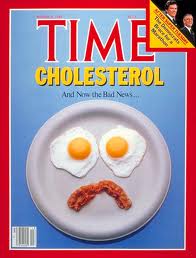
People follow the fad and the media. If five-toed shoes are hot then let’s all wear them as we grab our gluten-free bagels and soy latte coffee. It’s the cool thing to do. If you really understand how beneficial something is to your health then the fad doesn’t matter. You were hopefully eating eggs when your doctor told you it would result in high cholesterol. You were using salt while the media warned you that it would harden your arteries. And you were staying away from hydrogenated fats at the time when everyone was told margarine was the food of the future and butter was dangerous. So, now that the minimalist industry is going backwards after only a few short years are you going to stick more cushion in your shoes or stick to what you truly believe in? After all, there’s really not a whole lot of funding for the barefoot walking/running movement because there is no money to be made here; don’t expect some mind-blowing beneficial barefoot studies to pop up anytime soon.
You Ain’t Wearin’ Minimalist Anyway
So what really constitutes a minimalist shoe? Is it a 4mm or less drop? Is it a certain width in the toe box? Is it a shoe that a Leprechaun can fit into? There isn’t a set criteria for a “minimalist” shoe or even the ones that claim to be “barefoot-style” shoes. Shouldn’t a barefoot shoe be just that – barefoot with no shoe?
Without naming names – ah screw that – let’s talk Hokas and the many other “minimalist” running shoes out there that are far from that – most are maximalist shoes. I completely understand that if you can hop into a Hoka and run again then it’s a beautiful thing but perhaps you should be asking yourself, “Should I really be running if I need these devices on my feet?”
I’ve said before that most people should NOT be running because they are broken – their health and fitness is so poor, their mechanics are poor, and they don’t move well. So if that’s you, why would you want to go and run when you can’t perform basic essential human movements such as walking, squatting, and balancing? Running is too far advanced for you and putting on a shoe that gives you the false reality that you can now perform such activity is just like taking a sleeping pill and thinking you’re getting the benefits of sleep. Yeah you fell asleep, but you really didn’t go through the proper sleep cycles necessary for a restful night sleep; you cheated the system and it’ll catch up with you eventually. Step back and learn the basic mechanics before you run.
Saucony Kinvara and Virrata, Brooks PureFlow, and all the other “feel the ground shoes” out there that many think are minimalist are not even close to my definition of such. Being zero drop with a +15mm stack height or a 4mm drop and a crazy amount of cushion and motion control are a far cry from letting your feet move as they are designed to do. I know they make a lot of people feel good when they’re able to step into a trendy barefoot-style shoe while drinking their Kombucha tea, but your shoes probably aren’t much better than what you were wearing before you stepped on the trend-train.
My definition of a minimalist shoe is one with <10mm stack height, zero-drop, a firm, motion-free and cushion-free midsole, and enough room to allow your toes to not be mashed together. But regardless of what I think, the idea here, (well one of them anyway), is that less is usually better. If you can’t get away with less then you need to ask yourself why.
More Footwear Just Delays the Inevitable
Everyone is going to break down at a certain point. Muscle imbalances occur at this point when the nervous system has met the maximum amount of stress it can handle, (different for everyone and always changing in each individual too), and then fatigue, pain, and possibly an injury sets in. Many distance runners feel that more of a shoe is better because it allows them to run further without pain or injury. I understand this concept but I also think that if you need a shoe to support you at a certain distance in training or in a race then maybe you shouldn’t be running that distance in the first place. After all, more shoe, just like an orthotic, is not going to truly correct any imbalance, it is just going to support the imbalance while altering other aspects of your body such as your proprioception, and therefore your muscles, tendons, and ligaments will pay the price. So if you can’t run 20 miles without Hokas, you should be running much less. Something to think about.
Remember that shoes are for protection only. And of course I can see style at times; you don’t need to be some barefoot hippy that shuns all footwear all the time because they’re evil. (But if you’re into that then good for you, hippy.) You might not want to, and maybe in some cases you’re not allowed to, go barefoot, but you should be able to. You should be able to walk with only a few millimeters of material between you and the ground on any surface for any period of time.
If you always need foot support then you’ve got problems or you’re doing more than what you’re currently capable of. Wear the footwear you need to as you address why you can’t wear less but don’t do more with more footwear – that’s the completely wrong idea. Minimalism and barefoot is about injury prevention and treatment as well as performance regardless of what new and exciting research the NY Times might come out and discuss tomorrow.
If you follow the trend you will soon be wearing more of a shoe next year than you were last and you’ll miss the health and fitness benefits without even knowing it because fewer and fewer people will be talking about it.
Dr. Stephen Gangemi "Sock Doc"

I'm a board-certified chiropractic physician and clinical nutritionist with a passion for true natural health care. I implement dietary & nutritional therapies, exercise & movement practices, and lifestyle changes along with manual therapy techniques to help the body heal and prevent illness and injuries.
andrew says
Kinda depressed to see what a lot of the bigger manufacturers are doing with their minimalist ranges next year with people like New Balance and Mizuno seemingly backing out.
The big companies will just go with whatever way the wind blows at a given time so it’s time to support the comparatively ‘little guys’ like vivobarefoot, inov8 and Skora to ensure that we still have minimalist shoes available in the long term.
Andrew
Brandon says
Once again, great information but I want to ask about this article as it pertains to Basketball. I’ve always worn high-top Basketball shoes because it “supposedly” protects from ankle sprains. Are you suggesting that I wear minimalist shoes on the court? It would be very tough to convince my trainers to let me wear minimalist shoes during games. Basketball is also difficult because teams usually like to wear the same shoes… It would be nice if I could get my whole team to wear minimalist shoes but I doubt it… Lol! Any advice would be helpful on picking a minimalist shoe for Basketball or a helpful tip to avoid muscle imbalances or injuries when I have to wear Basketball shoes during games. Thanks again!
Sock Doc says
There is no evidence that b’ball shoes protect against ankle sprains, actually some say the contrary.
As I write, you wear the shoe that works for you, but ideally you should be able to wear zero-support in any activity, b’ball included.
Daniel says
I switched to wearing barefoot shoes just before I was scheduled for an ACL reconstruction. This worked out really well because the rehabilitation forced me to takes things slow. When I got back on the court I trained and then played in barefoot shoes. At first I had slight back pain after the games but after several months I realised I no longer had any pain. I have had no injuries and in particular, if I land on someone’s foot my feet can bend around the shoe I am landing on and ankle rolls seem to be a thing of the past. I am currently using Merrell Vapor Gloves, which grip the wooden floor nicely. If you do decide to go down this path, do follow the advice you read and take things sloooooooow. I think it was 2-3 years after I first started wearing barefoot shoes that I played my first competitive game and there was still some adjustment.
Ed Roley says
I sure hope that minimalist shoes are still available in the years to come. I’ve worn them for running and fitness as well as recreationally for 4-5 years now. I love my VFF’s for the gym, water sports(fishing, SUP) and beating around town. I love Merrell Trail Gloves for running trails. What will we do if these go away?
Susan says
This is one post I hope is wrong! I just discovered this whole barefoot / minimalist thing and am thrilled with the results so far (and I’m not a runner). That said, there are very few places, outside of the beach, any one can truly go barefoot (no shirt, no shoes = no service), work and shopping being the biggest challenge. At home, barefoot is easy peasy but out in the real world, where I spend most of my waking hours – shoes are sadly required. I’ve been more than happy with Lems, one of the few more normal looking minimalist shoes out there (i.e. not toed or flashy crayola colors).
Allan says
Just got done putting 500 miles on some to be unnamed max shoes. Hopefully I will recover from the ordeal some day. They totally trashed any good running mechanics I’ve developed running in various minimal shoes.
Jim Stanton says
I just got another pair of Vivobarefoots today. It’s taken me the better part of three years to be able to run in them without getting injured….I kept overdoing it and slowly I have corrected and strengthened all the faulty parts ( at least nothing has failed in several months) I realize now that I should have cut my mileage by a factor of ten when I started and slowed from 9 to 13 – 14 mim.mi pace. Had I done that I probably would have adapted much faster.
Soc Doc you are doing the right thing by getting information out but it would have been nice to have an algorithm that would help you through the transition. We need an app for that.
Jean-Serge Cardinal says
Same for me, I’m 2 year and a half into minimalist footwear, everytime I pass 30Km/week I re-injured my achilles. Maybe if minimalist footwear disappear I’ll go back to my Asic GT-2170 and do 80km/week like before.
Sock Doc says
I hope not!!
Damien Tougas says
There have always been, and will always be minimalist shoes. We just happened to go through a phase where runners thought it was cool, so there was a bit of a hype-spike in minimalist shoe development and sales by some mainstream companies. But like any trend, it wanes – and will stabilize. There continues to be new developments in minimalist footwear all the time, it just isn’t with the big players, and not necessarily in the area of running shoes. I am not too worried about it.
Secondly, I am tired of this trend where minimalist footwear somehow always has to be mentioned alongside running. As if that is the only thing minimalist shoes are used for. I think that perhaps the drop in interest may have as much to do with the fads of runners as anything else. I don’t think moccasins are going away any time soon 🙂
Sock Doc says
Agree Damien, the running fad plays a huge part.
David Jon Henry says
I agree that the current trend with the big manufactures is a little depressing, but I pretty much run in inov-8s for 95% of my running these days and they have a dozen or more models that are more minimal and still functional for high volume training than another other manufacture out there. I don’t see inov-8 changing what amounts to 80% of there lineup from minimal to more maximal or more EVA. I can’t stand the feelof large stack heights or soft shoes (ala Brooks pure, kinvara, etc), so I won’t be switching from inov-8 anytime soon.
Donald says
I wear VFF whenever possible, training-running-day to day activities and I run barefoot whenever the weather and environment allow me to. I wear Merrell’s most minimalist shoes when I compete in obstacle course races. I’ve eliminated knee, hip and back pain by adapting the barefoot running style and will never go back to cushioned shoes. I now enjoy living injury free after 15 years of pain, and I’m in the best health & fitness of my life.
Andrew says
As for minimalist shoes acceptable in public, yes stock up. Otherwise, there’s hardly anything easier to make than a pair of huaraches. Shoe rubber and laces are not going away. I’m not stocking up.
Bert says
Hello,
I’ve been wearing kinvara’s for about 5 months now, can you provide a list of minimalist trainers that are on the market now that you would recommend. I’m wearing Kinvara’s for a stepping stone to the dark side.
Road trainers and trail trainers.
Thanks.
Sock Doc says
I don’t provide a list – but you can check out “Lose Your Shoes” for more on transitioning.
g says
I’m not a hippy.
MB says
i’ve seen the 2014 inov-8 line and early 2015 samples and they are sticking with the same philosophy of building footwear they have had since 2003.
Sock Doc says
2015 already? I know that the 138s are already hard to come by, at least that is what I was told by a company that is a big Inov8 dealer.
Bert says
!38’s readily available in the uk about £70, I might try the Inov-180 or the trailrock 235 anybody had any experience with these. Tried the New Balance Zero but sent them back as the toe box was waaaay to small and no I don’t have fat feet quite the opposite.
Sock Doc says
The 235s for some reason caused me to roll in too much on my forefoot.
Matt says
Hi Sock Doc, Great article. I think it’s just hilarious what many companies and people call “minimal” or “barefoot” shoes. The whole idea of a shoe, like you said, is opposite of barefoot! I remember when the Nike Free was considered the best flexible show out there, much better now, but…changing like you said. I started with Vibram FiveFingers when they first came out with the Sprint and loved them, truly felt barefoot or really close. The FiveFingers KSO is my all-time favorite but they have even sense then gone more supportive and stiff. I run in Bikilas and Luna Sandals but nothing compares to the flexibility and glove like fit of the Sprint/KSO. I don’t consider any other “minimal” shoe anything close to barefoot. I wear Lems at work but they are NOT minimal in my mind, they might be better than most shoes but are very stiff and padded and disconnected compared to KSOs or being barefoot. I hope FiveFingers and some others go back to basics of no padding, super flexible, flat, roomy toe box, no support like true minimal shoes in my mind should be. Thanks for the article.
Fred says
I changed my running form. I now prefer sandals for trail and road. Changing my running technique was key. I’m 60 with 40 years of running on my feet and legs. If I had not changed my form, I’d be running in a pool. Screw the shoe companies.
Brian Roberts says
Good article Steve! Q: do you really think that if someone works on all those non-running strengths you mentioned, and does all the right things to make sure functionality is top notch in the lower extremities, that they should not use cushioned shoes to perform a task they want to complete? I like wearing my Altra Adams, but it’s not reasonable for me to run up and down mountains in those on the terrain I live near. You make it sound like minimal is the only way….what’s a guy to do?!
Sock Doc says
Yes that is what I think but of course there are limitations for everybody, just as I note in the article. So if you can’t run up and down the mountains, is that because your feet hurt (and you need more cushion)? So do you add more cushion or do you condition your feet? I say you condition your feet/body so you can do what you’re trying to do, or at least so you can do it better. Many people don’t spend the time or effort to really develop these muscles, so they figure that they can never accomplish something without more footwear. This is true even for those standing on a hard floor all day long – I hear all the time that they have sore feet, knees, back. Now of course if you’ve got a snow covered mountain and need more on your feet to keep you warm and dry, I completely understand that. But giving into more cushion is often the easy way out way too often for most people.
I’m actually surprised that only one person (via Twitter) commented on the exercises I describe and show in the video. The one on the board is typically very difficult for people to do. Have many people out there tried it yet?
Brian Roberts says
My goals are to cover rough terrain faster than my bare feet allow. Descending down rock covered trails at high angles, there would be no way to accomplish the speeds needed to compete with minimal footwear….I don’t care how strong your feet are. Some of these descents are hopping from granite to granite for more that 5 miles. (And yes, I am bragging about my mountains)
I agree with you that everyone should be doing the exercises and drills to strengthen the feet and improve balance. It just seems as if saying minimal or nothing misses a population of hardcore athletes that compete on diverse surfaces, otherwise destructive to even YOUR feet. 🙂
Keep up the great work Dr. Steve….we need more people to understand that their feet should be the structure that supports their body, not a shoe!
Sock Doc says
No I’m not saying that, but I am saying that people give into their footwear too easily. Look at people who are able to run mountains in huarache sandals often on terrain most wouldn’t even think about in thick boots. Of course there are not many people out there.
If you have to throw in some more cushion to run faster over your granite rocks then I’m all for it, especially if you’re racing. But if you always train that way and never try to go less, you’ll never develop anything and likewise, you’ll never think you can possibly attempt the same terrain with less.
It’s about adaptation. Think about it like someone who can withstand cold water swimming – it takes time and discipline to develop. To you (us) it’s just damn cold!
Janice Shirley says
Do you think tribes in Africa, Native Americans in North and South America, and all other indigenous people from around the world wore shoes and still wear shoes? 🙂 Just sayin….
Miguel says
I have an interesting observation. I used to wear more motion control/highly padded shoes for the last xx years (actually since I was a kid)… more recently with orthotics. Usually, after a long run and actually even without running i was somewhat painful to walk barefoot. Even inside the house over carpets and wood it was painful to walk barefoot.
Over a period of two years I transitioned to minimalist (when running) and barefoot almost all the time except when society doesn’t allow it i.e. work etc. Feeling great!
What I have noticed is the exact opposite of 2 years ago. If a now wear a shoe for an extended period of time I get weird aches on my feet and sometimes it hurts to walk. As soon as I take my shoes off and start moving around barefoot all aches are gone. It seems like my feet are addicted to the freedom of being barefoot and now reject shoes.
Is this normal? Is it psychological?
Sock Doc says
I’ve heard of this before. It’s perhaps more common than you think. One guy I saw it was happening to because his shoes were too small. So consider that, or try some more minimalist brands.
Lisa says
Miguel – I have the same exact issue. I was put in orthotics at 14 for flat feet and always ran in support shoes with orthotics until two years ago when I found sock doc. It has taken me a year and half to strengthen my very weak feet and calves and get back to 10-15 mile runs. I have a similar issue that you do, if I walk a lot with shoes on my feet hurt unless they are zero drop shoes (some 4mm New Balance are ok too). When I take my shoes off any discomfort goes away. I’ve also had to buy bigger shoes because my feet have widened and many of my older shoes are too small. I really wish I could walk around barefoot all the time, but in the winter it’s pretty tricky. I’ve had good luck with New Balance, Altra and just ordered some Vivobarefoot shoes. Would like to try Inov too. Working towards running more minimal as time goes on.
Tracy says
Hey SD! Hoping for ur opinion… Just had bunion surgery on my left foot – now 7 wks post op and the Ortho is pushing for orthotics – and I mean really pushing. So, since I’ve altered my body unnaturally, does this mean I get them?! I’m so torn because I love being barefoot and wearing minimal footwear but the doc wants me is super supportive footwear with orthotics while I’m healing – or forever(!) and I don’t want to screw up my new foot! Ive been wearing burkingstocks in the meantime. Ur thoughts?!!!!
Sock Doc says
Please see the articles on orthotics on this site.
Adolfo Neto says
It is curious, but the most interesting part of your post to me was this one:
[[Remember too that the research is often funded by shoe companies and their study participants are coined “healthy” because they have no known disease and don’t smoke. They’re often considered fit because they exercise a few times a week and have no current injuries (daily aches and pains don’t count). Hopefully you don’t want to compare yourself to these average folks.]]
I don’t think many scientists will agree with that. It makes much more difficult for them to find subjects.
Sock Doc says
I’d agree that it would be difficult, maybe impossible, for researchers to find ideal subjects. But What part don’t you agree with?
Adolfo Neto says
I agree with everything.
I meant the scientists that do research with human sucjects will not agree. If they would have to find, for instance, 100 healthy subjects (and healthy by our standards) to do research, it would be almost impossible to do research. So what would they do?
gus says
Hello,
How would I find someone with your philosophy in my area (connecticiut).
Sock Doc says
You’d have to ask around, sorry I don’t know anyone up there personally.
JB says
Well Said! Keep up the GREAT articles..
Richard smiley says
I changes to Nike frees a couple years ago. 3.0 was out with a loose tongue. Cut them down to zero drop and ran my best marathon ever. Now I play volleyball in them. No ankle stains at injuries at all. Build the strength in your lower leg first has really made a difference.
Scot says
I’ll stick with my VFFs, just bought another pair.
Marten says
I just want to thank you.
You have opened my eyes and helped me to discover what a healthy lifestyle is and how i should train and so much more. I have and had a lot of problems whit injuries (especially in my feet) probably because i am over pronating and have low arches. I have just bought me a minimalistic pair of shoes as i am going to start wearing when i get better in my feet. I have pain at the inside of my feet as i guess is there “Tibialis Posterior attaches to the foot so i probably have to wait until i can start wear my new shoes but after that i am going to start training in a healthy and naturally way.
Thank you!
Mary says
I’m new to minimalist shoes and hope they never go away so that I don’t have to go barefoot in a Massachusetts winter. Sock Doc, I was in orthotics for over 10 years because of knee pain due to overpronation of my right foot. My last pair wasn’t quite right, and after a couple of trips back to Orthotics Guy for tweaking of the prescription to no avail, I googled “orthotic hell” in extreme frustration and found your site at the end of October 2013. I stopped wearing the orthotics immediately and started doing your foot strengthening exercises. It was not an easy transition, as I had no choice but to go cold turkey on the orthotics, but I am so happy to be out of those things. I have a tailor’s bunion on my right foot (which I did not have before orthotics!), and developed awful bursitis there as a result of my toe box being too narrow (Correct Toes are helping a LOT with that – thanks for that recommendation too); I’m rehabbing my knee after reconstruction of my right ACL in late June; in short, I was dealing with a lot of challenges in my right leg at the time I started the transition to minimalist shoes but I have done it successfully. I LOVE my Lems Primal2 shoes. Thank you for this wonderfully informative website, and for the big difference you’ve made in my life.
Sock Doc says
Thank you. That’s really nice to hear.
Stephanie Bass says
My family thinks I am crazy because when I am home I am always barefoot. My mom has plantar fasciitis and has always wondered why my feet don’t hurt since I am always barefoot. Well this last year all that ended. I walked on the beach for a couple of hours and by the next day the outside of my ankle and down into the outside of my foot would hurt so bad I could barely walk. After about 4 weeks of terrible pain I finally went to a doctor that put me in a ankle/foot brace. I didn’t expect it to help much but it did! I wore it for about 2 months (while at work and took it off at home). I was finally better! Then I decided to go walking one day at lunch to gear up my exercising again. By that afternoon that same pain was coming back! All my shoes are minimal shoes or thin flip flops. Since the only thing that seemed to help was this brace and everything on the internet says get stabilizing shoes I am ready to go get a pair. (I also notice my shoes wear on the medial corner of my heel.) I am getting ready to go on vacation with a lot of walking and have no clue what to do so that this pain will go away for good! I love your barefoot teachings and I would love to be able to be in my thin flip flops or minimal sneakers again without pain.
Also I was under a lot of stress this last year so that is interesting that you mentioned that that can tie together.
Karl says
I’ve worn minimalist for a little over a year. I first tried the Minimus and just experienced horrible pain arch with them, just horrible shoes. Narrow toe box, loose at the back end, just crap and shoes salesmen were convinced they were the right size. Last Fall or so I tried Runamocs and they’ve been great. Wider toe box, zero rise, more minimalist, and no pain. I’ve even worn them at job interviews. Few months back I wore the Minimus for a couple days and the pain came back so they went in the trash. I could care less about the big shoe manufacturers and their minimalist shoes. My next pair will be another pair of Runamocs with perforated leather that I’ll be getting when the weather warms up.
Kaz says
Reminds me of the hiking dogma in footwear in the 80’s. I used to walk to crags in cheap trainers and thin socks. I was always being severely warned by the walkers clumping by in their 10lb a pair, clodhoppers – with 3 pairs of socks – of the dire consequences of my ‘improper’ footwear in the hills. I saw several hauled off with twisted and broken ankles. Never even slightly hurt my feet or ankles doing this and my footwear was far more comfortable.
Ultrawolf says
Hello Doctor,
Recently I checked out the “Best new Trail Running Shoes from the 2015 Summer Outdoor Retailer Show” on IRunfar.
Your look in the Crystal ball was spot on.
So sad what´s sold these days, such shoes are fine for KISS on stage but certainly not for healthy running.
Since even Inov-8 got not a single drop-less shoe anymore we´re left with Vivobarefoot, VF & Merrell I suppose……
Still, happy running !
Wolfgang
Scott Cunningham says
Hi
Any suggestions for a minimalist tennis shoe? I play platform (paddle) tennis a lot during the offseason and the court is very gritty and really wears away at the soles quickly so I need something with a durable base. unfortunately I have found that most of the tennis shoes out there in the box stores bring back my plantar fasciitis due to the higher arches and drop. Any thoughts? Thanks
Sock Doc says
Vivobarefoot or Lems.
Brandon says
I may have missed the answer, but what is the best basketball shoe for a female to where. I just recently transitioned my daughter to a zero drop running shoe on the court, and she loved it, surprisingly. With the increase of ACL injuries and the like for female basketball players, hoping this will be some type of prevention along with proper stretching, strengthening etc. Thoughts? Thanks!
Sock Doc says
There is no great “hi-top” basketball shoe out there. So it sounds like you’re on the right track with the transition you’ve made.
Chris says
I REAlly appreciate all your advice/ help Doc. I’m a runner/ avid exerciser and developed PF over time going with increasing shoe support to no avail. Over the last two weeks I’ve greatly decreased support and have been walking barefoot as much as possible. WOW! What a difference!! One tip to all who are looking for a less expensive option to barefoot shoes. I use water shoes to walk in just to protect my feet from hot pavement and glass. They are about $10 here in Rhode Island. Thanks a million Doc you’ve really helped me!!
Chris says
I use water shoes as my minimalist shoes and they are about $ 10 a pair!
John Mark says
And…. here it is 4 years later and minimalist Running is stronger than ever and growing by leaps and bounds. Bahahaa
Dr. Stephen Gangemi "Sock Doc" says
I wouldn’t say it’s stronger than ever. Just look at shoes.
Marc Johnson says
Hey Sock Doc, can you recommend some shoes for me to try? I work in town delivering. Usually walk about 10 miles, in and out of a truck. Up and down stairs. Officially our company tells us we need to wear a high top with a sturdy sole, and a leather upper. I most recently tried the Lems Boulder boot and was mostly happy with it, but felt like it wore out really quickly, but this has been the first minimal shoe I’ve worn and was mostly happy with the result. I have a pretty wide forefoot and toes. My main problem before was that when I’d get home from work and stopped wearing shoes, my feet would start to hurt. Especially after we moved into our current house with mostly hard floors. Since using the lems it’s no longer a problem, unless it’s really cold. Thanks for your help.
Dr. Stephen Gangemi "Sock Doc" says
Check out the “shoe reviews” on this site – that’s what I recommend, thanks!
Marc Johnson says
Awesome thanks!
DON says
I’ve been getting into cycling more and more over the past few months (addicted now i think). I am also a minimalist shoe wearer (I wear the Softstar Primal Run Amocs- the only “shoes” I can wear now. My question is, have you ever seen injury stemming from someone not using a stiff sole shoe while biking. Right now, I am getting some discomfort and numbing during rides over 30 miles, but to this point, everything seems back to normal an hour after I ride.
Again, just curious if you have seen any effects of this in your practice. Thank you-
Dr. Stephen Gangemi "Sock Doc" says
Hi – sorry I can’t comment on this one as I haven’t seen enough cyclists to give an accurate answer. My cycling/racing years were all in my “pre-barefoot” and minimalist years so I wore they typical stiff carbon fiber shoes. So maybe if I got back into it I’d experience what you are too.
I will say that I’ve had similar pain “hot spots” like you’re experiencing and correlated that to muscular imbalances in the lower leg & foot – tibialis posterior and soleus muscles, just as I discuss on the plantar fasciitis videos.