 Consult with
 Sock Doc Workshops
Stop Mindless Stretching, Part 4: Warm-up, Cool-down, Injury Treatment, and a Bozo Prevention Strategy
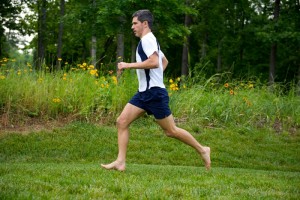
Aerobic warm-up & cool-down
Stretching should not be the sole activity performed during a warm-up before or cool-down after your movement (or exercise) program. Should it be a part of your routine at all?
Most of us have heard to never stretch a cold muscle. The thought that we need to stretch to “warm-up” is still being taught by many coaches even today, despite all the information out there that it does absolutely nothing to prevent injuries or improve performance and may actually increase the chance of injury. A proper warm-up is movement – aerobic movement. You warm up your body by raising your heart rate and literally warming it up while moving it though various ranges of motions. Those ranges should be somewhat in line with what you’re planning on doing. So if you’re about to go for a run, do you really need to be holding some deep hamstring stretch? I don’t think so. Ideally, you start by running slowly, (call it a jog if you’d like though that’s a terrible term as it refers to a jarring type of motion), and for the most part – that’s all you really need to do.
I never stretched or even did any of the movement skills that I do today in my fifteen years of racing Ironman and I wasn’t injured once. That’s because my flexibility was achieved via taking care of my health – my nervous system – through proper training, diet, and all the other factors I’ve previously discussed. If you are planning on doing some more dynamic movements, such as jumping or climbing, then you should still warm up aerobically but also add in various movement patterns that are applicable (functional) to what you’re about to do, much like I discussed in Part III of this series.
Post-Workout Stretching
How about after you train – should you stretch out? Well, to answer this question we need to go back to what I originally talked about from Part I – “Why do you feel the need to stretch?” If you feel the need to stretch after your exercise or movement program then you should be asking yourself one simple question – “What did I just do wrong?” If your program made your muscles, joints, and all your connective tissue tighter, then you put too much stress on your nervous system. In other words, you did more than what you were capable of doing at that time. Maybe you trained too long, too intensely, or perhaps the program was too complex. Whatever it was, you pushed yourself too much and now your body is reacting to that insult with tightness and protection and most likely, an over-driven sympathetic nervous system.
Stretching won’t correct this insult to your nervous system. However, movement, especially proper breathing exercises, can. So just as the warm-up portion of your program is (should be) completed with light, functional range of motion movement, including aerobic training, the cool-down portion should be performed in the same fashion. They should be part of the workout routine, not a separate or distinct part. Move easily and breathe in a deep and relaxed manner after you’re done training. Hopefully you’re able to move through greater ranges of motion as you’ve actually increased flexibility with your training. This is not only a simple measurement tool but moreover, a direct feedback mechanism immediately following your workout as to whether your routine was beneficial or detrimental to your overall health. A good movement routine leaves you feeling more flexible and then, as you cool-down, you can stretch your body further than you did before the training program. You’ll naturally become more limber!
Should You Stretch that Injury?

Don’t even think about it. Resting here, not stretching.
The short answer when it comes to whether you should stretch an injury or not is NO, you shouldn’t. Traditional stretching does not help injuries because it strains the muscle fibers and connective tissues that are trying to heal. This is neither helpful nor healing for injured tissues. Injuries occur when the stress to an area is greater than the load absorbing capacity of that area. Stretching decreases the force loading and load absorbing capacity in tissue and that’s definitely not a good thing when you’re already injured. You might feel better when you stretch an injured area but that is only because stretching provides a lot of stimulation to our mechanoreceptors, which in turn, dampens pain. These are our sensory nerve fibers. Stimulation of these mechanoreceptors helps to block the activation of smaller sensory nerve fibers responsible for pain, called nociceptors. This is why when upon injuring yourself, you may wish to immediately rub the area. The sensory stimulation blocks the pain receptors. Stretching acts in a similar way and it’ll only temporarily make you feel better via this nervous system input.
The two best things you can do to an injured area is to apply deep pressure manipulation, (also known as origin-insertion technique, myofascial release, or trigger point therapy), to the areas of injury and the tendon attachments as well as move the area, if it’s safe to do so. When there is an injury, the cells are often distorted in some configuration so they cannot properly heal.Using trigger point therapy can help those cells line back up, heal properly, and positively affect our “gel-fascia” as previously discussed. For an acute injury, feel around with deep pressure to locate very tender ‘hot spots’ throughout the complete muscle/tissue, from the main area of injury working your way outwards. Hold and/or rub these tender spots out with deep pressure in a slight circular motion for 15-30 seconds. As I discuss in the Injury First Aid – do not ice! Your therapist or doctor may need to assist you with this and they may need to perform other types of therapies to help your injured muscle heal properly.
Active movement throughout full range of motion is also ideal for injuries as long as you’re not hindering the injury – think of a sharp pain or pinch as a bad sign. Use common sense. Movement also activates those mechanoreceptors and helps to lay down new tissue if the movement is done in a healthy manner. Moving the joint through it’s full range of motion with some incremental resistance tissue loading, (think flexibility plus strength), will develop the mobility, and then the stability, in that area of injury. Plus, movement is a huge anti-inflammatory – and it’s free! If you have a major muscle pull or tear, or obviously if you aren’t healing, you should seek the advice of a professional.
Finally, if you’ve read some other Sock Doc articles, you know that I often say that the treatment area for most non-acute injuries, (typically after one week, on average), is to look distant from where the injury is. Due to myofascial meridians, gait imbalances, and other factors that affect the nervous system, it’s very common for a compensatory pattern to develop that is now hindering the area of injury and keeping it from healing. Much like an injury, you may feel tight and the need to stretch one area of your body because another area is too tight. A common situation arises when a person has poor shoulder mobility and this affects their hips. Stretch your hips all you want, but you won’t see improvement in your hip flexibility until you tend to the shoulder girdle problems first.
Don’t Be a Bozo and Just “Stretch”
Damn Bozos
Yes, there are plenty of studies out there discussing how stretching helps get people more flexible. They’re not hard to find. But realize that these studies are looking at very inactive people who are typically doing nothing else but sitting in front of a computer for most of their lives. For them, any bit of movement is good, even if it is some static stretching. That static stretching will increase short term flexibility but it won’t sustain. It won’t help with their strength, but it’s better than nothing as long as it is not done to extremes. Hopefully you want to be way beyond the point where static stretching is a significant, or the only part, of your movement routine. Muscle length and structure will not change with stretching, only the stretch tolerance controlled by the central nervous system will change. That’s flexibility – not mobility. That’s relatively useless.
But what about those who are doing some crazy deep stretches and holding them for a prolonged period of time? Realize that there are some people who can safely do these stretches and it’s actually good for them. They’ve progressed to a certain level of mobility and now they need to take their movement program to the next level so their body continues to adapt. Adaptation is what it’s all about when it comes to health, fitness, and especially movement. This goes back to not doing more than what you’re ready for too soon. Go at your own pace and realize that achieving more flexibility isn’t always better. Two people doing the exact same stretch can have very different outcomes if one is mindfully moving and breathing well and the other is forcing the hold just to say they did it. It’s a huge disparity between the two. This is why, over the past five years, I have changed my mindset from that of “stop stretching” to “stop mindless stretching”.
Don’t mindlessly stretch. Move. And move all the time. Hold the movement, move with resistance, move with tension, and move with relaxation. This is how you create flexibility in a healthy manner, along with adhering to your overall health and the impact that it has on your nervous system. Listen to your body and, more importantly, pay attention to what it says back to you. Or else – you’re a Bozo.
Dr. Stephen Gangemi "Sock Doc"

I'm a board-certified chiropractic physician and clinical nutritionist with a passion for true natural health care. I implement dietary & nutritional therapies, exercise & movement practices, and lifestyle changes along with manual therapy techniques to help the body heal and prevent illness and injuries.
Ann Hibbard says
Good information well presented! Thank you. I found you via Sandy Fritz Facebook post.
Frank Bergson says
How does this relate to Senior athletes, many of whom may have a touch of arthritis?
When I first get up in the morning, I cannot even touch my toes. My fear is that without adequate preparation, attempting a workout that requires full range of motion will lead to injury, I usually start with dynamic movements, such as arm and leg swings, hip rotations, neck rotation for about 10 minutes. I then do about 4 laps or one easy mile, and stop for a full set of MILD static stretches, but not to the point of pain. I do a full set of stretches after completing the workout. My concern is not only injury prevention, but inability to maintain proper race walk form unless I can harness the full range of motion in shoulders and hips.
Frank B (age 77)
Sock Doc says
It relates at any age. Keep moving as you’re doing. For the most part, the more the better.
-Joey Ward says
This article is biased, a person who genetically has a large concentration of SO Muscle fibers is likely to find endurance sports a ton easy than someone without. So where are the studies that show the affects of stretching on the three different types of muscle fibers? I am beginning to suspect Slow Oxidation fibers are likely the larger concentration of fibers in the participants in these studies.
Kevin Mefford says
Wasn’t let down after reading the third part lol and yes, I did read parts one and two as well. Great stuff doc! Like Ann says, you present your information very well.
paul m says
Great article! Over the past year I have really put a lot of focus on making the right movements and really focusing on the specific muscles and parts of my body I am trying to work. I really like your take on stretching here and am going to check out some more of your stretching articles. Good work!
Muzzamil says
Another Great Information that will massively help me out in staying fit and just doing stretching smartly. Thanks again.
Teresa Garland says
I have moderate ankylosing spondylitis and have been told I must do a series of stretches every day in order for my spine not to fuse. I find them very uncomfortable and unnatural. Is there a better approach? I am extremely stiff.
Dr. Stephen Gangemi "Sock Doc" says
Check out the full stretching series on this site and the info over at drgangemi.com about autoimmune issues.