 Consult with
 Sock Doc Workshops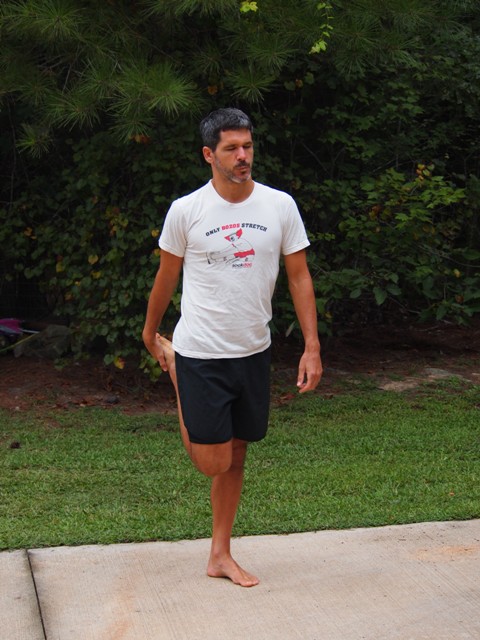
Don’t do it!
I must say, and I know this comes to a shock to you Sock Doc veterans out there, stretching is dangerous. Yes I’m talking about the typical static stretching that so many perform before or after exercise. Actually many consider static stretching an exercise of itself. There’s no need to get into why I don’t agree with the static stretching philosophy, as well as some types of dynamic stretching – you can read “Stop Stretching!” to learn why. As I say in that stretching article, and throughout the SockDoc site, flexibility is what’s important. Flexibility is associated with health and fitness, and vice-versa. Flexibility is the result of a healthy body and that includes a healthy nervous system. Stretching will not accomplish this aspect of health for you. What will accomplish it is addressing total health – dietary, emotional, (yes, spiritual too), and physical well-being.
Is what most regard to as “stretching” part of this physical well-being? No, I don’t believe it is. But moving is. And we should move a lot – every day, and hopefully often throughout it. Natural movements are essential to achieve proper flexibility. Sure, when you move naturally you are essentially “stretching” to some degree or another. It’s impossible to draw the line between what is beneficial and what is harmful in regards to stretching for every possible movement. And no, holding some static stretch for a bit isn’t necessarily always bad. Remember, it depends on why you feel the need to stretch, what you’re trying to accomplish, and if your movement is even natural for you (not someone else) and your activity. Those first two points are discussed in “Stop Stretching!”; the last – the “natural” part, I will address here.
Stretch Like an Animal
People love to say that animals stretch and therefore humans should too. Well that’s true, to a certain extent. Animals move and “stretch” within their natural means. A lion, (or your dog for that matter), doesn’t cross his hind legs and lean forward to stretch out his hips before he chases a zebra (or your house cat). Your cat doesn’t doesn’t take her front paw and grab her rear leg to pull it to her neck so she’s more flexible prior to her night hunt. You get the point. Don’t they sometimes “hold” these stretches for several seconds? Sure, sometimes they do. So I guess, if you’re timing it, then some of the stretches may be defined as “static” since that cat may reach her legs out for several seconds before she gets up from yet another nap. But it’s a natural motion and she’s contracting muscles during this movement. Also, she (hopefully) doesn’t have another cat sitting on her back pushing those legs down more to the ground or pulling her leg out forward to give her more of a stretch n’ hold. I’ve never seen that in nature, as funny as it would be, but we see it all the time with humans. So yeah, we should stretch like animals, but within our humanly means, (which is individualized for each person). I still don’t like that ‘s’ word – but call it what you like. I’m going to stick with moving naturally.
Warm Up and Cool Down
Stretching is performed by many as a pre and post exercise regime. Many consider it their only form of a warm up or cool down. Though ideally the best warm up and cool down you can perform is light, easy, aerobic exercise. This is true whether you’re going for an easy run, a hard run, lifting weights, or getting ready for some grappling. Aerobic exercise prepares the entire body for any type of activity whether it’s easy or very strenuous. Now of course the aerobic exercise may not suffice for the activity or sport you’re about to perform, so other natural body movements specific to your sport will be beneficial for a proper warm up and maybe cool down too. It’s impossible to give examples for every activity and every sport, but after the aerobic warm up, (walking to easy running for approximately ten minutes is most common), then consider moving your body within its natural means with respect to the activity you’re about to perform. So if you’re preparing to ride your bike, you don’t necessarily need to do some hanging movements as I show below in the photos, that would be more applicable if you’re about to do some climbing or lifting and carrying activities. However, I will say that hanging drills are always good either way. If you’re about to swim, you sure don’t need to focus heavily on your quads. If those muscles appear tight, then you need to address why they are that way. But how about this – rather than worry about each individual muscle and compartmentalize your body, why not perform some movements the way your body actually moves in a dynamic, natural, and integrated system.
Common Bozo-Type Stretches & Their Natural Corrections for Flexibility
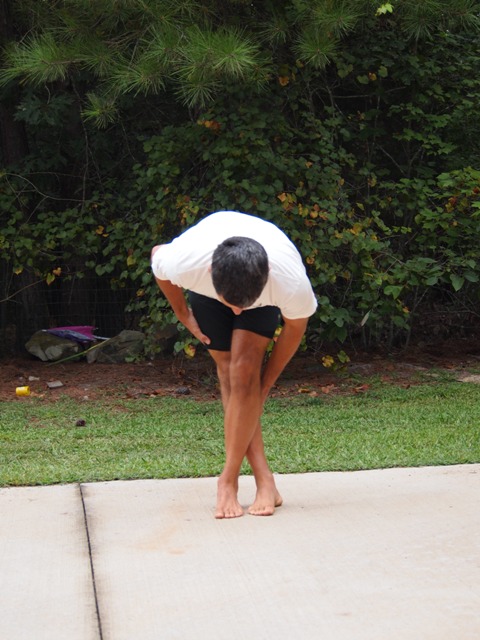
Below are several very common stretches that have been performed for years and for the most part are unnecessary, useless, performed incorrectly, or just flat-out dangerous. Basically for the ones where I’m wearing the “Only Bozos Stretch” shirt, I’m acting as such.
First, let’s start out with five very common types of stretches that we all learned some time or another: quadriceps stretch, ITB stretch, hamstring (Hurdler’s) stretch (somehow this photo got lost – but it’s on my shirt!), groin (adductor) stretch, and the calf stretch. Click on the first photo in the group to enlarge and to read the description, then click the photo or your escape key to exit.
-
- Perhaps one of the dumbest and most dangerous stretches. Funny thing is that it actually doesn’t even stretch the ITB. Do this to put excess tension in your hip joint and lateral knee and increase your chance of injury.
-
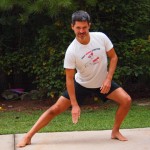
- A side-step maneuver is a great mobility drill, but stretching your groin (adductors) is just plain silly. It’s a great way to weaken the area and stress the medial knee. Note my dance-move potential.

-
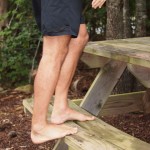
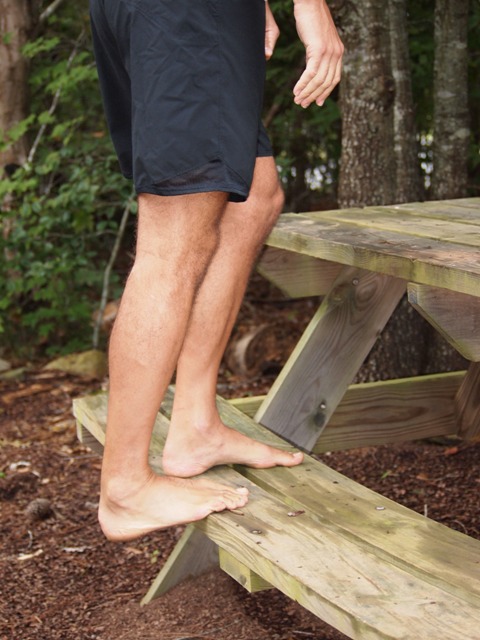
- The calf stretch – dropping the heel off an elevated area and stretching the calves. Though not the worst, it’s rather unnecessary, and dangerous if you have Achilles issues. If you do this, you’ll not want to hold it too long at the bottom, but slowly lower the heel (eccentric contraction).
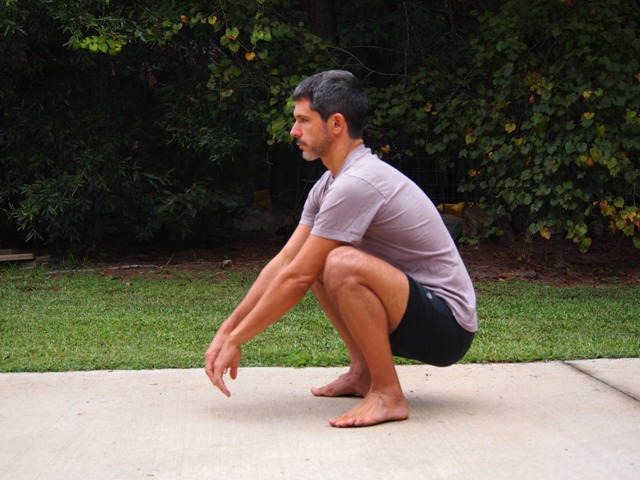
Now, here’s how you can warm up these muscles much more safely and effectively.
-
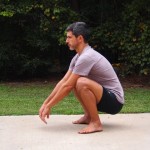
- Full squat: All the way down, (or as far as you can go), heels stay down. Body weigh centered and controlled.
-
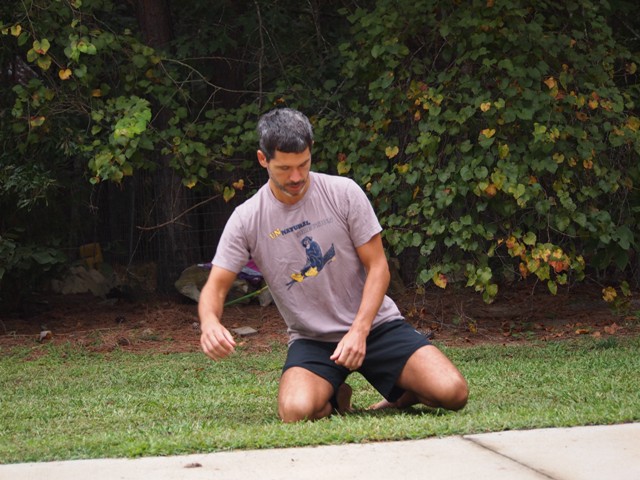
- Body weight transfers to the opposite leg (right in this example). Feet remain in the same position.
-
- Opening up the pelvis and hip region – easy, controlled mobility. After the left leg opens out, body weight transfers back to center.
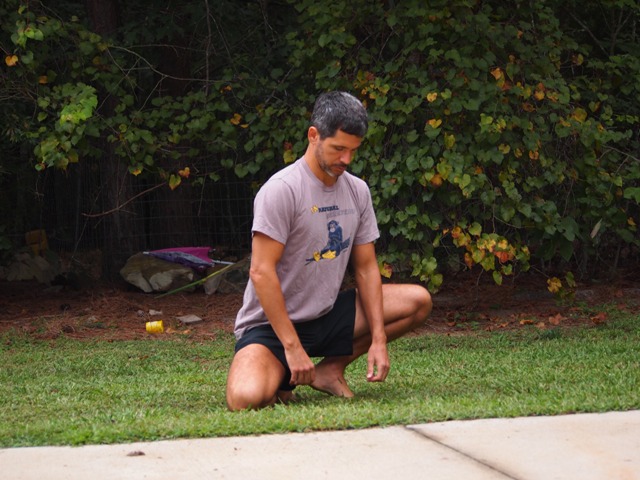
-
- Pelvis & hip mobility on the opposite (right) side.

-
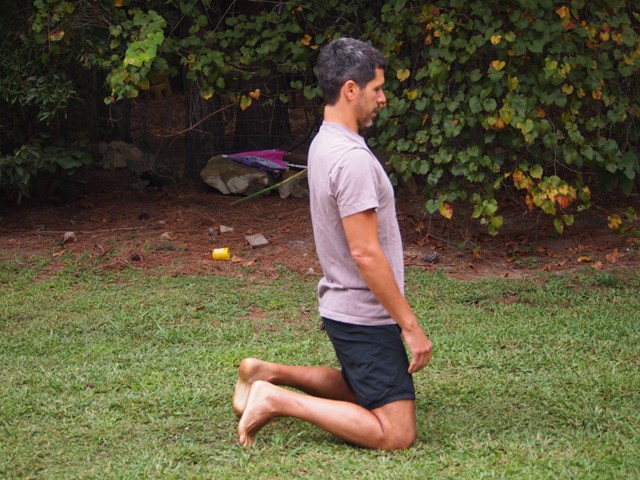
- The Balanced Squat Mobility Drill – well I’m not sure what it’s really called. Start by sitting back on your heels with your back straight. Great for ankle mobility too. Stay relaxed. If your knees hurt then sit up a bit.
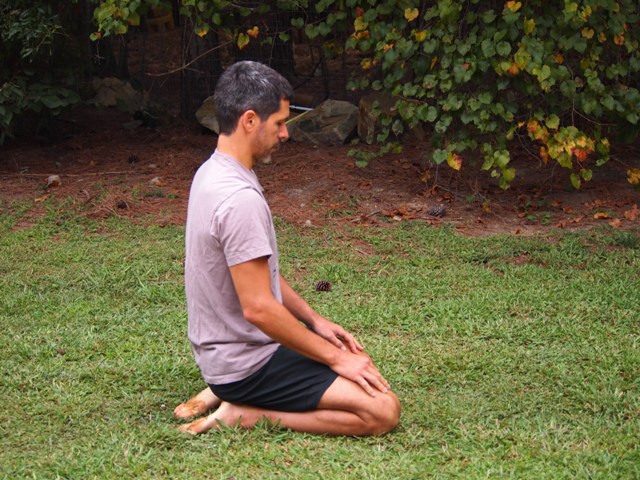
-
- Now thrust your hips forward and point your toes down.
-
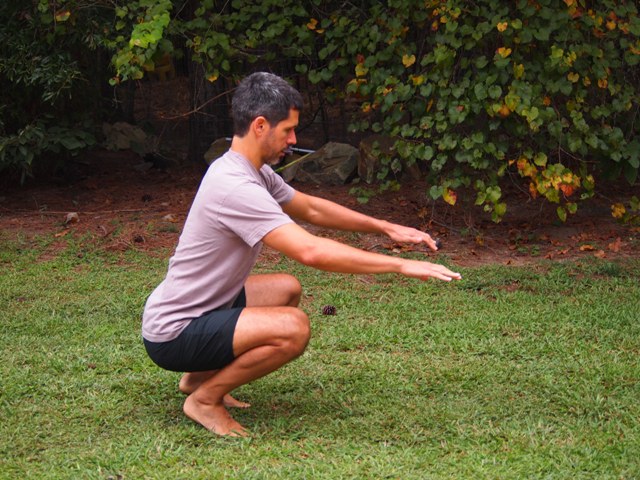
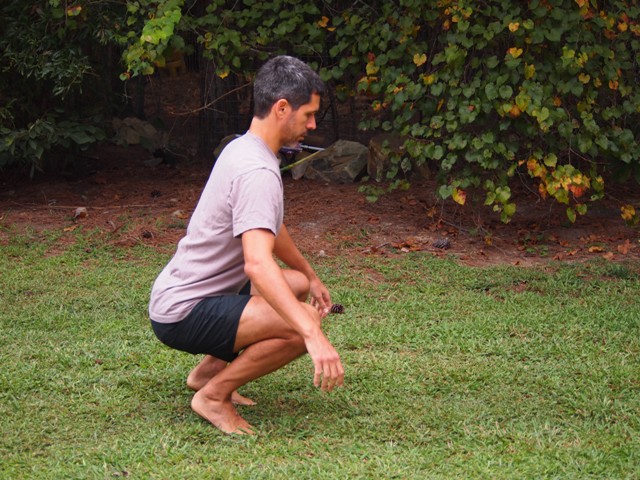
- Next rock back on your heels using your arms to counterbalance the body weight transfer. Stay controlled. Your feet never move their position.
-
- Next slowly lower your knees back down (don’t slam them!). Nice and controlled. Again your feet don’t move. Use your arms to help with control and weight transfer.
-
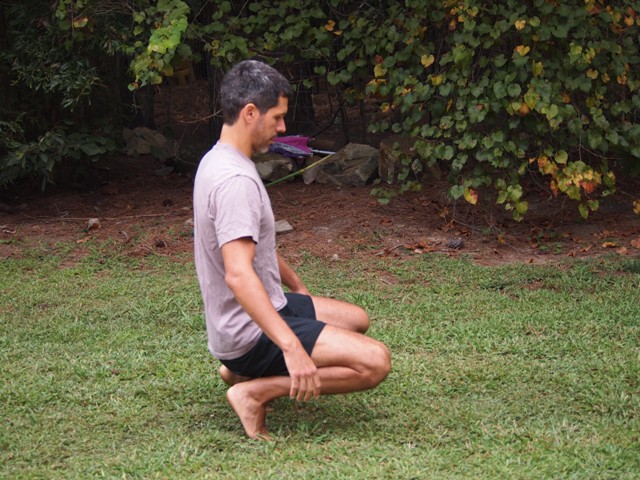
- Back down to the ground like so…
-
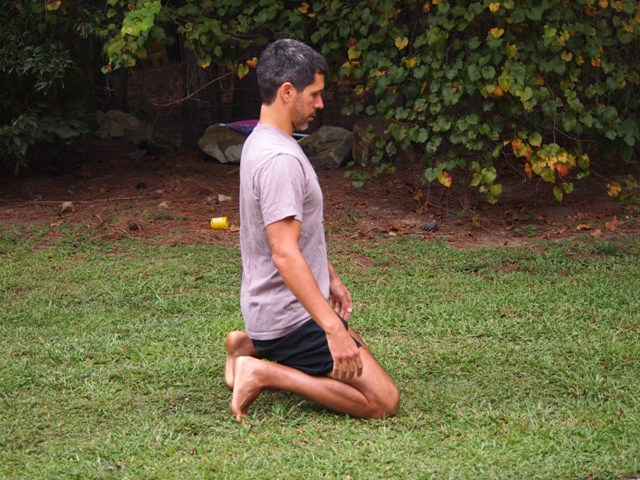
- …a slow and controlled touch-down with the knees. Feet still in same place, toes pointed. Next would be the toe tuck and sitting on the heels to start over.
-
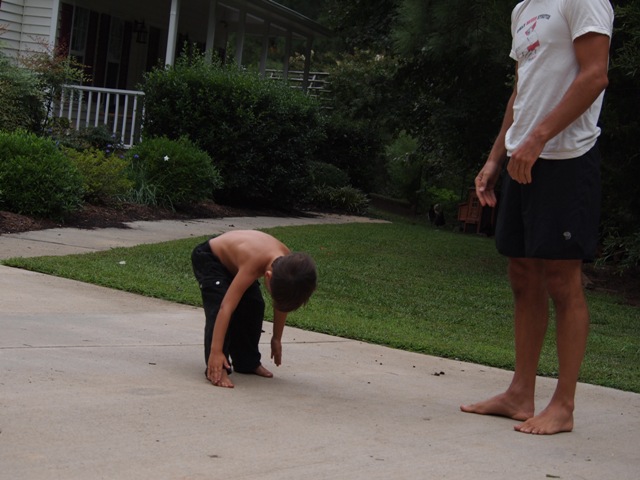
- “This is how you do it you Bozo.”
-
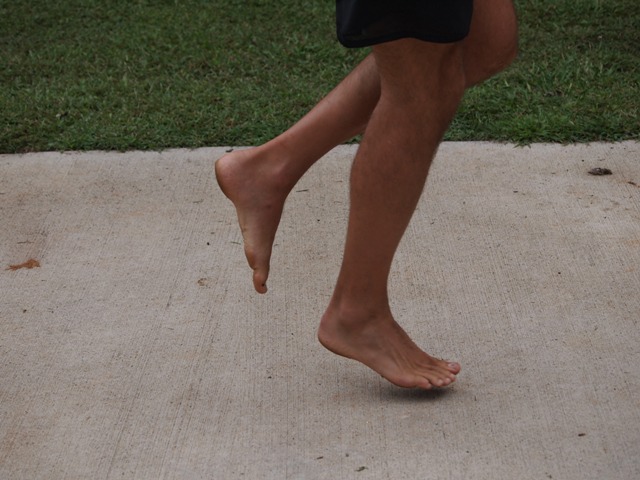
- Run in place on the balls of your feet – never letting your heels touch down. Either single leg or alternating back and forth like you’re in the ring ready to rumble.
-
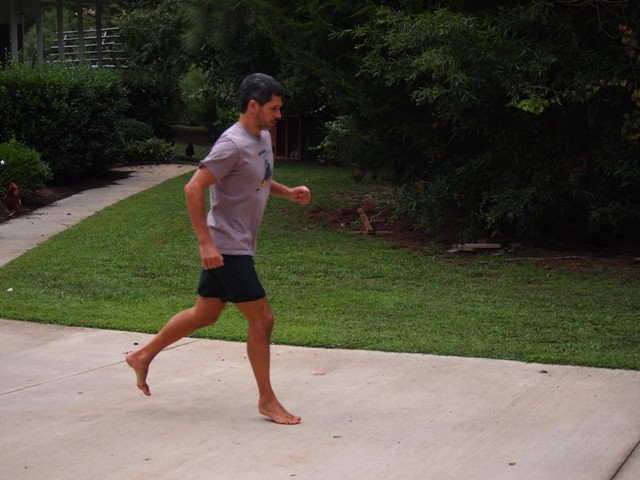
- Run very easy, or even walk, for a proper (aerobic) warm up.
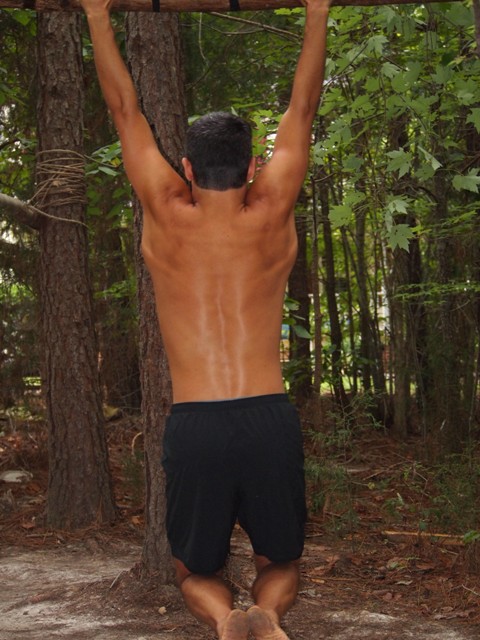
A few ways to strengthen, stabilize, and bring natural flexibility to your shoulders, back, and that trendy “core” everyone talks about.
-
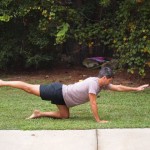
- Contralateral movement.

-
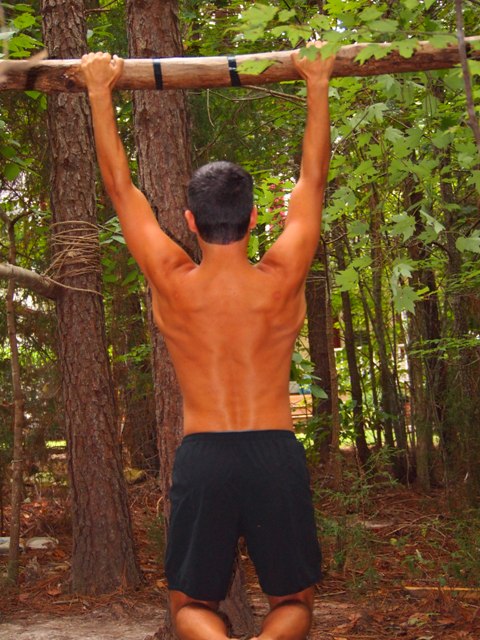
- Active Hang: This movement engages just about all the back muscles and helps with shoulder stability and mobility. I’m not just hanging in the gallows. Of course you need grip strength (especially if you’re using a thick branch as I am), as well as arm and back strength.
-
- Passive Hang. Just a dead drop.
Dr. Stephen Gangemi "Sock Doc"

I'm a board-certified chiropractic physician and clinical nutritionist with a passion for true natural health care. I implement dietary & nutritional therapies, exercise & movement practices, and lifestyle changes along with manual therapy techniques to help the body heal and prevent illness and injuries.
Joanna says
Thank you very much for this great information. Is there a book or DVD where one can learn to do more of these ‘primal’ exercises?
Sock Doc says
Thanks Joanna. Look for a MovNat workshop. http://movnat.com/
Also, lots of parkour in the UK – they teach great movement patterns.
Hamed Saif says
I am Muslem and when we are praying we do all that moves you have explained
Jay says
The Wharton active stretching book is also a good one imo.
Tresa says
Sock Doc, my chiropractor recommends neck stretches and seated side stretches, to increase mobility. What can you say about better alternatives to stretching for these areas?
Ryan says
Dr. Gangemi,
Thank you for this very informative article. The picture examples are especially useful.
Ryan
SteveL says
Thanks so much. I’ve been wondering what to do since stretching is out now I have some solid information.
Bill P says
Thanks for the article Doc!!
susan says
Thanks for the article and photo demonstration. I am unable to get my heels flat on the ground as shown in the first position. No way they are touching ground! Should i continue to attempt this position or is it just what it is….impossible for some people? i have a history of achilles tendonosis and retroC bursitis most of which is 95% healed thanks to all i have read on your websites.
Sock Doc says
It takes time! Right now go as far as you comfortably can and you can also grab hold of something (like a pole) in front of you to help with balance so you don’t tip over backwards. I don’t want to say it’s “impossible” but the longer you don’t use or do these movements the harder they will be.
Kay says
Interesting article/pics are helpful. So, curious, you disagree or agree with doing basic yoga?
Sock Doc says
Read “Stop Stretching!” for yoga questions.
greengirlrunning says
Thanks for this post! The pictures are really helpful. I was just saying to Miss Zippy that I am so grateful to her for introducing her readers to you and your site! I have found your advice/tips/explanations extremely helpful and send links to your posts to my friends often. It’s tough when most doctors and therapists are still recommending stretching, but I am slowly hearing of more and more runner friends saying they have lightened up or completely given up static stretching. Thanks!
Ronnie says
Regarding the pelvis and hip mobility exercise are you supposed to move fluidly from left, center, right? How many sets do you recommend, and how often? How many sets of the balance squat mobility and how often?
Sock Doc says
You can just go from left to right, back and forth – no need to stop in the center. Sets: I don’t really count. Do them for a minute or so, depends on how difficult they are for you. Same goes for the balance squat (and other drills). If you’re moving well and they are easy for you then you just do a few. If they’re difficult and/or new to you then you do more (unless you have pain or you’re performing them wrong).
Hayley says
Hello, First of all great article! When ever someone seems to be suffering from an injury I send them to your website. I have a question though. I have a 9 year old daughter who is super fast. She plays soccer and the other day she got pushed from behind, she landed on her right side and arm and it looked liked her neck whipped down and then up. She felt a tightness on her back right trap. area but tingling on the opposite side. Sounds like a stinger right? Well today she is telling me her sacrum area is sore to the point where it is uncomfortable to walk, and even sit up from the laying on her back position. My first inclination is to go into dynamic stretching mode and try to loosen her up. She has the tightest hamstrings / muscles ever. Tighter than mine which is crazy because I am extremely inflexible. My question is what can I do to help her gain flexibility? And where can I find trigger points for the injury just described? Is it safe for me to work on her? I know you are not a big fan of iicing, but is it a good idea to ice during the 48 hours? Thanks for any suggestions or help.
Sock Doc says
Hi Hayley – check out the new video on the shoulder (https://sock-doc.com/2012/10/shoulder-injuries_rotator-cuff-pain/) and look for those trigger points in the upper trap. They’re going to insert right above the scapula area. You don’t want to do ANY stretching for an injury or to “loosen” anyone up. That’s not how it works. Flexibility is a result of health – as I write in the Stop Stretching! article.
If she isn’t feeling better, then you might seek the help of a holistic doc (chiropractor) or therapist.
Hayley says
Love your website! Thanks for sharing your knowledge and experience with us!
Juzbo says
So I re read the bit about yoga, thanks.. But am wondering also about Pilates? Typically more strength work But also some rotational stretches/twists… Good, bad or depends? Thank you
Sock Doc says
All depends on how it’s implemented. It definitely shouldn’t be the foundation of your workouts, but if you use it to isolate an imbalance here or there then that’s fine (no deep stretching though).
alex says
Hello can i stretch like this?:http://www.nismat.org/orthocor/programs/neck/neck10.gif
and this after pull ups , chin ups exercises?
https://myhealth.alberta.ca/health/_layouts/healthwise/media/medical/hw/hwkb17_079.jpg
Sock Doc says
If you want but I wouldn’t. That’s no different than quad & calf stretches that runners do.
alex says
Hello what about stretchign after push ups, pull ups what kind of stretching ?
Sock Doc says
Nope.
alan says
is the picture of the lion more akin to a yawn rather than a stretch. when cats yawn like this they do it after rest, the muscles go into tension and squeeze the waste products from the muscles preparing them for activity. i think i remember this correctly from an article i think i read in new scientist some years ago. For humans perhaps a yawn accompanied by all over muscle tension is an appropriate precursor to activity.
Sock Doc says
I hadn’t looked at it that way (the lion) but interesting and would make sense.
Rob says
Dr. G–I’m not clear on passive vs. active hanging. A while back, a chiropractor recommended passive hanging to me to “line me up.” I do it regularly but not for long periods, as you suggested. I understand that passive is just letting your body hang all the way down, a dead drop. But in the active photo, are you pulling yourself up a bit, as if you were going to do a pull-up without raising yourself all the way up as you would in a pull-up? How far up should you lift yourself for an active hang?
Thanks
Rob Gallagher
NYC
Sock Doc says
I am not doing a pull up but I am rotating my shoulders without any pulling. It is 100% scapula motion (and it’s not very easy either). So it only looks like I am going up ans my scapula rotates in that direction, but my arms do not bend any to “pull” me up.
stephane says
Hi,
great article but I can’t see the images at the end (I get [nggallery id=4], [nggallery id=5]…instead)
is it my browser?
awesome site by the way
s.
Sock Doc says
Got it fixed, thanks for letting me know!
Laurence says
Hi Soc Doc,
I have a question:
Do you still recommend walking barefoot or wearing barefoot shoes with an ankle or soleus injury. Wouldn’t this be stretching the injured area?
Love those alternative warm-up exercises!
Sock Doc says
I would call that moving, not stretching. Just like the exercises I show here, “stretching” while moving is fine and a good thing.
Tony says
Soc Doc,
For a track warmup: 15 minutes of easing aerobic running, followed by dynamic stretching… When you refer to dynamic stretching (natural movements), are you only referring to dynamic drills (high knees, heel kicks, skips, etc) or are dynamic “stretches” okay too? (walking toe touches, walking quad stretch, etc)
Thanks
Johanne V says
Hello, I’ve just looked at your suggestions, how to warm your muscles. Due to a pain in the knees, I can’t bend my knees completely, what do you suggest and I can’t put my heels on the ground. Thank you.
Sock Doc says
You’re referring to the inability to do a deep squat? Put a board under your heels – that will help – and go as far as you can w/o pain. Aside from that, check out the SD Knee Video.
Paul Newcomb says
Hey Sock Doc, I’ve got a question about the first full squat position. Wouldn’t that be considered a static ankle stretch? Are you holding this position for a certain amount of time, or is just showing the bottom position of an actual dynamic squat?
Sock Doc says
Not really – it’s more of a passive mobility movement. Though if you’re not very good at it, (and most people aren’t), then yes, it could be very taxing on the ankle and lower leg. But since it’s weight bearing for most, it’s not a static stretch which you’re going to cause problems with because you can’t overdo it – you’ll have to stand up or you’ll fall first. 🙂
Paul Newcomb says
Ok, I think that makes sense. Although to me it still seems like the equivalent of doing a soleus stretch, just in a squatting position rather than standing.
So how long do you recommend holding this position for?
Sock Doc says
Once you can easily hold the position like most people outside of the US, then you’re really not stretching anything. It’s a rest position. So ideally you should be able to hold it indefinitely.
Paul Newcomb says
Interesting. Thanks for the info Doc!
Sedem says
i’ve been diagnosed with an anterior pelvic tilt and to correct it have been told to stretch my hips and glutes,i do freerunning, capoeira, tricking and gymnastics but as a result of the pelvic tilt have other associated problems such as overdeveloped short erector muscles which i’ve also been told to stretch. is their any activity i could do to correct the problem withought stretching such as yoga or swimming as i’m aware static stretching reduces strength?
Sock Doc says
Please read this; thanks!
https://sock-doc.com/sock-doc-questions-comments/
Gabriele says
I’ve been searching for proper way to do the stretching for quite a while now. Somehow static stretches and unnatural poses made my body feel more tense and like it was a chore. But seeing this I realised taht I already been doing the best natural way to stretch my body muscles. Great article : )
Elizabeth says
What do you recommend for shin splints (posterior, front, lower part of the shin)?
Dr. Stephen Gangemi "Sock Doc" says
Please see the articles/videos on shin splints.