 Consult with
 Sock Doc Workshops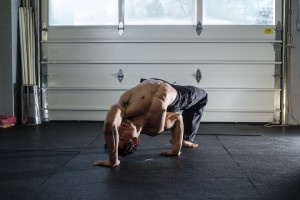
Kellen Milad moving with a purpose: Photo credit: Matthew Anderson Photography
Stop Mindless Stretching, Part 1: Stretching for Flexibility, or Not
It has been almost five years since I first posted my somewhat controversial “Stop Stretching!” article on the Sock Doc website (or Soc Doc as many continue to write). My views regarding stretching haven’t changed much but my knowledge and experience around body movement, mobility, stretching and flexibility have undergone some drastic changes over these years. Stretching for flexibility is still something that many athletes practice daily hoping it will improve their performance and reduce their chances of become injured.
In 2011, when I wrote “Stop Stretching!” I was still racing triathlons and finishing up a fifteen year Ironman career. I believed and still do believe, that traditional stretching for athletes, and particularly endurance athletes, is a waste of time, as there are typically more risks than reward obtained from such practice. Then, in the summer of 2011 I made a rather quick transition away from triathlons into the world of movement. Primarily, I became heavily involved with MovNat, as most of you are or should be familiar with. Over time, I have become involved with various other programs and movement philosophies such as but not limited to parkour, Ido Portal Method, and Original Strength.
The two worlds of endurance and movement training are as vastly different as you can imagine. Sure, there is some overlap as with almost anything, but now I was beginning to move my body in a much different way, reminiscent of things I had done during high school wrestling some twenty years prior. I was still flexible after all these years of endurance training, as I discussed in “Stop Stretching!”, but it wasn’t because of the practice of ‘stretching’. So, now that I focus more on strength and movement while still including the endurance component to a lower degree, have my views on stretching for flexibility changed? Not really.
I appreciate flexibility and strength more than what I did in the endurance world, but it is all relative. It still depends on what you are trying to achieve, and for the most part when it comes to flexibility, more is not necessarily better. So, lets take a look at this controversial subject more thoroughly in this updated Sock Doc four-part series on stretching. Hopefully by the time you have read the whole series, you will have learned new information, answered some questions and perhaps come away with new questions to investigate. And hopefully, I get less hateful comments than I did five years ago!
Although I have read and learned a lot from many pro and anti-stretching peer reviewed articles, you will see nothing cited in these four articles. While I’ve used these references when speaking at some conferences, it’s a subject matter that I feel is very narrow minded and easy to “cherry-pick” your position either for or against. Simply put – you, the reader, will (hopefully) never be convinced of something simply because of a study to back up the claim. If you’re skeptical of the claim and I was to cite a study, it’s easy for you to find a reason to debunk that study and/or find another to support your position. These articles are written based upon my close to 20 years of clinical experience, personal experience, research, and involvement with great individuals in the areas of movement, manual therapies, and science. This, in my opinion, is much more important to pass along and share rather than reference various cited works to satisfy the group who doesn’t interact personally and professionally with the human body day in and day out.
What Exactly is Stretching?
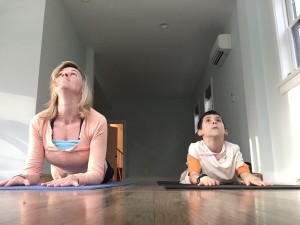
Stretching? More like resetting the nervous system.
Let’s start by getting confused. Stretching is flexibility and flexibility is what most everyone equates to mobility, therefore, we should stretch to improve mobility, right? I mean, if you are flexible then you must be mobile. Subsequently, if you are mobile then you are flexible because you are moving. I think that’s right. But what kind of movement? Well it must be Natural Movement like everyone talks about today and not something un-natural. But what’s that? Well, of course I’m talking about movement that’s functional – you know, Functional Movement. Or is that the same as moving natural? Is that like yoga? No, yoga is just stretching, right? Well that’s what everyone thinks about yoga. But what is stretching then? Stretching is flexibility which is mobility but I don’t think that mobility is stretching. Maybe it is? Wikipedia says “the goal of stretching is to achieve muscle tone”. That can’t be right – they also use the word stretching in the expanded definition of stretching and that’s breaking the rule of defining a word. Is that stretching active or passive? Or maybe it’s active isolated stretching – that’s better than just active because now you’re isolating the area. Sounds good to me. But maybe dynamic is better; better than static anyway. Kinda like ballistic. Oh damn – isn’t dynamic stretching a ballistic stretch? Well then what’s plyometrics? That sounds super scientific – it’s got to be the best. How about PNF? Everyone talks about it, but few know what it stands for. A lot of awesome movement students do loaded progressive stretching, so maybe that’s the best way to get more flexible and improve my health and performance. Stretching will achieve this too so I’m told. I hope.
Why Do You Stretch?
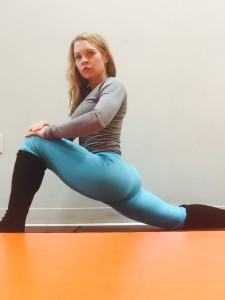
Keira Newton stretching mindfully
People “stretch” for a variety of reasons, and maybe they don’t even know exactly why they are stretching. Some stretch because they think it’ll make them a better athlete. Some stretch because they can’t exercise without going through their stretching ritual. Some stretch with the belief that they’ll prevent an injury, while others stretch because they think it’ll help resolve their injury. For some people stretching is their only exercise they do – it’s their complete workout routine.
But perhaps the more important question is, “Why do you feel the need to stretch?” rather than, “Why are you simply just stretching?” In other words, why are you tight or not flexible in a certain area? Furthermore, if you’re able to develop a greater range of motion in that area, is that truly beneficial in some way? How much flexibility should you really have in an area to be fit? How much flexibility is considered healthy? Is a greater range of motion of a muscle or joint better than less? Where does the madness end? Who decides what is good, bad, healthy, fit and flexible? I know the Presidential Fitness Award that I received in grammar school had required me to reach a certain way down to my lower leg. I got the patch, so I’m flexible.
Flexibility Means Something
Relaxed, flexible, and stable. And stretching a leg.
Flexibility just might be the main reason why most people stretch. Flexibility to most means a more fit and healthy body. Although this isn’t always true – it’s just not black and white. You might not agree with this, but then again, you might not be “most people”. I ask a lot of my patients what they do for exercise. The average Jane and Joe, who is lucky enough to have some sort of 20-30 minutes exercise routine a few times a week, will include stretching as a part of their program. They do so because they think, or they have been told, that stretching will lead to more flexibility and this in turn equates to a better fitness level. And yes, most people still think that fitness equates to health, so by default the more they stretch the healthier they are. It’s all a big lie.
Flexibility comes from the Latin term flexibilis which means “to bend”. It’s the ability of a joint to move through its full passive range of motion. Full range of motion however, is different for each person. One person might easily be able to put their foot behind their neck while another can only get their foot to their chest. So who is more flexible? Most would state the obvious, that the one who can put their foot behind their head is clearly more flexible but that’s not necessarily the correct answer. If the person who can only get their foot to their chest is actually getting their joints, (in this case the hip and to some degree their knee), through their full range of motion then they could actually be more flexible than the one who can put their foot behind their neck, if that person is actually able to do more than just get to their neck but they’re restricted from going further. It’s all in how you look at it.
There is a functional range of motion, or a functional flexibility, that we have and that depends on a specific skill which we would like to perform. Yes, there are basic human movements we should all be good at. If you only want to walk well, then you do not need the flexibility in your hips and legs that a gymnast would need. However we then get into a very gray area of how much functional range of motion we, as individuals who are hopefully striving to be healthy and fit, should be able to achieve in our quest to do more than just walk well. (Most people do not walk well!) What is normal? What is healthy? What is fit? I personally think this is much harder to apply a set standard figure to, than the usual prescribed values of angles and measurements of flexibility which many choose to adhere to. Stretching for flexibility and overall body flexibility goes way beyond simply moving. This will be discussed in Part II.
Dr. Stephen Gangemi "Sock Doc"

I'm a board-certified chiropractic physician and clinical nutritionist with a passion for true natural health care. I implement dietary & nutritional therapies, exercise & movement practices, and lifestyle changes along with manual therapy techniques to help the body heal and prevent illness and injuries.
Sherri Leigh Iwaschuk RMT KMI says
I like where you’re going with this Steve. As a Massage Therapist and teacher of Anatomy Trains courses (and soon to be level 1 Movnat instructor!), the stretching conversation comes up frequently. I don’t often have time to go into this detail but I hope this series of articles helps me organize and prioritize my thoughts.
Elizabeth says
Love it. This article definitely displays the insanity of figuring it out. And that moment in bodywork when someone tells me that they stretch.
@Sherri awesome combination KMI plus MovNat
Uniquely moved
Matt says
Hi Sock Doc. Thanks for all he great info on this topic, has really given me a lot of insight since becoming an MCT. I’d be interested to hear about your views on interoception and stretching. My experience of combining some ballistic and CR stretching with my MovNat techniques has been much greater sensory awareness of the structures involved in the movement and therefore much greater control, particularly at the end ranges. The stretching serves to light up those tissues in my sensory awareness. So in my pursuit of mindful movement I’ve found stretching to be very beneficial. It certainly isn’t mindless stretching though and requires a a good deal of awareness to make it worthwhile I think. Looking forward to rest of the series, definitely a fascinating subject!
Deb Walker says
Would love for this line of discussion to actually get to the point. I do ‘stretch’ but I more think of it as ‘relaxing the muscles’ after a workout while I’m still warm. It does not feel like a ‘stretch’ at all. If I don’t my muscles are painful later after I cool down and they become stiff. So I do not know where this is going . . . but I’m interested and hopefully Sock Dock will get to the meat of the discussion. Looking forward to it.