 Consult with
 Sock Doc Workshops
 Strength training, whether performing traditional weight lifting exercises like a dead lift, plyometric exercises like box jumps, or simply body-weight exercises such as pull-ups and abdominal crunches, all have their place in most exercise regimes. Ultimately, the decision to do any strength training, or not, should be based off of your health, your fitness level, and what you’re trying to accomplish.
Some coaches, trainers, and therapists recommend strength training initially when a person just begins an exercise program. The thought is that the extra strength will help them perform better, or perhaps lose fat quicker too, as the body burns more calories during the day with added muscle. However, most strength training is anaerobic, to various degrees, so some advise building an aerobic base before starting any strength conditioning as the aerobic system is the foundation for fitness. If you’ve read a lot of my articles on exercise and its relationship to health and fitness, you can understand why I believe building a strong aerobic base is an important step for everybody whether you want to start an exercise program, rehab from an injury, lose weight, run a marathon, or improve your tennis or squash game. So Rule # 1 – build your aerobic base first.
Weight & strength training is predominately an anaerobic activity due to the types of muscle fibers. It is not as much dependent on the heart rate you may be exercising at. Red, Type 1 muscle fibers contract slowly and are called slow twitch muscle fibers. They are aerobic and are able to function for long periods of time without fatigue. White, Type II muscle fibers contract much faster and are therefore called fast twitch. They provide speed and power, and are anaerobic. They will fatigue much faster than aerobic, often within a few seconds to a minute or so.
The slow, red, aerobic fibers and fast, white, anaerobic fibers are the two main types of muscle fibers. There are more, and there are even muscle fibers that have a combination of both. But for purposes of training, most are concerned with the type of activity which develops the aerobic and/or anaerobic muscle fibers.
As you’ve hopefully read in my other articles, the anaerobic system can be very taxing on your health if you train it too often, or for too long a duration (months). Your health, and eventually your fitness, will be compromised. Dramatic fitness gains may be made initially, but eventually you will plateau and then regress. Anaerobic workouts have their place in a training program, but they must be limited and carefully planned. This includes strength training. Strength training, just like anaerobic workouts performed at a high HR, can help build the aerobic system temporarily, but too much anaerobic will result in injury, illness, and health problems such as fatigue, low libido, sleep difficulties, and a host of other problems. Again, too much anaerobic activity will eventually compromise fitness too.
Anaerobic workouts, including weight lifting and strength conditioning programs such as plyometrics will stimulate the anaerobic system to various degrees. How much is a certain exercise or activity taxing your anaerobic (and aerobic) system? The answer is that it depends on your health and your fitness level. Therefore, it is highly individualized. Anaerobic workouts produce a rise in cortisol. That’s your major stress hormone secreted by your adrenal glands. Too much cortisol excretion for too long a period is linked with blood sugar handling problems, hormone imbalances (low progesterone, estrogen, & testosterone), immune system issues, and many other health problems. Too much cortisol output is often associated with the nervous system being in a constant state of “flight or fight” – too stressed out. Definitely not healthy. You’ll be burning a lot more sugar for energy and hanging onto fat. An unhealthy person – one taking any medication, or eating a lot of refined carbohydrates, or injured or suffering from pain, or under a lot of mental stress – is going to be more anaerobic than another person who is not dealing with those issues even if the two are training at the same heart rate, or lifting the same amount of weight for the same number of reps. So, Rule #2 is this: If you’re under a lot of stress and having symptoms, (see “Listen to the Warning Signs” here), don’t perform anaerobic activity or lift weights/strength train. Stay aerobic.
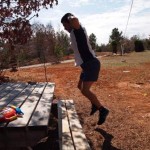
Rule #3 – Be sport specific. Strength and power can also be developed through your training, and therefore making your strength program a functional one – one that will develop the muscles you’re using for your sport or activity. Riding your bike in a higher gear while going up a steep hill, running up a steep hill, or swimming with a T-shirt on (or some other drag creating device) is a great way to develop your anaerobic system and the strength and power associated with it. This will be much more beneficial than just lifting weights and isolating certain muscles that you most likely will not rely on during your exercise, or your daily activity. Muscles work in groups, so train them that way. I think it’s silly when people do specific exercises to isolate an individual muscle such as one of the rotator cuff muscles, particularly during rehab after an injury; your body almost never uses just use that one muscle. Squats may develop your glues and thighs, but plyometric power-jumps or box jumps, or the picnic table jumps I’m doing in the photo below, will develop those muscles even better and many others so you’ll be a fitter, more balanced, stronger, and healthier person (athlete).
Other functional exercises can be very beneficial to your health and fitness. Again, make sure your aerobic system is well developed first. This may take you many months to accomplish. Plyometric exercises are great exercises to do to help you develop power, strength, and balance. They will even improve your aerobic system to some degree. Check out the following photos for some I like to do right here at my house. No need to go to a gym and bench press, dead lift, or squat. I’m not training for a power-lifting competition and I’m not getting ready for a track meet where I’m throwing the shot put. Are you? If you are, then you should be performing specific exercises to develop those muscles so you perform your sport or activity optimally. Remember, you still need an aerobic foundation.
Here’s a brief run-down of the craziness you see below in the photos. Hover your cursor over a photo to see a description and click for a larger view and caption.
Chopping wood – It’ a great activity to do – aerobic and anaerobic. You’ll realize the muscles you’re using the next day after you get out of bed. Arms, back, upper thighs, abdomen, and your glues will be feeling it. Some do this with a sledge hammer and strike a large tire on the ground. Hitting a heavy bag is a great workout too.
The “slosh-tube” – This is an easy device to make using a 4” plumbing pipe – I think it is 9 feet long – fill it about ¾ of the way with water. You can do many exercises with it. It’s only going to weigh about 40lbs, but when the water shifts to one side – well, be ready and enjoy. As one of my patients said just before dropping it on the pavement and cracking the end open, “All you do is walk with it?” It’s not easy. And yes, you can always use a shorter and smaller pipe.
Jumps – Many people like to do box jumps, I use my picnic table. Hands over the head makes them much harder. This is the one that really gets my HR up into the 150s. Jump from ground to seat, then seat to top, then top to seat, and back down. Make sure you can make the jump or your shins will suffer.
Inverted ladder climb – I’ll do this one every so often. It’s very difficult and sometimes tears up my hands, even with the gloves on. It’s like the monkey bars going uphill and backwards.
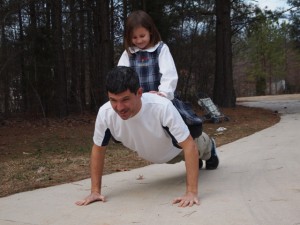
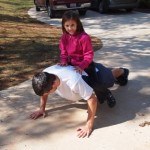
Push-ups – You don’t need a kid on your back, but it will make the muscles work harder if you’re already able to do multiple reps no problem. If I want to do a lower-rep anaerobic exercise, I call over one of the kids and give em’ a ride. Otherwise I’ll do them slow focusing on form – less anaerobic w/o a kid.
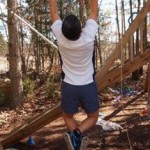
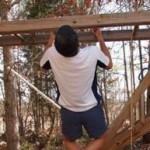
Also the playground I’ll do pull-ups and some abdominal work such as knee lifts and leg raises, as shown below.
Additionally, I use a balance ball for other exercises and there’s some really great programs you can find at Outside Online’s Fitness Video page. Click here.
Don’t overdo anaerobic – you’ll always pay for it in the end.
Special thanks to John at RailRiders for the great workout clothes I’m wearing.
-
- wood chop
-
- wood chop
-
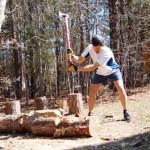
- wood chop
-
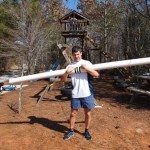
- slosh tube “just walk with it”
-
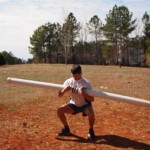
- slosh tube squat
-
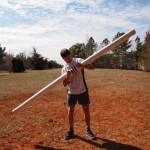
- slosh tube side drop
-
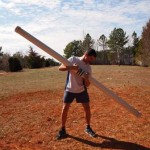
- slosh tube side drop
-
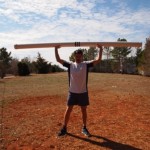
- slosh tube press
-
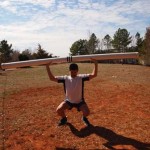
- slosh tube press & squat
-
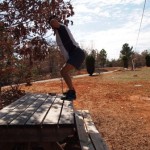
- jump seat to top
-
- back down
-
- pull-ups on the monkey bars
-
- kid push-up
-
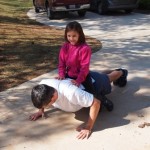
- kid push-up
-
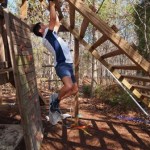
- inverted ladder climb
-
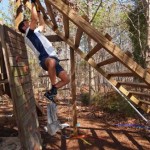
- inverted ladder climb
-
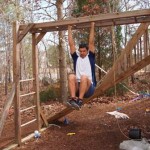
- knee lifts on the monkey bars
-
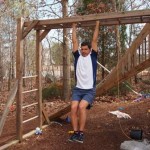
- leg raises on the monkey bars
-
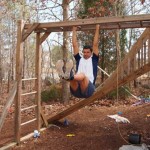
- leg raises on the monkey bars
Dr. Stephen Gangemi "Sock Doc"

I'm a board-certified chiropractic physician and clinical nutritionist with a passion for true natural health care. I implement dietary & nutritional therapies, exercise & movement practices, and lifestyle changes along with manual therapy techniques to help the body heal and prevent illness and injuries.
Hasan says
Interesting post, however your description of fast and slow twitch fibers is misleading and incorrect. The fast and slow refers to the fatigue rate of the fibre not the contraction speed. In fact the difference in contraction speed is less than 0.05 of a second. This is a very common misconception in the health and fitness world and does indicate how myths like aerobic and anaerobic work become popular. Remember aerobic work cannot begin without anaerobic work, the two are one system.