 Consult with
 Sock Doc Workshops
Paleo diets for athletes have become increasingly popular over the recent years. For athletes, a Paleo diet can provide optimal use of the fatty acid metabolic pathways. As your body becomes more and more accustomed to a reduced carbohydrate intake, intra-muscular triglycerides stores will increase along with increased efficiency of stored fat breakdown. Liver, blood and muscle glucose stores will be more actively conserved. The net effect of all of these changes will be to keep your blood sugar levels within normal ranges during the day and during exercise; you’ll be a more efficient fat-burning animal.
Many foods are restricted on a Paleo diet for the reason that they were not available to our prehistoric ancestors. These include all processed foods, sugar, salt, grains, legumes, dairy products, coffee and alcohol. Potatoes are also restricted because the varieties available now are genetically and nutritionally altered and are much higher in carbohydrates in comparison to those available in Stone Age period. Some suggest there is evidence that the diet of Stone Age humans (as early as 23,000 years ago and perhaps even as early as 200,000 years ago), did include, in some form, refined starches and grains that are excluded from the Paleolithic diet today. However, cereals and other grains are excluded from a true Paleo diet; Lucky Charms and Corn Flakes – sorry.
Meat, poultry, fish, eggs, most vegetables, mushrooms, fruits, nuts, herbs and spices make up the majority of the diet. Insects too if you’re into that. Honey, dried fruit and natural oils are permitted in very small portions. Some say coffee is okay in small amounts too.
Key Points of a Paleo Diet For Athletes
- Higher intakes of protein reduce appetite and increase metabolism. High protein also prevents loss of lean muscle
- Emphasizes fruit and vegetables
- High intake of essential fatty acids (omega-3 and omega-6)
- May be beneficial for dieters who have difficulty with carbohydrate cravings and blood glucose imbalances
- Protein (19–35% energy); carbohydrates (22–40% energy); fat (28–58% energy)
- 56–65% of food energy from animal foods and 36–45% from plant foods
- More than 70% of the total daily energy (calories) consumed by persons in the United States comes from dairy products, cereals, refined sugars, refined vegetable oils, and alcohol.
Some sources advise eating only lean cuts of meat, free of food additives, preferably wild game meats and grass-fed beef since they contain higher levels of omega-3 fats compared with grain-produced domestic meats. Some Paleo proponents also allow canola oil as part of the diet, (even though this was not available during that era), due to its high level of monounsaturated fats comparable to olive oil. Many also say that since salt was not part of the hunter-gatherers’ diet, it should be omitted, as our metabolism cannot handle salt very well.
The SockDoc take on the Paleo diet for athletes, which has been supported by advising patients on dietary changes for almost 15 years and more recently after a week-long strict Paleo diet at the MovNat retreat, is this:
- A Paleo diet for athletes is a great dietary template to follow if you want to improve your health, fitness, and over-all well being, (as well as lose fat and gain muscle). Ideally I feel it should be the foundation to every person’s diet unless there are food allergy concerns.
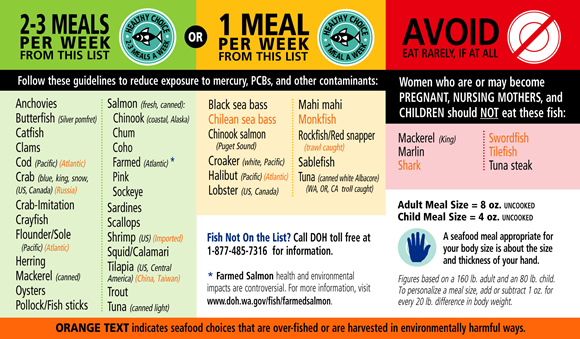
- Take it easy on the fish. Fish is not as healthy as it was back in Paleo times. There were no coal plants omitting mercury and other contaminants into our oceans, rivers, and lakes. Contaminants were much, much lower (perhaps non-existent?). Keep the fish, especially the large ones like tuna, to once a month. Smaller fish can be consumed by some individuals once a week. Check out the fish chart below.
- Ditch the canola oil. It’s not the same as olive oil.
- Dairy fats are needed, especially butter. The arachidonic acid (AA) is necessary for neurological development and health (even in the elderly), as well as hormone production, and even necessary to properly deal with inflammation. Though you can get these fats from red meat, it’s much harder to do, especially if you’re getting the leaner, healthier grass-fed beef.
- Salt, in the form of sea salt, should be considered, especially when sweat rates are higher – hot summer days and with prolonged exercise. Healthy diets, devoid of canned food and fast food (where most humans get their salt), can often be deficient in sodium chloride.
- How about grains and other starches? That should depend on your exercise rate and how you feel eating them. Sweet potatoes and possibly even regular potatoes may be advised if you feel you metabolize them well. You can certainly be very healthy without these in your diet, and they should not be consumed every day. Corn, rice, and other non-gluten containing foods should be based off your individual need and preference. Though you can’t call yourself a true Caveman or Cavewoman, pay attention to how you feel when you eat a certain food.
Adjust the diet to your individual needs and habits. More calories should come from fats (avocados, eggs, nuts, seeds, coconut, butter) and less from carbohydrates (fruits, potatoes, honey) if your exercise levels are low. The opposite holds true if exercise is more intense and of long duration.
Racing or training at a high intensity or long duration? – Consider some carbohydrates
During long or hard workouts and races you may want to consider high glycemic index carbohydrates mostly in the form of fluids such as sports drinks or gels like GU. Events lasting less than one hour, and perhaps up to two hours depending on your metabolism, don’t require any carbohydrate. Water should be all you need. A starting point for deciding how much carbohydrate to take in is 200 to 400 calories (50-100 grams) per hour modified according to body size, experience, and the nature of the exercise. For example, if you’re not aerobically fit and training/racing too anaerobically, then you’ll need more carbohydrates because you’re burning more sugar than fat for fuel.
In the first 30-60 minutes after long and/or highly intensity exercise or a race use a recovery drink that contains both carbohydrate and protein in a 4:1 ratio. 80-100 grams of carbs and 20-25 grams of protein is a good average starting point. This 30-60 minute window is critical for recovery and should be your highest priority after a hard workout or race. For the next few hours continue to focus your diet on carbohydrates, especially moderate to high glycemic load carbohydrates along with protein. Now is the time to perhaps eat “non-Paleo” foods such as rice, corn, and other foods rich in glucose as they contribute to the necessary carbohydrate recovery process. If you handle gluten well, then breads and pasta may benefit your recovery. Remember, a Paleo diet for athletes is all very individualized so listen to your body and experiment with different foods. Don’t be an ignorant Caveman – also known as a Jackass in modern times.
Dr. Stephen Gangemi "Sock Doc"

I'm a board-certified chiropractic physician and clinical nutritionist with a passion for true natural health care. I implement dietary & nutritional therapies, exercise & movement practices, and lifestyle changes along with manual therapy techniques to help the body heal and prevent illness and injuries.
Liz says
Glad to see your take on carbs during workouts and recovery… Have been reading Sisson’s Primal stuff, and although I haven’t done too much digging yet, was feeling a bit concerned that it all might be incompatible with my (ultra endurance) athletic goals.
Still interested in modifying my diet to be more paleo-like (although I am already pretty close to it). But would like to know that I’m not undoing all of that good eating with workout/recovery eating.
Sock Doc says
There’s a time and a place for carbs. I can tell you that since I dropped my carb intake drastically (removing the grains in my diet and also cutting down honey and some more sugar (chocolate)), my blood sugar levels have been even more stable running and training long distance. I’m not running ultra like you, but for example, today I ran the trails for 1:30 pretty moderate pace, and didn’t need to eat anything during, or right after because of feeling low blood sugar. Of course within the hour after I finished I took in some good protein (grass fed beef), lettuce, and some coconut milk, strawberries, and honey to get the carbs in for a quicker recovery.
Nick says
Thanks for this very informative article. This seems more inline with what I’ve been thinking. I also really appreciate your fish chart at the bottom. I wish I could find a chart similar to that for other meats, and veggies. Always helps me if I can see specific types of meat, fish, veggies, etc and how much I should be eating them per week. I think that’s why a lot of dieters fail is because they become overwhelmed with trying to figure out what they can and cannot eat. A nice simple breakdown like this makes it easy and helpful to plan meals for the week.
Carrie says
I was wondering what your stance on primarily plant based diets are. Do you believe it possible to maintain your health eating meat/fish only once or twice a week? There are so many heated debates about endurance athletes and vegetarian diets; I would be curious to know what you think.
Thanks!
Sock Doc says
Personally I don’t think it’s possible to be healthy eating meat 1-2X a week. I don’t think fish is very healthy either. Now if you’re adding clean whey protein and lots of eggs for protein in your diet, and only eating meat 1X a week, then I think that can work.
Yes – I’m well aware of the endurance athletes including some ultra runners who are vegan. I’ve never treated one of those guys so all I can say is they sure don’t look healthy; but maybe it works for them. I know Dave Scott (6-time Ironman champ) used to be a vegetarian. I’ve heard he is no longer. I’ve treated plenty of vegetarians and they all have health problems partly based off what they’re eating (or not eating) and every vegan I’ve ever seen is a complete disaster.
Carrie says
Thanks!
Jennifer says
What makes the vegans you have seen a “disaster?” Can you elaborate on this please? I have eaten meat, been a vegetarian, and currently a vegan. I feel my health has improved after giving up all animals products. I have food sensitivity testing done and found I rated high to eggs (which I was consuming raw and cooked)….once I gave those up things improved.
Sock Doc says
Too much to elaborate here but it comes down to they lack protein, eat too many carbs, and have a lot of inflammation. Maybe you got better because you cleaned up other things in your diet. Maybe you felt better simply because of the egg sensitivity. If you felt worse eating meat then you could have had digestive problems. Sometimes going vegan for a short period (1-3 weeks) is okay, but staying on it is not – just my observations.
Mike says
Hi Dr. Gangemi,
By “lots of inflammation” do you mean soft tissue issues (trigger points and what not) or something else? I ask because I’m an ultrarunner and have been vegetarian for the past year (started vegan then started incorporating eggs and dairy). I try to pay attention eating to alkalizing foods and staying on top of my protein intake. But I’ve still had nagging issues (hamstring or quad or toe). Now that could be caused by overtraining (of which I have been guilty!), but are you saying that by switching to a more paleo diet my body would be able to handle the beating a better (that I would be healthier not just fit)?
Thanks for this site! It will do until I can somehow get to NC to schedule a visit. 🙂
Mike
Sock Doc says
Yes, for the most part the more fat your body runs off of and less sugar then the less inflamed your body will be. Typically vegetarians, and especially vegans, eat way too many carbs and that increases inflammation big time. So the more you’re running off fat then more volume and intensity you can handle – because you recover quicker and your body is more efficient.
Mike says
Thanks, Dr. Gangemi, for your response. Very helpful. I’ve got a follow up, if that’s cool.
I’ve taken your advice and am trying out a paleo-type diet. I’m on Day 12 of paleo (Whole30) — coming from clean vegetarian foods for the past year— I’ve really loved eating meat again and can already tell that my body is thriving on the added (animal) protein. My energy levels have been much more stable (e.g., not waking up ready to eat my own arm), but my running has been a LOT slower. How much slower? My “easy” pace is a full 1 to 2 minutes slower. I just don’t have the gas in the tank to do more than that an “easy” effort. Now, I noticed two things on my 7 mile “easy” trail run today: (1) my “easy” pace is right at my Maximum Aerobic Threshold (based on feel and guestimating my pulse), and (2) If I just gave into the slowness, I felt great running that slower pace. But if I tried to pick things up, I got over worked pretty quickly (within 1 mile).
As a vegetarian it was not uncommon for me to eat three cups of cooked rice in a single sitting. It’s hard to keep up that carb intake on sweet potatoes!
My guess is that my body is still adjusting to burning fat and that’s why I’m so sluggish. Does this sound familiar to you or do I need to tweak something (or try adding pasta back in)?
I’m adding things like gluten-free oats immediately after runs for recovery, but other than that, keeping strict paleo. Haven’t do a long run yet (got 25 miles this Saturday), so I’ve not run with gels or Perpetuem yet—perhaps that will make the difference?
Any thoughts?
Mike
Sock Doc says
Hey Mike – yeah I’d say you got it right and your body is not used to the fat burning. That’s the #1 reason why people go slower when they train aerobically too, as well as feel the need to do so when they get off a lot of carbs. You should not need oats or carbs after an aerobic run – if you do, it wasn’t aerobic.
And what’s this guestimating? You’re a runner – going to run 25 miles this weekend and no HR monitor? Go spring the $80 and figure out your LT and set your zones my man.
stephen thomas says
I am 67. I have been running or jogging for 45 years. 14 years ago I had some ischemia (but no heart event) and became a vegetarian, following much of Dr. Ornish’s advice. I try to do 30 minutes a day of jogging or 30 minutes of training on a machine. What should my training heart rate be? Thanks in advance. Steve
Sock Doc says
Check out the Sock Doc Training Principles to learn your intensity zones.
Laurel says
What do you suggest for fuel and electrolyte replacement during long runs ? I have been paleo for about six months.
Sock Doc says
Depends on what you consider “long” and what your intensity is. The more you’re burning fat the less you’ll need. A healthy and fit and efficient endurance athlete should be able to run aerobically close to 3 hours w/o fuel (other than water).
…I use anything that’s natural (no sucralose, no artificial sweeteners, etc…) – GU drink is okay, so is Powerbar’s formula. There’s several others out there. Stick with maltodextrin, dextrose, fructose, sucrose, and natural flavors in your ingredients. Again – this is for recovery, intensity, and truly “long” runs.
Jong Wok Kim says
Hi Steve
A lot of people believe eating red meat causes cancer. But from what I read on the Internet, all the reports saying that seem to come out of the US only. People who argue eating red meat does not cause cancer say the reason for that is because of the way antibiotics and aritificial chemicals are used very extensively for agriculture in the US, which in turns make the meat there unhealthy (and potentially cancer-causing). On the other hand, Europe, Australia and New Zealand seem to have very strict standards on agriculture, and there has been no report of the link between red meat and cancer from those countries. Some people also suggest that boiled or roasted red meat have less cancer-causing compounds that the grilled option.
What do you think about this?
Sock Doc says
Yes I agree with that and a lot of the “red meat” studies are done with those eating hotdogs and hamburgers – white, refined buns included. And really bad meat; not pasture raised meats.
John Calarco says
Hey sock doc i just recently watched a documentary called forks over knives where they go to great extents to prove that all diets should be plant based and all animal products should be avoided. From my own experiance and what ive learned from you this is not so. However I am curious about all the benefits these people miss out on by eliminating animal products what are the true benefits of eating meat and why is it not ideal to be a vegetarian?
Sock Doc says
Way too much to get into there – plenty of info on this on the several Paleo sites and books out there.
Ethan says
I’ve been following this type of diet religiously for about 7 weeks.
5-6+ cups organic vegetables daily
Daily 3 egg omelete with plenty of veggies and avacado
Only cooking with Coconut oil or butter.
Daily grass fed beef or organic chicken (8+ ounces) daily
2-4 pieces of fruit daily
Nuts and peanut butter daily
Coconut milk fruit smoothies
No grains, nothing processed, and I haven’t cheated at all!
Probably not getting 56% of food energy from animal foods. I’d say more from veggies, nuts and fruits. That’s the only difference.
I’m a triathlete and I noticed the “low carb flu” the first couple of weeks. Things got better for a week or so but at the 7th week I feel horrible.
No energy while working out. Very fatigued muscles. Easy swim sets are now hard.
No desire to train
Old injury flared up
Tired in general
Not sleeping well
Bowel movements haven’t been normal for 7 weeks. Passing undigested food for the first 4 weeks
Lack of motivation overall
All of this even when my training went from 15hrs per week to last week only 4 hours.
Am I missing something really obvious? Am I doing something wrong?
If I’m messing up the diet, do you have a sample day of eating on your site anywhere?
Thanks for your time,
Ethan
Sock Doc says
Your diet looks good to me but it might not be right for you. So if I’m understanding this correctly you had some symptoms early on (gut issues mostly) and then now, 7 weeks in, you’re really tired?
One thing to consider is that you’re eating something you’re allergic or sensitive to. Think of a food or foods that you didn’t eat much (or at all) before and now you began to eat during this diet change. That food(s) could easily cause your gut issues and wreck your energy. That would be the most obvious reason for your problems. Next I would look at some metabolism problem – and that’s typically fats when someone has a problem with this type of diet. If your gallbladder isn’t efficient then you might not be able to handle so much fat right now. So cut back and see how you feel there. So take a few days off from all the coconut, butter, avocado, and nuts. Don’t go fat-free 100% though.
I’ll leave you with that for now so you can see if that helps; feel free to report-back if this helped, or didn’t.
More on gallbladder here: http://www.drgangemi.com/2012/07/gallbladder-health/
Ethan says
Thanks Sock Doc,
Let me answer your questions…
The first gut issues were for about 4 weeks. Food was passing through completely undigested which isn’t normal for me. After that things changed but bowel movements are far from normal. I’d say a bit oily/runny if anything. Sorry to be gross!
I’ve been very tired for the last couple of weeks. I swim with a masters team 4-5 days a week and swimming sets that are usually a breeze to swim are just really tough now. I have no energy. I feel like I’m full of lactic acid even at what should be easy paces. Also I feel like my general sense of motivation is lacking. Not common for me.
An old hip/sciatic nerve injury popped up about 10 days ago and I haven’t been able to run or bike either. I went for a massage the other day and I was much much tighter than usual. I was full of knots and trigger points. More than normal.
Regarding allergies, the things I eat now that I didn’t eat much of before would be coconut oil/milk, green beans, bok choy, bananas and avacados. Outside of that everything else is pretty standard for me.
I’ll try to cut back on the fats for now and I’ll be sure to read the gallbladder article.
Thank you again for your time,
Ethan
Sock Doc says
Yeah sounds more of a fat metabolism problem – I’d start there and see how that goes.
RobinBir says
I went paleo for about 6 months last year (2011) but developed severe constipation and dry eyes . I upped the fat (butter and coconut oil ) for a while with no significant improvement. The problem was fixed when I added back some cooked white rice into my diet .
Elizabeth says
Great article! The most balanced view I’ve read regarding Paleo PWO nutrition (for those that don’t workout super crazy and for those who do). When I did the Insanity program last year (before I really went paleo), I *needed* those extra carbs, but now that I only workout 3 times a week for about 30-40 minutes, I find that a low-carb Paleo diet suites me very well! My blood sugar has a tendency to get out of whack when I consume too many for my level of exercise, so I thought this article made total sense.
Elizabeth says
You mention red meat and fish more than poultry — where does that fit in? After having been a vegetarian for 25 years I realized I have some serious issues with soy and have been reintroducing some fish and eating more eggs (1-3/day) to make up on the protein, which really agrees with me. But my husband has a red-meat allergy (breaks out in hives, it’s apparently a tick-borne pathogen and a growing issue) and I find red meat entirely unappetizing. Anything to consider in the balance between poultry, fish. and eggs if red meat is not an option?
Sock Doc says
Well if you don’t like red meat, or there’s an allergy – that’s just the way it is. Focus on pasture eggs, clean undenatured whey protein, poultry, and fish – wild caught and small.
Sonja says
What would be a typical meal plan for a week? Morning, lunch and dinner, for one who is trying to get to good health, and is having joint issues and knee pain. I was running, but the pain and now lack of energy is becoming my enemy…I have not certain diet.
pam says
I am a vegatarian for the last almost 30 years. I will eat eggs and the occasional fish. I am an endurance type athlete…mostly cycling. I am interested in changing my diet to reflect the paleo type diet.. I will not eat read meat or chicken though. what are your suggestions to overcome this and still eat enough protien?
Thanks
pam
Sock Doc says
Meats, eggs, fish, & whey protein.
Mike says
Hi Dr Gangemi,
Thanks for such a wonderful site! I just have a brief question or two for you. I’m a 29 year old 5’8 145lb former collegiate distance runner, and post college I’m running everything from 5k’s to marathons, and I’m planning on shooting for Boston Qualifying next Fall. I’ve been trying to make changes in my diet recently to 1. Keep sugar levels more stable, and 2. Possibly lose weight, and be in the 130’s for running/racing. My first move has to been to cut out a much sugar and processed foods as possible, while focusing on eating more fruits and vegetables.
Question: You have a lot of very good general information on your site, but do you recommend a source where I can go that gets very specific about foods to eat and not eat? Perhaps even offers recipes, ect. and do you think my plan thus far is a good one? Is being in the 130’s reasonable or just crazy?
Thanks so much!!!
– Mike
Sock Doc says
Lots of Paleo Sites out there. I like Paleo Magazine too (I write for them :)). Marks Daily Apple is a good website too with a lot of good food/nutrition advice and recipes.
Bee says
Hey,
What do you think about legume (lentil any mungo bean) sprouts? Can I eat them?
Sock Doc says
I think if you digest them well then go for it.
Ed says
I see you recommend a 4 to 1 ratio for carbs/protein after a hard workout or race taken within 30 minutes. What are your thoughts on chocolate milk?
Dr. Stephen Gangemi "Sock Doc" says
I’m a fan of good, 85% or more dark chocolate and organic whole milk (preferably raw or unhomogenized), but not chocolate milk.
Ed says
Ok thanks! This is an amazing site. There’s so much I didn’t know and I’ve been running for almost 40 years. I mean I thought barefoot running was the fad, not the other way around.